
Healing Without Harm, Legacy Without Loss
By Carolyn Mary Scott
At the edge of Sonoma Mountain, in the villages of Eldridge and Glen Ellen, an old state institution sits quietly – abandoned, yet brimming with history. For more than a century, the Sonoma Developmental Center (SDC) was a hub of care and community for people with developmental disabilities, shaping lives and livelihoods across the Sonoma Valley. Its historic buildings and sweeping grounds are inseparable from the land itself.
Today, SDC stands at a crossroads. One path would transform this publicly owned land into an 88-percent luxury development – nearly a thousand homes and 2,500 residents, a high-end hotel, and commercial space carved into a sensitive mountain ecosystem. The other path offers a fundamentally different future, rooted in adaptive reuse, community governance, and long-term stewardship.
Adaptive reuse is grounded in climate science which shows that preserving and retrofitting existing buildings dramatically reduces carbon emissions by avoiding the energy-intensive extraction, manufacturing and transport of new construction materials while extending the life cycle of already embodied carbon. In other words, the greenest building is often the one already standing.
The proposed luxury plan adopted by Sonoma County planners is not just ambitious – it’s a carbon bomb. Roads, homes, and hotel infrastructure would be built within feet of vital riparian habitat and wildlife corridors. Construction alone would generate massive greenhouse gas emissions while placing long-term strain on water resources, increasing wildfire risk, and fragmenting one of the most important ecological corridors in the North Bay. Every acre paved compounds climate impact and erodes the rural character that defines Sonoma Valley.
Yet Sonoma is not without alternatives. Across the country, communities facing similar choices have rejected sprawl and chosen to build carefully on what already exists.
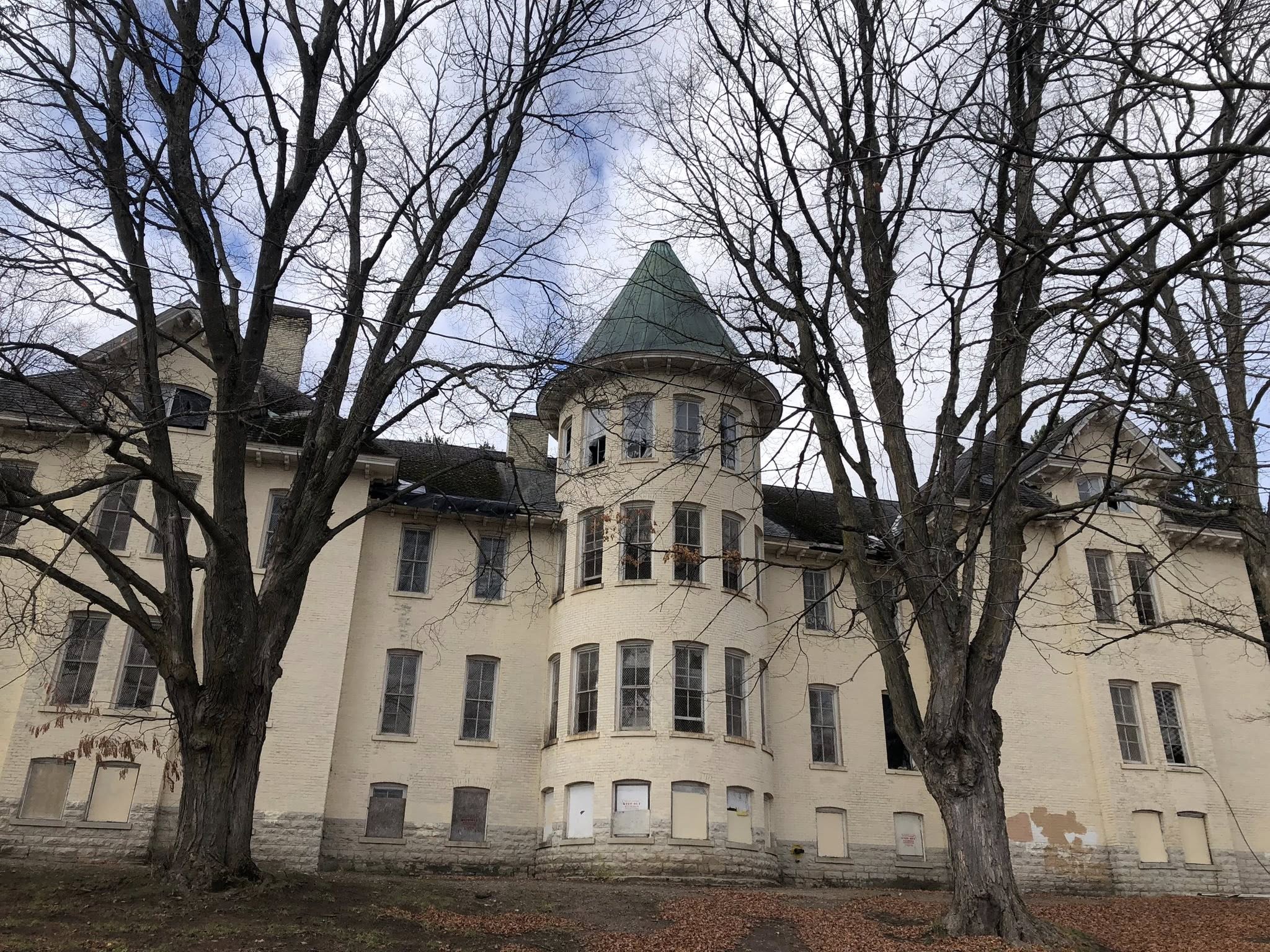
In Michigan, the Traverse City State Hospital – originally the Northern Michigan Asylum – was built in 1885 and grew into one of the nation’s largest psychiatric institutions. When it closed in 1989, the site faced a familiar fate: demolition, decay, or speculative development. Instead, the community chose adaptive reuse.
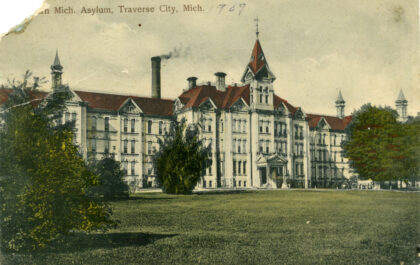
Today, the Village at Grand Traverse Commons is one of the most celebrated adaptive reuse projects in the United States. Historic buildings were restored and repurposed into homes, offices, shops, galleries, and restaurants, surrounded by nearly 500 acres of preserved parkland and trails. Former patient wards became apartments, institutional corridors became vibrant commercial spaces, and gardens once used for therapy became shared public commons.
This transformation did more than save historic architecture. It created jobs, supported small businesses, revitalized the local economy, and preserved green space – proving that adaptive reuse can deliver environmental stewardship, community resilience, and economic vitality at once.
The parallels between Traverse City and the Sonoma Developmental Center are striking. Both are large institutional campuses with deep histories, surrounded by ecologically sensitive landscapes. Both present a choice between short-term profit and long-term stewardship.
Luxury housing and resort development may promise revenue, but the hidden costs are steep: carbon emissions from new construction; traffic congestion in mountain corridors and dramatically-increased evacuation risks during wildfire events; increased demand for water and energy, and irreversible habitat loss. Greenfield sprawl is incompatible with the climate realities we face and the values Sonoma residents have repeatedly expressed.
Adaptive reuse offers a better path with benefits like:
- Lower carbon footprint by preserving existing structures.
- Energy efficiency through modern retrofits.
- An emphasis on affordable housing instead of high-end homes.
- Community-serving spaces rather than exclusive luxury enclaves.
- Protected landscapes that support wildlife, water filtration and carbon sequestration.
SDC can be reimagined as a place of density without sprawl, healing without harm, and legacy without loss.
That vision is not theoretical. It has already been articulated in detail by Norman Gilroy’s nonprofit, The Next 100 Year Project, a community-driven proposal developed over years of public input. The plan keeps the Sonoma Developmental Center in permanent public ownership while transforming it through adaptive reuse, rural-scale development, and expanded open space and wildlife corridors.
Guided by a locally controlled community services district and a nonprofit community trust, the proposal centers long-term local decision-making rather than speculative real estate interests. It calls for a village-scale, 15-minute neighborhood with approximately 470 homes – most of them affordable – integrated with historic preservation, public commons, parks, local services and restored ecological corridors.
Importantly, this was not just a community vision – it was validated in court. In related litigation, the Sonoma County Superior Court recognized The Next 100 Year Project’s proposal as the environmentally superior alternative, affirming its reduced development footprint and stronger protections for open space, wildlife habitat, and community interests.
Rather than selling off public land to the highest bidder, the Next 100 Years plan keeps the land working for the public good – financially viable, climate-responsible, and rooted in the rural character of Sonoma Valley.
The Sonoma Developmental Center is not just a collection of vacant buildings. It is a living landscape, a critical wildlife corridor and an irreplaceable historic resource – a place where ecological systems, community memory, and public purpose intersect. One future fragments this land with luxury development that accelerates climate harm and severs habitat; the other builds carefully on what already exists, reducing carbon emissions, protecting wildlife, and honoring history.
The choice before Sonoma is not abstract. It will shape the Valley’s environmental and cultural legacy for the next hundred years: renewal over destruction, stewardship over speculation, community over carbon bombs. Learn more about The Next 100 Year Project plan at https://www.sdcnext100.org/proposal
Main Photo: The adaptive-reuse converted Grand Traverse Commons in Travis Center, Michigan, existing infrastructure converted to homes, offices, shops, galleries and restaurants.
Carolyn Mary Scott is an award-winning filmmaker, visual storyteller and creative director. Her documentary film about SDC, “Small is Beautiful,” is available at https://smallisbeautifulmovie.org/.

Be First to Comment