
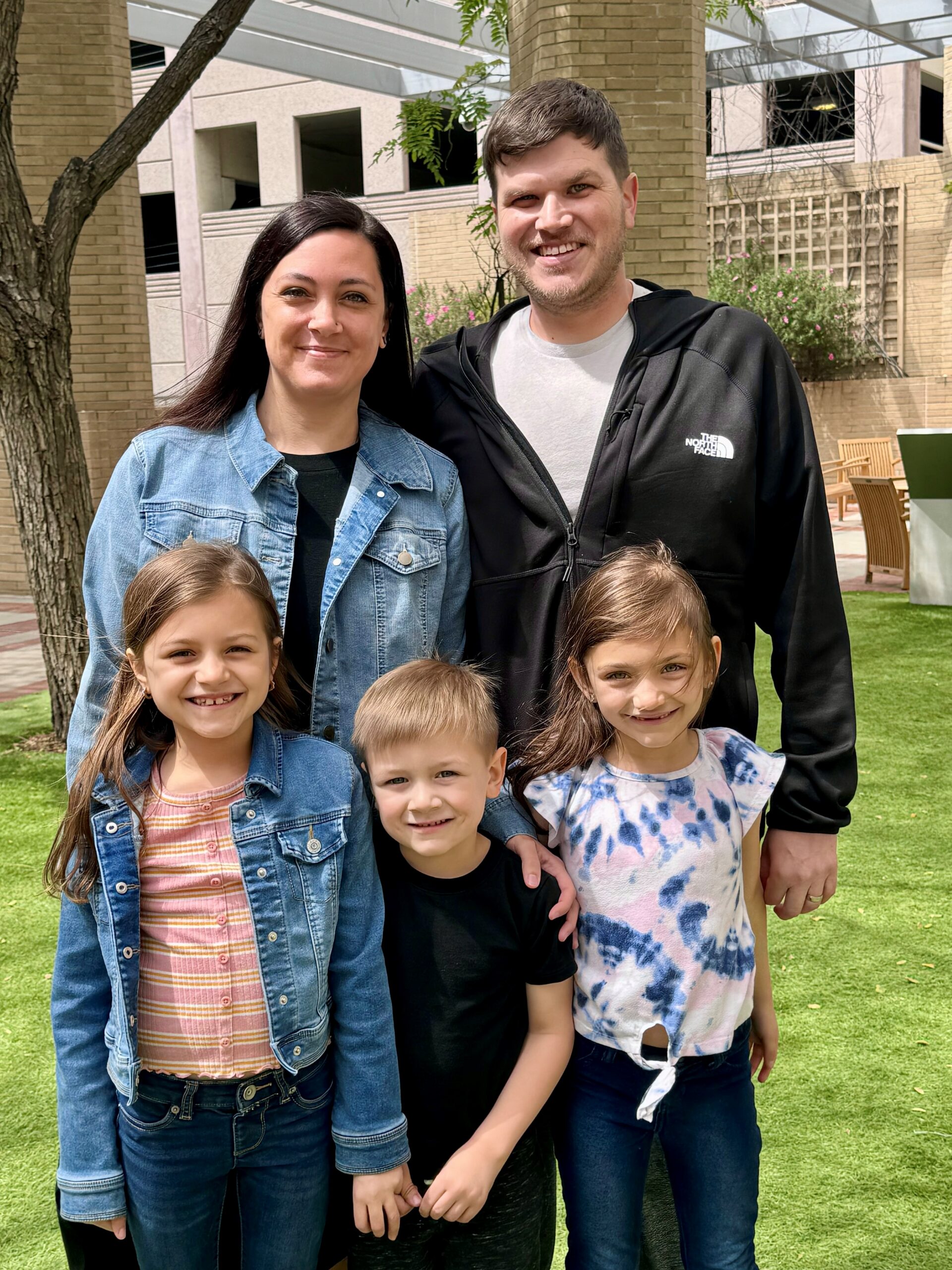
Ava, Olivia, and Landon Langenhop were all born with a rare and life-threatening immune disorder called severe leukocyte adhesion deficiency-I, or LAD-I. This rare genetic condition makes them at risk of near-constant bacterial and fungal infections, and survival beyond childhood is rare without treatment.
In 2020, an investigational gene therapy in an international clinical trial co-led by UCLA and developed by Rocket Pharmaceuticals, restored the children’s immune system function. It involved removing their bone marrow stem cells, correcting their genetic makeup, and reintroducing the cells back into their body.
As the world recognized Rare Disease Day on February 28, attention turned to children like Ava, Olivia, and Landon who are now thriving because of advances in gene therapies in California. In the United States, approximately 30 million people – including over 3 million in California – have one of about 10,000 rare diseases like LAD-I, sickle cell disease, or cystic fibrosis. Approximately 95 percent of rare diseases have no available therapies. Many rare diseases affect children early in life and are fatal.
For the last 20 years, the California Institute for Regenerative Medicine (CIRM) – a state agency created by the people of California – has funded lifesaving research and clinical trials in stem cell and gene therapy to accelerate treatments for patients with unmet needs. About half of all CIRM awards that support clinical trials are for rare diseases, typically for individual diseases.
In January, CIRM announced a new approach to funding research that will help more families like the Langenhops, the Rare Disease Acceleration Platform and Innovation and Delivery (RAPID) plan. CIRM will take a platform approach to funding rare disease research, which allows researchers to use the same method to develop therapies for multiple rare diseases, significantly lowering the cost and time of development.
“RAPID marks an important shift in how we provide genetic therapies for rare diseases in California,” said Rosa Canet-Avilés, PhD, Chief Science Officer at CIRM. “Platform-based approaches are a more efficient way to speed up the discovery process and reach patients with innovations that can transform their lives because we know for patients, every day matters.”
A faster approach to new therapies for rare diseases means more children like Ava, Olivia, and Landon could live their lives free of disease.
You can learn more about CIRM’s work at cirm.ca.gov and find current clinical trials at cirm.ca.gov/clinical-trials/.




Be First to Comment