
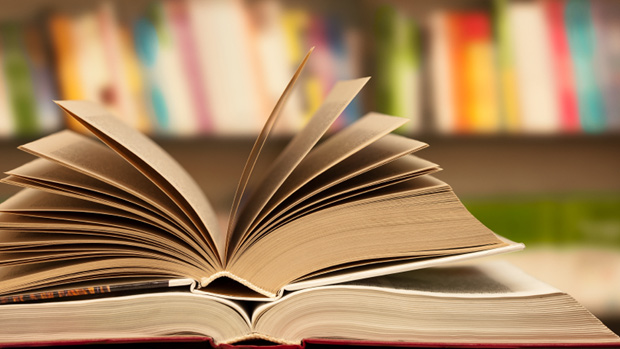
Albert Camus wrote of fiction as, “the great lie through which we tell the truth.” So what are the “great lies” and what are the “truths” they tell?
Now, to be sure, ‘great’ is in the mind of the beholder. But the “great lies” referred to in novels is the process of capturing of life, from the profound to the salacious, in its every way, shape and form. Life ever-changing, from the new and different to the plodding and mundane, to the raucous and overwhelming, and onward into the dramatic and dangerous times that will surely emerge.
In the lies of great fiction, all aspects of life are chronicled, every twist and turn, birth and death, every insight and experience the writer decides to lay before you. Life is after all a tricky mother that rips the ground out from under us, or offers solace and solitude, or presents the panoply of opposites and choices, or shuts the doors and holds us prisoner to our ignorance.
So, books are my saviors, the place I can go to for comfort from the storm, for nourishment for mind and body or for a brief bit of, “Oh, I get it.” Books are a place to learn and a place from which to watch the mad world at a safe distance and try to make something of its burdens and escapes into the now.
It’s books where I go to breathe or ponder, and to try to deal with the confusion and myriad convolutions that come with every dimension or approximation of reality.
There is simply nothing that can supplant a well-crafted novel, shaped and formed like a sculpture that leaves you standing in awe. Not a film, no matter how artful, or a TV series as compelling as it may be, can replicate the magical journey of a story in the hands of a masterful artist that leaves one moved and changed forever. Only a good novel can lead us to a greater understanding of how the world works, while reflecting to us our own thoughts and revealing how to navigate the rivers and mountains that populate our lives.
Only artful books provide the time for contemplation required to understand what we need to know, and the time in which to learn it. Stories are what we tell each other and ourselves, and in the telling unveil the truths we need to learn the secrets of life. Or at least to get a glimpse of them. A great novel is a gift from the gods, who will only laugh at our struggles to understand the confounding illusion we call life. But then, that’s the way the gods work.


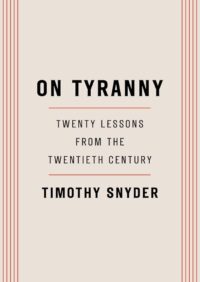



Thanks for directing me to your column, Will, when we met yesterday at Sonoma Peet’s.
Your essay above on novels reminded me you said you wrote a couple novels of your own, which shows in some of your specific words of appreciation like “craft” and “sculpture.”
A number of your other insights implied what I’ll add as the benefit I first seek in reading a novel (or any literature, including nonfiction), namely a sense of order imposed on the noisy extravagance of human and more-than-human nature buzzing and booming around us in more complex relationships and at greater scales than a lone soul is equipped to process—except in creation or reception of art.
Perhaps surprisingly, Camus’s perception of fiction as a truthful lie is that we in turn impose those lies on the phenomenological truth that faces us before and beyond literature, which leads us to speak of and act on, say, romance as happy endings, to look for a hero to model our own behavior or a sidekick to support it, etc. Correspondingly, thanks for writing some fresh thoughts and starting others.