
What To Do with Burn Piles?
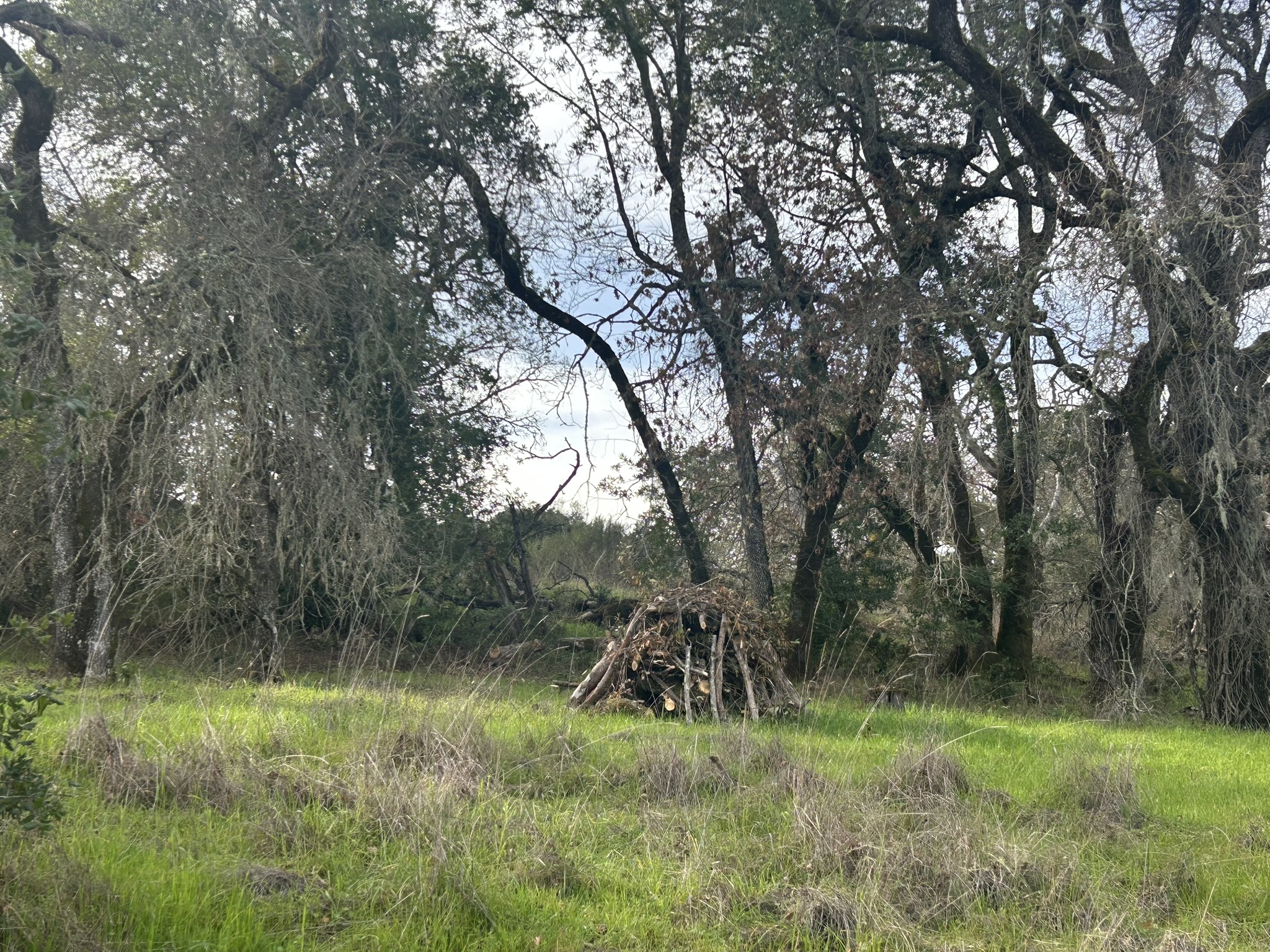
Lately I’ve seen burn piles of oak limbs, bay branches, manzanita and tangled grass and leaves in parks and open space everywhere. Big tipi-shaped mounds border the trails at Sonoma Valley Regional Park, Sonoma Developmental Center and Bartholomew Park. I find it very unsettling to see massive clearing and burning of underbrush, snags and live bushes and trees conducted under the premise of increasing wildfire safety for communities.
Not only is the clearing and piling up for burning a direct threat to animals and the ecosystems, but the practice is also questionable at best when it comes to reducing wildfire threats to people.
Most of the burn piles I’ve seen are heaped up in parks and open spaces that are somewhat distant from homes, schools and businesses. Recently I traveled to Hendy Redwoods State Park near Boonville where piles in the damp redwood forest extended in both directions for several miles along the entrance road. What are the chances of a wildfire ever starting here, I wondered.
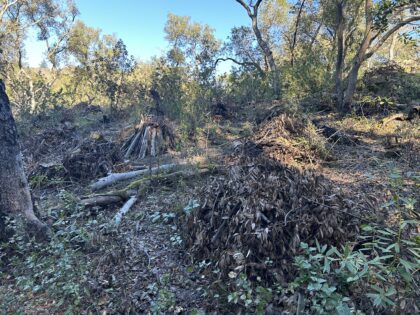
When burn piles sit around for weeks or even months, wildlife and birds are attracted. In no time the piles become shelter for mice, voles, rabbits, snakes, lizards and insects. In the Sierra, even rare fishers and martens from the weasel family may take refuge or create dens inside. Then, if without warning, the piles are burned, these creatures must flee or perish. Instead, forest ecologists suggest creating these as habitat piles, aka “critter condos,” as needed, that are never burned but left in place for the benefit of wildlife and the forest.
The dead or nearly dead trees and charred snags that remain after wildfire provide essential habitat for woodpeckers and other species that seek out burned areas to nest, breed and feed. We know that natural wildfires are essential to forest health. “Snags, large, downed logs, and big decadent trees provide food and shelter to more than 40 percent of wildlife species in Pacific Northwest forests,” according to the Northwest Natural Resource Group.
We know that trees are not the cause of devastating wildfires. Humans ignite about 90 percent of all devastating wildfires – and that includes utilities such as PG&E, arson, campfires gone wild, fireworks, mechanical equipment and so on. The tragic wildfires that destroyed homes and livelihoods in Sonoma Valley and beyond in 2017 were caused by human activity. If you look at some of the post-burn photos, in many cases the trees remained standing amongst the ruins. Trees are not the problem, according to Fire Safe Marin.
While conflicting science and opinions rage about how to prevent wildfire and keep people safe, most agree that the best option for homeowners is to clear five feet around the home from all flammable materials. From there out to 50 or 100 feet, keep trees and landscapes in check. Make sure your house has soffit screens to prevent embers from flying inside during wind-driven wildfires that are the most dangerous. Firesafe Sonoma provides many recommendations to reduce wildfire risk.
My research tells me that cutting down trees and clearing underbrush in parks, open space and far out in the forests has gone way overboard. In fact, greenbelts close to communities are often beneficial as they serve as wildfire buffers where wildfires can be slowed or stopped. Clearing trees, brush and grass creates warmer, drier areas where wildfires may spread faster and hotter.
Our landscapes are certainly out of balance and may need some tending, such as prescribed or cultural burns and reducing flammable materials around homes. However, I believe the driving force behind clearing and putting up burn piles everywhere is money and profit. Right now there is ample grant money available for cities, counties and non-profits for removing “fuels,” by which we mean plants and trees. Well-intentioned elected officials and agencies want to demonstrate they are taking action to protect everyone from wildfires. However, the real solutions are complicated and not very politically popular, such as providing funding for hardening homes and to stop developing in the wildland-urban interface. The Sonoma Developmental Center is a case in point for planned urban development in a high wildfire area. Tragically, it is more politically expedient to hire foresters and conservation crews to cut and clear.
Then there is also pressure from extractive industries, like timber companies, that seek more logging, and biomass advocates who want to expand polluting facilities that burn plant material to make pellets or liquid fuel for export.
At the national level, we have our own Senator Padilla forwarding the so-called “Fix our Forest Act,” which opens the door to more destructive practices in the wild lands far from communities, that is likely to do little to reduce wildfires, and perhaps even increase the risk. Sierra Club and all major environmental organizations oppose that bill as well as all the federal plans to expand logging and mining on our public lands.
All of this comes to mind when I see the burn piles in our precious Sonoma Valley. My wish is that we do the minimal intervention needed to protect people, homes and farms and just let the plants and animals be.







Be First to Comment