
Honoring the Old, Respecting the Present, & Planting for the Future
– Hannah Aclufi, Sedra Nathan, and Vincent Distrola
Daffodils and jonquil
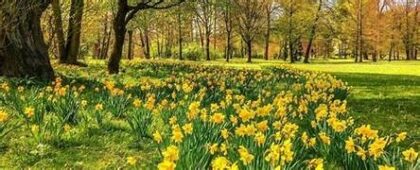
Photo: NatureHills.com
Historic Symbology
As winter fades, Sonoma’s wildflowers begin to emerge—but first, let’s honor the traditional birth month flowers for March: daffodils and jonquils, both in the genus Narcissus. These early bloomers symbolize renewal and new beginnings, making them a fitting tribute to the transition from winter to spring.
- In Christianity, they are linked to the resurrection of Christ.
- In China, their bloom coincides with the Lunar New Year, symbolizing prosperity and good fortune.
- In Japan, Sakura (cherry blossoms) take center stage this month, representing renewal, vitality, and fleeting beauty.
- The golden hue of Narcissus traditionally signifies joy and optimism
A Modern California Perspective
In Sonoma, March showcases three standout native plants: California buttercup, blue dips, and manzanita species. These flowers not only add beauty but also play crucial ecological roles in our local landscape.
California buttercup (Ranunculus californicus)
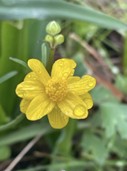
This cheery flower is currently beginning to bloom all over the Sonoma Valley Regional Park, the Montini Preserve, and Arnold Field, just to name a few of its local haunts.
Symbolism: Its bright yellow color dotting the landscape represents merriment and joy.
Ecological benefits: Very low maintenance and pollinator friendly,
Habitat role/ garden application: California buttercup grows well in part shade and in open meadows. A dependable plant for the garden, it reseeds freely year after year, yet pulls up easily where it’s not wanted. A bit of folklore- if it’s glossy petals reflect yellow when held up to your face, it’s said that you like butter.
Blue dicks (or blue dips) (Dipterostemon capitatus)
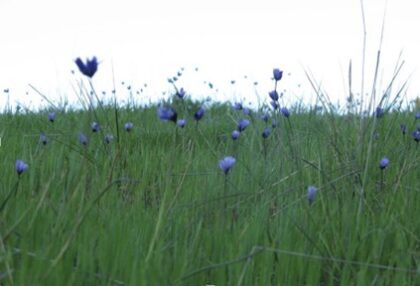
A recent genus change from Dichelostemma to Dipterostemon has inspired the common name change from blue dicks to blue dips, which is preferable if you’re leading wildflower hikes with elementary school students. They grow slowly, from corms, and usually lose their leaves by flowering time.
Symbolism: rebirth and revitalization, echoing the symbolism of other early appearing flowers
Ecological benefits: Flowers provide food for hummingbirds, bees, and butterflies. The fleshy corms are a staple in the traditional Native American diet.
Habitat role/garden application: Grows well in sunny open areas; they prefer some drainage, but that can be achieved with raised beds or soil amendment. Like most plants growing from bulbs/corms, they do not appreciate summer irrigation.
Blue dips are available in several nurseries, and look great in a border or meadow with buttercups. Like buttercups, they are summer deciduous, so consider planting them with natives that stay green through summer and fall such as iris, violets, penstemon, or California goldenrod. Plant blue dips in groups for the most dramatic effect.
Unfortunately, many smaller meadow species in our area often get plowed over to make way for shopping malls, parking lots, and even dog parks. Bring some local habitat into your garden space and plant some of these lovely natives.
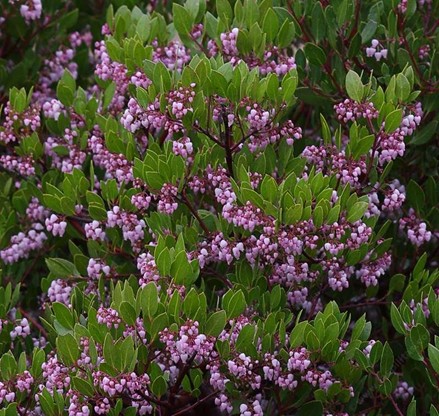
Manzanita species (Arctostaphylos ssp.)
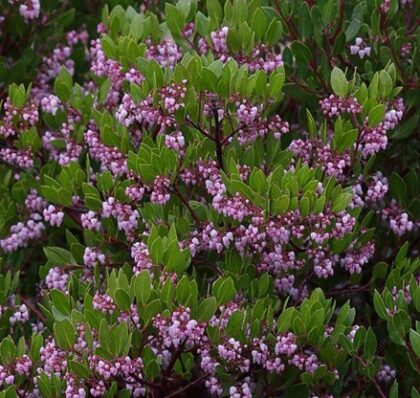
Photo: Las Pilitas Nursery
Manzanita, named in Spanish for its fruits which resemble “little apples”, is a very diverse genus that has evolved to survive in a wide variety of habitats. With its twisting branches, reddish-brown peeling bark, evergreen leaves, and clusters of white to pink urn-shaped flowers, it’s a captivating beauty of the California landscape.
Symbolism: strength, resilience, adaptability
Ecological benefits: Manzanita species are highly drought tolerant. They provide shelter for birds, insects, and mammals. The flowers attract a wide variety of pollinators, and birds and small mammals feed on the berries. Its deep roots can help control erosion, and its symbiotic relationship with nitrogen fixing soil bacteria enriches the greater ecosystem in which it lives.
In traditional Native American ceremonies, the burned branches are used in purification rites.
The bark has been used medicinally to create an astringent, and also to create tools and religious artefacts.
Habitat role/garden application: The colorful, flowing branches of manzanita shrubs provide structural elegance to the garden. Most manzanitas prefer full to part sun. There are so many hybrid varieties of manzanita in different sizes and habits, that you should be able to find one that suits your garden specifics. They’re somewhat slow growing, but are well worth the wait.
Bringing Native Habitat to Your Garden
By honoring tradition, respecting the present, and planting for the future, we ensure these native beauties remain part of Sonoma’s natural heritage. Whether you plant buttercups, blue dips, or manzanitas, you contribute to a more resilient and biodiverse landscape. Why not try out some of our lovely California natives in your garden?
All photos © Hannah Aclufi 2025 unless noted




Be First to Comment