
Acquisition of SOS Could Bring Long Term Valley Benefits
By David Bolling
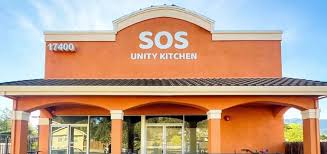
While all may not be complete unity at the SOS Unity Kitchen – whose singular mission is to feed the hungry in Sonoma Valley – the final outcome of a recently negotiated marriage with Petaluma’s Sonoma Family Meal was probably the best thing for both organizations and the food-insecure constituencies they serve.
Formally revealed in a press release on August 25, the ownership change (viewed by some critics as a shotgun marriage) was candidly described by SFM executive director Whitney Reuling who told the Sun, “Let’s be honest, it’s an acquisition.” In other words, not a co-equal merger.
That fact was not warmly received by SOS longtime executive director and passionate protector Kathy King, who resigned in protest once the shape of the transition was clear, as did board member and former Sonoma Mayor Madolyn Agrimonte, who protested publicly through press releases to local media and an address to the Sonoma City Council.
But while the loss of local ownership may have felt to some like betrayal, the overwhelming logic of the move is hard to dispute.
Consider these cold hard facts: According to Census Bureau data reviewed by the California Budget and Policy Center, a Sacramento think tank, California is currently tied with Louisiana for the highest poverty rate in the nation. Even with the fourth largest economy in the world, 17.7 percent of Californians – equaling seven million people – are living below the poverty line. Which reflects, among other things, the exceptionally high cost of food and housing in California.
Many analysts expect the figure to get even worse when the full impact of President Trump’s “Big Beautiful Bill” arrives, reducing health care coverage for 10 million people nationwide, while some three million fewer Americans will receive food benefits from SNAP, the Supplemental Nutritional Assistance Program.
The appearance of Sonoma Family Meal at the doorstep of the SOS Unity Kitchen, on Highway12 in the Springs, was no coincidence. The genesis of SFM’s involvement was, ironically, a request from SOS for financial assistance from The Catalyst Fund, the Sonoma nonprofit founded during the pandemic in 2020 to coordinate funds, strategies and initiatives for surviving Covid 19.
From the success of that initiative, which raised and distributed $1.3 million, there evolved a Catalyst Fund decision in 2023 to comprehensively address the issue of food insecurity in Sonoma Valley. Part of that effort involved sending social entrepreneur Elise Gonzales around the country as a “Food Network Weaver,” to research how other communities were addressing food insecurity, and how to weave collaborative connections among a diverse variety of agencies. One of her core conclusions was that the old “soup kitchen” model, harking back to the days of the Great Depression, “is no longer financially sustainable, across the nation. Just charity alone doesn’t work. The challenge now is how to create new revenue streams.” And the answer, says Gonzales, is new collaborations, shared staff, consolidation of business plans, creating partnerships for economies of scale and increased outreach. So that’s what Catalyst advised SOS to do, and helped negotiate the union.
This is not to suggest that SOS and its Unity Kitchen was failing in its mission. In 2024, they provided 76,000 meals. Do the math and you come up with close to 300 meals a day, almost 1,500 meals per five-day week, and more than 6,300 meals a month. That’s an enormous achievement, for which countless SOS friends, donors and volunteers credit Kathy King, the resigned executive director who gave a big slice of her life to SOS, and the various iterations it evolved into.
And yet, with all that success, SOS/Unity kitchen was more or less lurching from cash-flow crisis to cash-flow crisis, always about to run out of money without a permanent, reliable revenue stream. And the need was never going away.
Food insecurity is an official term from the USDA, defined as the experience of not having enough adequate food or not knowing where the next meal will come from. In Sonoma Valley, according to Elise Gonzales’ research, there are currently 7,200 people suffering from food insecurity. Of that number, roughly 3,400 are Latinos and 1,800 are seniors at risk.
It’s a growing problem in the U.S., where 47 million people, including 13 million children, experience food insecurity annually. And millions more who do not meet the definition of food insecure – turn to the charitable food sector for support.
So, with guidance from the Catalyst Fund, and with the benefit of the research conducted by Elise Gonzales, the SOS Unity Kitchen was advised to seek a working relationship with another compatible food insecurity organization to achieve more reliable cash flow and corporate efficiency.
Enter Sonoma Family Meal, an offshoot of the 2017 catastrophic wildfire that burned thousands of homes in Santa Rosa in one never-forgotten night.
The original plan of Sonoma Family Meal, inspired by Press-Democrat food editor Heather Irwin, was to lean on the county’s abundant restaurateurs to leap into the breach and cook like crazy for the firefighters, the police, the utility workers, and the thousands of residents suddenly without homes or food. And they did, but it was clear to everyone that need transcended the periodic horror of a natural catastrophe.
So in time, the organization’s origins in the restaurant industry begat a restaurant-based business model that now generates reliable cash flow. With a series of increasingly sophisticated professional kitchens, SFM engineered a training program for budding culinary workers, drawn largely from disadvantaged youth. With training in everything from food prep, serving, bussing to frontline cooking, trainees can matriculate into the local food industry. The SFM business model incorporates catering, contract meals, cooking classes, pop-up dinners, and kitchen rentals, all of which offer trainees real-world food business experience while simultaneously generating revenue to offset costs. Those program features will now be incorporated into Sonoma’s Unity Kitchen, a name that will be preserved, albeit now as SFM Unity Kitchen.
SFM Executive Director Reuling says the acquisition of SOS is a win for everyone involved.
“We’re committed to preserving the mission of Unity Kitchen. It’s a hard job and we’re going to need support from the community at large to do it well. There are a lot of partners in Sonoma Valley who want to make sure that people get fed. We will do our best to cultivate the help of this incredibly committed community.”
And like almost everyone else involved in grassroots philanthropy, Reuling sees the immediate future through a political glass darkly. “Food insecurity numbers are going to skyrocket,” she predicts, warning that the Trump legislative agenda “is going to be catastrophic for those who are food insecure.”
Next up in the Sun: Where the free food is and how to get it.






Be First to Comment