
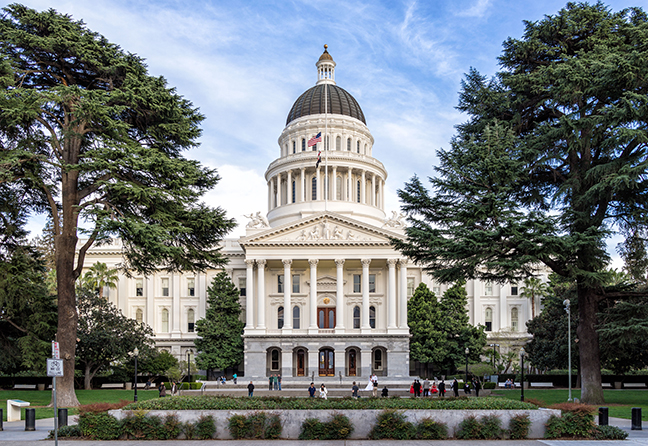
A dramatic overhaul of local government meeting requirements
By Johnnie Pina, legislative advocate (governance) California League of Cities
Gov. Gavin Newsom has signed SB 707 (Durazo), a dramatic overhaul of local government meeting requirements, into law. Although the bill incorporates language from Cal Cities’ sponsored legislation and is aimed at improving transparency and public engagement, it also creates significant operational, fiscal, and legal challenges for cities. Among other provisions, SB 707 adds new remote public comment, translation, and outreach requirements, creates new exemptions from certain teleconferencing rules, and extends several sunsetting Brown Act laws.
Many of the bill’s mandates apply unevenly across cities and will generate substantial new costs for audiovisual equipment, translation services, and staff time — all without reimbursement. Notably, the state itself remains exempt from many of the same requirements it is imposing on local governments.
Below is a summary of the bill.
Note: SB 707 is nuanced and highly fact-specific. Moreover, many of the obligations imposed by the law will likely be difficult to implement. Ultimately, agencies should not assume that their current Brown Act protocols will satisfy all of SB 707’s requirements.
“Eligible legislative bodies” defined
While SB 707 generally applies to all cities, certain portions only apply to newly coined “eligible legislative bodies,” which include the following:
- A city council of a city with a population of 30,000 or more.
- A city council of a city located in a county with a population of 600,000 or more.
Beginning July 1, 2026, eligible legislative bodies will need to meet additional requirements under the Brown Act, as described below.
Information on general Brown Act changes begins on the section titled “Alternative teleconferencing rules.”
Remote public comments
An eligible legislative body must provide the public with a way to attend meetings and comment via a “two-way telephonic” or “two-way audiovisual platform.”
The bill describes a two-way telephonic service as a one “that does not require internet access and allows participants to dial a telephone number to listen and verbally participate.” A two-way audiovisual platform is defined as an “online platform that provides participants with the ability to participate in a meeting via both an interactive video conference and a two-way telephonic service.”
Internet service interruptions
An eligible legislative body must adopt, at a noticed public meeting in open session (not on consent), a policy on disruptions to telephonic or internet service. The policy must include the following:
- If a disruption prevents public participation through two-way telephonic or audiovisual platforms, the body shall recess open session for at least one hour and attempt in “good faith” to restore service.
- The body may meet in closed session during the recess.
Open session may not reconvene until at least one hour has passed or service is restored, whichever comes first. - If service is not restored, the body may resume only after adopting, by roll call vote, a finding that good faith efforts were made and that continuing the meeting outweighs the public’s interest in remote access.
Reasonable translation assistance
An eligible legislative body shall “reasonably assist” members of the public who wish to translate a public meeting into any language or wish to receive an interpretation provided by another member of the public, so long as it does not disrupt the meeting.
An eligible legislative body shall publicize how to request assistance. Assistance may include any of the following, as determined by the eligible legislative body:
- Arranging space for one or more interpreters at the meeting location.
- Allowing extra time during the meeting for interpretation to occur.
- Ensuring participants may utilize their personal equipment or reasonably access facilities for participants to access commercially available interpretation services.
- This section does not actually require an eligible legislative body to provide interpretation services itself. Nor is the eligible legislative body responsible for the content or accuracy of any interpretation facilitated, assisted with, or provided.
The bill does not define what “reasonable” means.
City-provided agenda translations
The agenda for each meeting of an eligible legislative body shall be translated into all “applicable languages.” Each translation shall include instructions in the applicable language describing how to join the meeting by the telephonic or internet-based service option, including any requirements for registering public comment.
The accessible internet webpage shall be translated into all applicable languages. Each translation shall be accessible through a prominent direct link posted on the primary website home page of the eligible legislative body.
A translation made using a digital translation service shall satisfy the requirements. The bill expressly states that the agenda translation requirement does not apply to the entire agenda packet.
“Applicable languages” defined
For purposes of this bill, “applicable languages” means languages, according to data from the U.S. Census Bureau’s most recent American Community Survey, spoken jointly by 20% or more of the city’s population, provided that 20% or more of the population that speaks that language speaks English less than “very well.”
For cities, the applicable population shall be determined pursuant to data from the U.S. Census Bureau’s most recent American Community Survey.
- For an eligible legislative body, the applicable population shall be the population of the city.
- If more than three languages meet the criteria, “applicable languages” shall mean the three languages that are spoken by the largest percentage of the population.
- An eligible legislative body may determine the applicable languages based upon a source other than the most recent American Community Survey if it makes a finding, based upon substantial evidence, that the other source provides equally or more reliable data for the territory over which the eligible legislative body exercises jurisdiction.
Local outreach
An eligible legislative body must take the following steps to encourage public participation in meetings:
- Provide a system to electronically accept and fulfill agenda requests (via email or an agenda management platform), with a prominent link on the body’s home page.
- Maintain a dedicated, accessible webpage for public meetings that includes or links to:
A general explanation of the meeting process.
Instructions for submitting oral (in-person or remote) or written public comment.
A calendar, with the date, time, and location of each meeting.
Posted agendas.
A link to this webpage from the body’s home page.
Make reasonable efforts to invite groups that do not traditionally participate in meetings.
No legal action may be brought against the body for failing to provide information to a specific group.
Physical public posting location
An eligible legislative body shall make available a physical location that is freely accessible to the public in reasonable proximity to the physical location where council agendas and translations are posted. Members of the public must be allowed to post additional translations of the council agenda in that location.
An eligible legislative body is not responsible for the content or accuracy of any translation provided pursuant to this subdivision.
The bill also states that no action shall be commenced or maintained against an eligible legislative body arising from the content, accuracy, posting, or removal of any translation provided by the eligible legislative body or posted by any person pursuant to this subdivision.
The following section is on general amendments to the Brown Act that are applicable to all cities, not only “eligible legislative bodies.”
Alternative teleconferencing rules
SB 707 extends the existing AB 2449 alternative teleconferencing provisions until Jan. 1, 2030. AB 2449 authorizes limited remote participation from undisclosed locations due to “just cause” and “emergency circumstances.” As related to AB 2449, it also:
- Allows members with certain military service obligations that result in them being unable to attend in person to use this provision.
- Removes the requirement for the legislative body to approve each instance a member wants to participate remotely for “emergency circumstances,” and applies the same rules for participating remotely for “just cause” to “emergency circumstances.”
- Requires that the minutes for the meeting identify the specific provision that each member relied upon to participate remotely. This subdivision shall not be construed to require the member to disclose any medical diagnosis, disability, or any personal medical information that is otherwise exempt under existing law.
- Additionally, the bill confirms that members of legislative bodies with physical or mental disabilities may participate remotely per the Americans with Disabilities Act and count towards any applicable in-person quorum requirements.
Subsidiary (advisory) bodies
Alternative teleconferencing is authorized for an “eligible subsidiary body,” defined as one that:
- Serves exclusively in an advisory role.
- Cannot take final action on legislation, regulations, contracts, licenses, permits, entitlements, grants, or fund allocations.
- Does not have primary subject matter jurisdiction over elections, budgets, police oversight, privacy, restricting access to library materials, taxes, or related spending proposals.
- These bodies may include elected officials, non-elected officials, or both.
An eligible subsidiary body may request to present recommendations to its legislative body, which must hold a discussion at a regular meeting within 60 days (or the next regular meeting). This discussion cannot be on consent, but may be combined with the legislative body’s subsequent findings for the next 12 months.
A legislative body may not act on recommendations until the meeting following the discussion.
To use teleconferencing pursuant to this section, the legislative body that established the eligible subsidiary body must make specific findings by majority vote. The legislative body that created the eligible subsidiary body may prohibit the eligible subsidiary body from using teleconferencing pursuant to this section at any time.
Multijurisdictional bodies teleconferencing
Alternative teleconferencing for an eligible multijurisdictional body is authorized if a member participates remotely only when their location is more than 20 miles each way from the meeting location and the member receives no compensation other than reimbursement for actual and necessary expenses.
Neighborhood councils teleconferencing
An eligible neighborhood council may conduct a teleconference meeting if it complies with specific requirements.
Emergency teleconferencing
Teleconferencing flexibility is expanded during state-declared emergencies to include local emergencies.
Social media usage
Existing law allows members to engage in separate conversations or communications outside of a meeting using social media for specified purposes, provided, among other things, that a majority of the members do not use the platform to discuss business of a specific nature that is within the subject matter jurisdiction of the legislative body. This bill makes this exception indefinite.
Zoom bombing
Existing law authorizes the presiding member of the legislative body conducting a meeting or their designee to remove an individual for disrupting the meeting. This bill specifies that these rules are also applicable to any teleconferenced meeting.
Open meeting compensation discussions
Existing law requires legislative bodies to provide oral summaries of compensation recommendations for certain employees before taking final action; this bill adds department heads to that requirement.
Agendizing items previously considered by committee
Existing law specifies that an agenda is not required to provide an opportunity for members of the public to address the legislative body on any item that has already been considered by a committee composed of members of the legislative body.
This bill specifies that, with limited exception, such an opportunity must be provided when the item has been substantially changed since the committee heard the item; a quorum of the committee members did not originally participate; or the committee has primary subject matter jurisdiction on elections, budgets, police oversight, privacy, removing from, or restricting access to, materials available in public libraries, taxes, or related spending proposals.
Copy of the Brown Act
An agency must provide a copy of the Brown Act to any person elected or appointed to serve as a member of a legislative body of the local agency.





Having reviewed the actual language of SB 707. Counties with a population of more than 30,000 are also included in the definition of “Eligible legislative body”. From SB 707
(2) “Eligible legislative body” means any of the following:
(B) A county board of supervisors of a county, or city and county, with a population of 30,000 or more.
https://leginfo.legislature.ca.gov/faces/billCompareClient.xhtml?bill_id=202520260SB707&showamends=false
It would be nice if the article identified which local bodies are included in each category. It appears the City of Sonoma is not an “eligible legislative body”, but the county is. As for “eligible subsidiary body”, it appears this applies to the North Sonoma Valley MAC and the Springs MAC. What is not clear is if the SVCAC is a “eligible subsidiary body,” or not. It may not be. It may be instead an “eligible multijurisdictional body”, instead.