
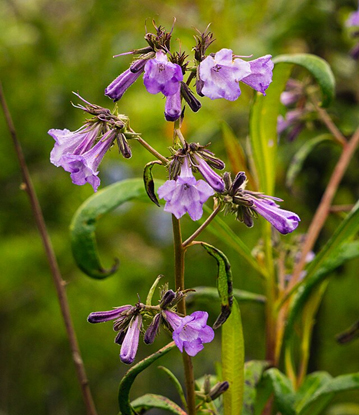
Honoring the Old, Respecting the Present, & Planting for the Future
Hannah Aclufi, Vincent Distrola, Hannah Aclufi, and Sedra Nathan
The winter rains have fully subsided, and Sonoma County’s blooms are starting to show off. While we still may get April flowers, there are an abundance of flowers out right now!
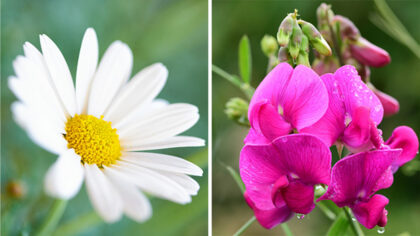
Traditionally, April is associated with daisy and sweet pea. Daisy is seen as a symbol of innocence, purity, and, love and has a longstanding tradition in Norse mythology. For Freyja, the goddess of love, beauty, and fertility, the daisy was her sacred flower and daisies are common gifts to new mothers to honor the innocence and purity of their newborn. Sweet pea is associated with gratitude, friendship, and appreciation. Becoming popular during the Victorian Era, sweet pea could often be found at events celebrating communion, elopement, and large gatherings of like-minded people.
A Modern California Perspective
In Sonoma County, our hillsides are alive with wildflowers and perennial plants in April. This month, you can find the giant umbels of Cow Parsnip, the yellow allure of Mule’s Ear, and the delicate white Yerba Santa flowers in full bloom.
Heracleum maximum (Cow Parsnip)
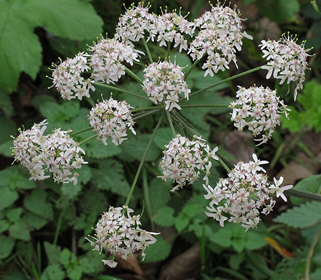
You can find cow parsnip growing in wet areas; in full sun growing along our coastline or in deep shady spots in interior spots such as Sonoma Mountain. A member of the carrot family, this plant is easy to recognize from its huge foliage and the flowers that sit on top of a thick umbel.
Symbolism = Strength and power; this large blooming flower is a show-stopper, and our only native Heracleum in North America.
Ecological benefits = Cow parsnip is a great food source for agricultural animals as well as our native fauna such as black bears. This is also the host plant for the black swallowtail butterfly and the anise swallowtail butterfly.
Wyethia sp. (Mule’s Ears)
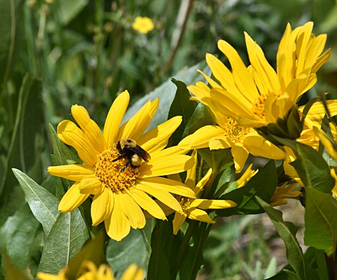
Mule’s Ear is a wonderful, very showy native plant in the sunflower family. It is easy to spot this plant, as the big, bright yellow flower is hard to miss, especially as the annual grass starts to die back around them. These plants can be found in a variety of habitats but prefer dry, rocky areas in the full sun. They can also do well in the dappled shade of live oak trees.
Symbolism = Good luck, positive change, moving forward; this native sunflower is a great reminder of the changing of seasons, and the excitement of the coming months.
Ecological benefits = A giant sunflower, this plant provides an excellent source of nectar for butterflies such as the monarch. These are a fire-adapted species, and fire increases the chance of blooming in grasslands.
Eriodictyon californicum (Yerba Santa)
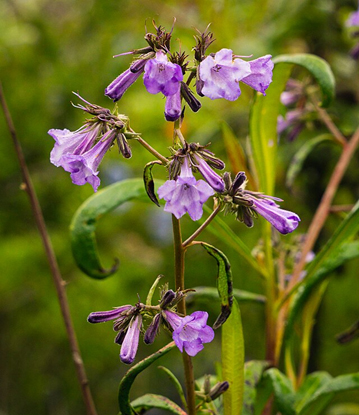
Yerba Santa is a common shrub that grows in our chaparral habitat on hot, dry slopes of heavy clay soil. The dark green/black resinous leaves are mostly left alone by wildlife and instead have historically been used by indigenous people to treat respiratory illnesses. It spreads via rhizome, and can often be found growing in extremely large clumps with little to no plants growing underneath their thickets.
Symbolism = Healing and well regards; traditionally used as a medicine for healing respiratory ailments, yerba santa is a shining example of the healing powers plants can provide for us.
Ecological benefits = Yerba Santa supports a large number of native bees, and can be used as forage for black-tailed deer.
So, while you’re out enjoying the milder weather this April take note of some of our lesser known California native plants appearing in the parks, gardens, and roadsides.
Happy botanizing!
Vincent Distrola, Hannah Aclufi, and Sedra Nathan




Be First to Comment