
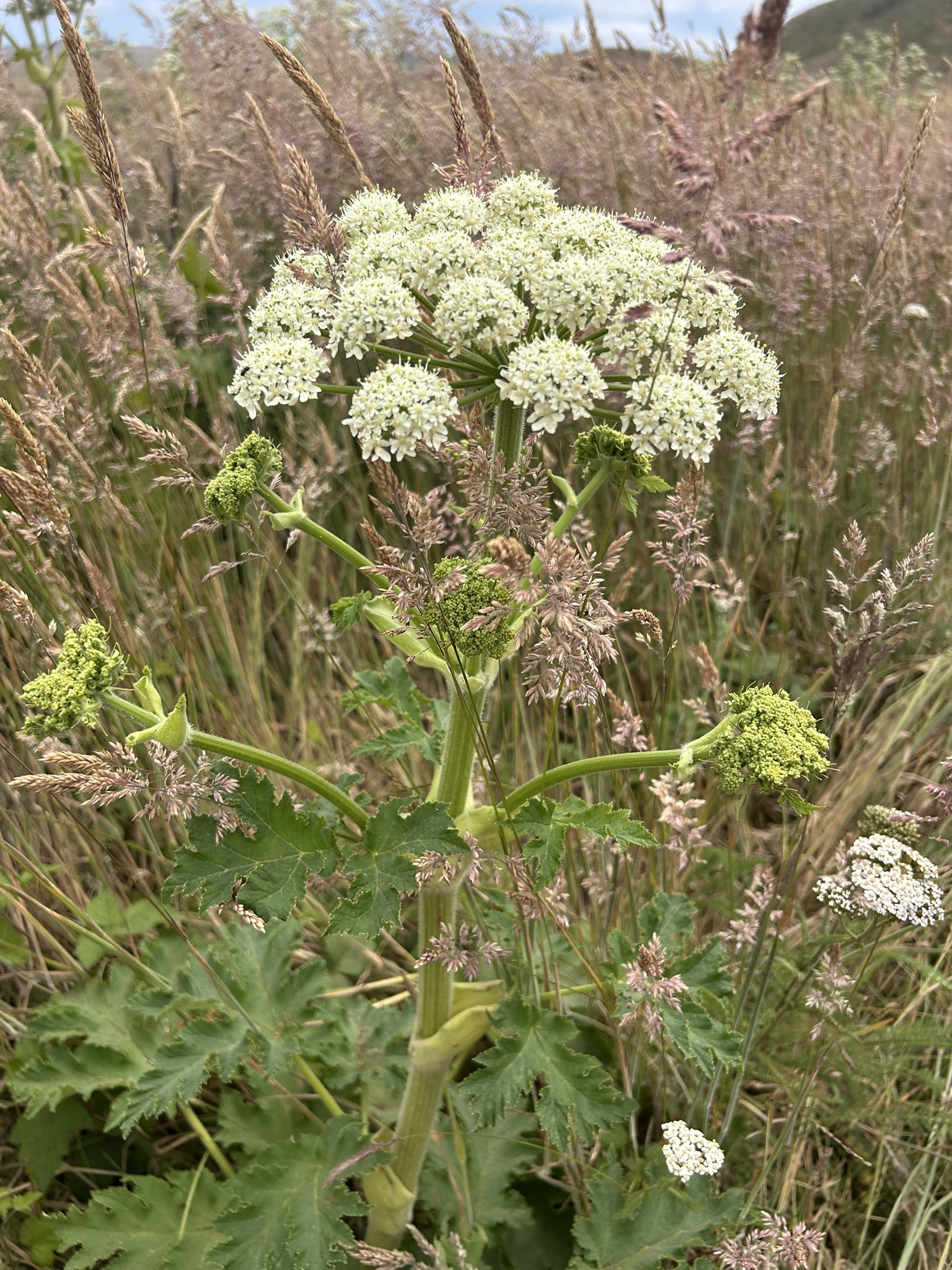
Three weedy plants that we love to hate seem to be everywhere right now: dandelions, yellow star thistle and poison hemlock. The first two dot sun-dried hillsides like lemon drops and stickery jujubes, though certainly not as sweet! Poison hemlock towers up to eight feet high with white umbrella-like clusters of flowers, called umbels. All three are non-native invasive species.
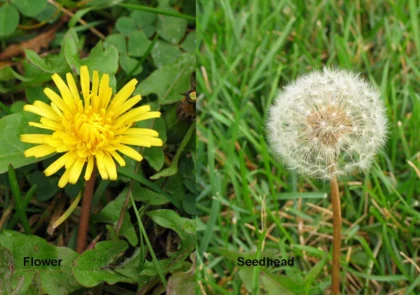
Dandelions are the bane of every lawn, and they also proliferate far and wide beyond the confines of gardens and yards. This year a bumper crop of bright yellow dandelions has spread across just about every expanse of open, sunlit soil from the Valley floor to the top of Hood Mountain. Such free-ranging displays of color feel more enriching than annoying to me.
The familiar common dandelion flower (Taraxacum officinale) consists of tiny florets that compose the flower head, like other plants in the daisy family (Asteraceae). And we probably all recognize the puffy balls formed to disperse seeds by the wind, or a gentle blow from a child’s pursed lips.
The rain and sun this season have been just right for dandelions to thrive. They have also been helped by shifts in weed management away from spraying of toxic chemicals toward mowing, hand-weeding and more holistic approaches. That’s good for honeybees, bumblebees and some other pollinators that feed on dandelions when other sources may be scarce. And as lawns are removed in favor of native plants, dandelions must spread to new territory to survive.
Thickets of yellow star thistle are just nasty. Its stickers stab and hurt. It takes over large swaths of pastures and hillsides by growing densely and emitting chemicals into the soil that stops other plants from gaining a foothold. It blocks wildlife and makes horses sick. The invader from the Mediterranean thrives in our climate and has taken over about 15 million acres of land in California, according to Grassroots Ecology, based in Palo Alto.
Although honeybees and other pollinators may benefit from yellow star thistle (Centaurea solstitialis – in the Aster family), and that it is sometimes used for medicinal purposes, nobody really likes it and most of us hate it. Best to avoid it at all costs. What’s worse is that the only effective way to rid the land of it is to mow, hand-pull and/or even burn it. Kudos to those who have taken up such a Herculean task!
On a recent hike, I got a bit too close up to some poison hemlock while trying to identify it by its unpleasant smell and somehow touched it with my lips. Immediately my lips started feeling raw and a bad taste started up. Yup, poison hemlock! The symptoms resolved shortly, so it was not enough to do me harm, but prompted me to get to know that plant better.
Non-native Poison hemlock (Conium maculatum) grows tall and menacingly with hairless, smooth hollow stems blotched with maroon, reddish or purplish spots. The blotches on the stems are the best way to differentiate it from other look-alikes. The white flower bunches are similar to other local plants in the carrot or parsley family, such as harmless Queen Anne’s Lace or wild carrot (Daucus carota), which has a hairy central stem and usually a single flower cluster. Cow parsnip (Heracleum maximum) also looks similar but grows bigger and wider, with large lobed leaves. But its sap can be toxic.
Then I find out that native Spotted Water Hemlock (Cicuta maculata) is even more toxic than the non-native variety. It looks very similar with its white, umbrella-shaped flowers, but its leaves are not as lacy, and its leaflets are larger and toothed. Western Water Hemlock (Cicuta douglasii) also grows around here and is super poisonous. Both these hemlocks grow in wetlands, marshes and near creeks. And finally, wild parsnip (Pastinaca sativa) joins the poisonous parade as another highly invasive and toxic plant, with bright yellow flowers and green stems without splotches. Stay clear of all of these common look-alikes!
My conclusion: Sometimes it is better not to know what you don’t know!



Be First to Comment