
Water and Economic Sustainability
Then there’s sustainability in an economic context. Presently, Sonoma County’s economy is both dependent on, and intertwined with, wine grape farming and wine production. But who can say this will always be so? Prior to wine grapes, Sonoma agriculture centered on other crops, including apples, olives, nuts and berries. Wine grapes are the cash crop now, but time and circumstance might change that as before.
Local economies, like national economies, are subject to change. This we know. As Sonoma and Northern California become more and more tourist-focused destinations, the County and the region will enjoy that tourist-dependent economy. Sonoma is assuredly a destination, but in our increasingly shrinking world of times and distances it isn’t the only one. U.S. economies have run boom and bust over the decades and there’s no reason to think that won’t continue. If there’s any certainty, it’s that economies fluctuate, and what is now Sonoma’s economic mainstay may not be tomorrow’s.
The water factor
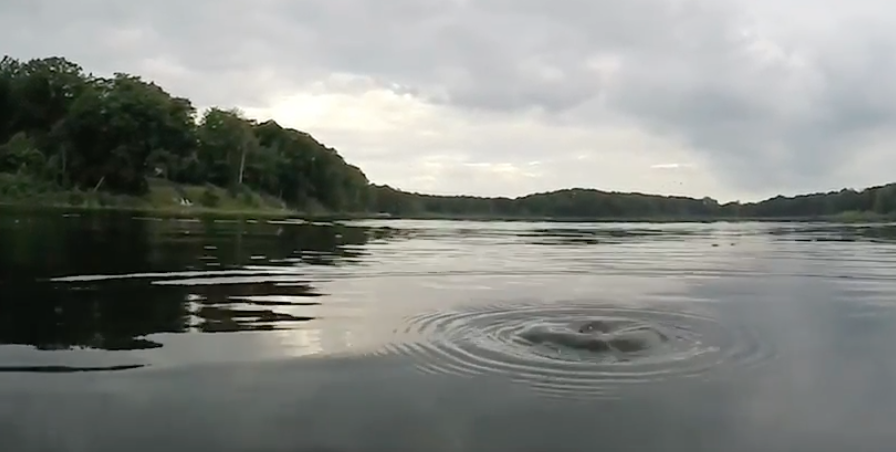
The biggest part of the equation left out by the wine industry’s claim of sustainability is the ongoing availability of water. Evidence abounds that, as the climate changes so will the mountain snow packs, rainfall and groundwater intertwined with it. Rivers and lakes dry out, either from natural causes, human overuse or both. There’s no reason to believe it won’t (and isn’t) happening here.
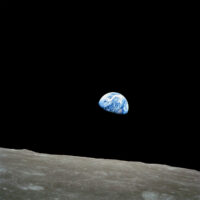
Climate change is impacting our water, land and air. One example is the ocean’s depletion of fish. Given the profound changes on track to come to the Earth’s plant and animal (that’s us) life, any claim of long term sustainability, by any human enterprise, cannot help but be disregarded as fatuous, and a flat- out fabrication.
In California, we are now living in the time of less water. This could be a temporary condition, or it could be the new normal, as former Governor Jerry Brown suggested. All indications point to the latter as we move further along and deeper into climate change and global warming, especially here on the West Coast. In this time of water scarcity, we must make intelligent and just decisions as to its use and distribution.
Potable water is a finite resource. It has always been thus, and now, more than ever before in human history, we must come to grips with this stark reality.
The first priority in regulating water use must be its use for human health and welfare. It is a public trust. No life exists for very long without it – the ultimate failure in sustainability. As water is essential for human existence, should it be a commodity available only for those who can afford it and access it? Is it something that should be privately owned by certain individuals or entities and denied to others? Or should we consider water a necessity for our common survival, as it most definitely is?
One startling irony in California is that, in the midst of our dealing with the ramifications of ongoing drought, the sale of water to corporations for global distribution – the Nestle Company being only one example – continues apace. The state is about to slap mandatory water cutback regulations on its citizenry, and all the while export it for some entity’s profit. If there’s a shred of sense in this, it needs to be pointed out to me.
As the climate changes, and potable water becomes scarcer, we (humans) who have relegated to ourselves dominion over all of nature, will have to answer this and other questions if we want to address what is truly sustainable in our profoundly shifting natural and societal world. We cannot dodge this for long, as time is catching up with us. Claims that we can have it all – economic, environmental and social stability and equanimity within the shrinking boundaries of our watered world – are simply a pipe dream not based in reality.
“Somewhere along the way, environmentalism stopped being about protecting the Earth, and it became about ‘sustainability,’ which is about continuing this culture that’s killing the planet.” — Derrick Jensen, noted author




Be First to Comment