
By Lynne Joiner
Three years ago, on August 23, 2023, Maui went up in flames. The old historic town of Lahaina burned to ash in a mere 17 minutes. The slopes of Haleakala around Kula, that were covered in flammable non-native grasses, were also quickly incinerated.
Now, as Maui approaches the third anniversary of the devastating wildfires, re-building has barely begun.
In late May, I visited Maui as part of a Presbyterian Disaster Relief Mission to help Habitat for Humanity rebuild homes in Lahaina and to help the Kula Community Watershed Alliance (KCWA) restore the Kula hillsides on the slopes of the old volcano. Our group included seven members of Sonoma’s St. Andrews Presbyterian Church, plus others from Sacramento, Las Vegas and two from East Coast churches.
We were each sent a spreadsheet asking us to assess our skills – like drywall, masonry, plumbing – and to rank our experience level from one to five in each field. I only qualified for planting/ weeding, painting and preparing meals! But that was good enough for the mission.
We stayed at historic Po’Okela Church in Makawao, on the slopes of Haleakala volcano, and were greeted warmly by the pastor and church members who welcomed us with a delicious Hawaiian dinner. By 5:30 the next morning, we were up making and packing our sandwiches for lunch and getting breakfast before starting out. During the next week, our days were filled with long van rides to our work sites that gave us lots of time to get acquainted and to bond.
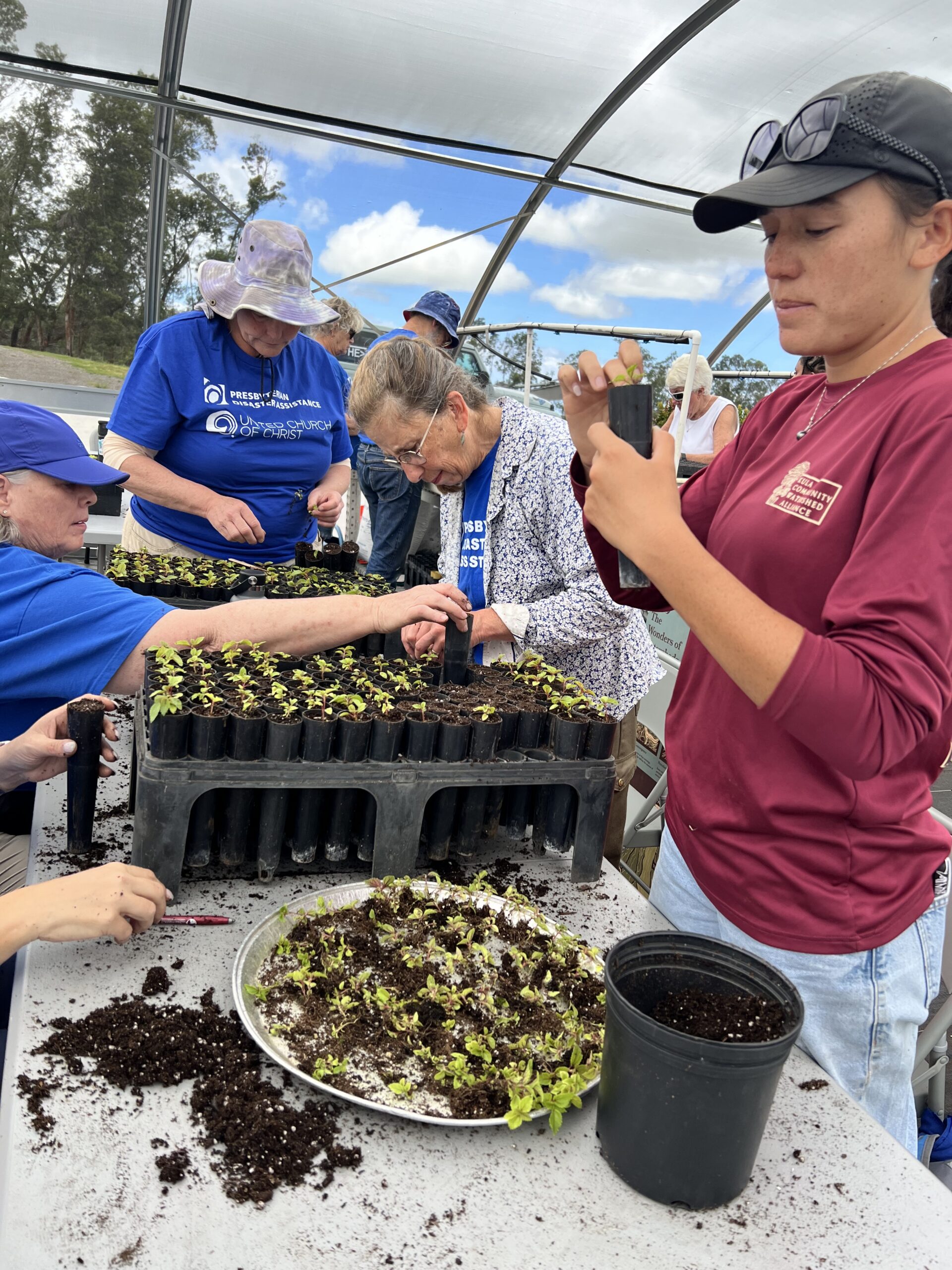
Our first efforts were focused on helping the Kula Community Watershed Alliance (KCWA) nurture native plants and remove highly flammable invasive grasses, Wattle (an invasive Australian shrub) and Eucalyptus trees. The group had painstakingly collected seeds of native plants and was coaxing them to grow inside two large screened nurseries built after the fire. We set to work with toothpicks separating the soil from the fragile roots, then gently tucking the tiny plants into tiny individual sections of garden trays. As we worked, we were told these efforts are based on traditional “mālama ʻāina,” a caring for the land with respect, humility, and a shared responsibility for the places we call home.
Once we finished putting the young seedlings into their own small cubicles, we inserted tiny irrigation tubes into their beds, and then moved into another area of the green house where progressively larger plants were being cultivated and drip irrigated. We were told our efforts helped save the alliance a month’s work of transplanting.
The next day, we hiked into the gulch and were shown how to pull out the new growth weeds and invasive plants before gently putting newly grown mature plants into the soil to prevent erosion.
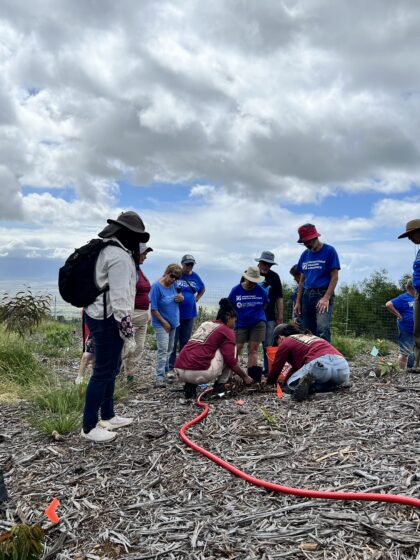
This restoration work is being done with the active participation of the 84 landowners in the area impacted by the wildfires. It was heartwarming to realize that they are developing an ongoing collaborative stewardship for 120 acres of the burn scar in their community – and really appreciated aid from volunteers like our group.
Our work days ended with a wonderful swim at a local beach before returning to Po’Okela Church to prepare dinner and to compare notes on our day. The bonding of our volunteer group of strangers had begun and would only deepen over the next week.
After two days working on the watershed restoration project, we headed to Lahaina to work with Habitat for Humanity. Ironically, the organization is helping re-build homes they had helped build, after an earlier fire in 2020 destroyed them.
It was amazing to watch giant, 2,000 pound compressed wood slabs carefully hoisted into place upon the foundations by a gigantic crane. The fire-proof slabs were developed by Boise Cascade and made the process of building easier and faster.
Soon, some of us were busy using paint rollers to put two coats of primer on the walls and ceilings before adding a final coat of paint. Other volunteers worked on putting together kitchen cabinets and measuring closets for wall boards. We worked side by side with residents who were helping rebuild their homes – and sleeping right there on site in tiny “cabins” brought in as temporary housing.
A total of 102 people died in the fire that swept through Maui in August that year. It was sobering to see the makeshift memorial, with photos of the victims standing along the roadway. We drove through the decimated town of Lahaina, with many empty blocks still waiting to be rebuilt. Miraculously, the historic Banyon tree survived the inferno and has been nursed back to health by local horticulturists. But a huge swath of historic Front Street – the heart of Lahaina – still remains fenced off.
On July 13, Hawaii’s Supreme Court finally handed down a decision against an effort by insurance companies and utilities to evade their responsibilities for the blazes. This decision now paves the way for payments totaling more than $4 billion dollars to begin being distributed to the survivors of the horrific fires that destroyed thousands of homes.
Along the roadside outside town, there’s a simple sign at the Lahaina Memorial that states, “Divisiveness and politics have no place here. This is a place to walk humbly, to grieve, to seek peace, to love, and reflect on all that we have lost.”
Sonoma resident Lynne Joiner is an award-winning broadcast journalist, news anchor, documentary filmmaker and author.


Be First to Comment