
In a famous and well -worn phrase attributed to Benjamin Franklin when asked what kind of government the Constitution gave us, he replied, “A Republic, if you can keep it”. Whether that quote is accurate is questionable, but it is indeed an accurate definition of the type of government the Founders fashioned; for its time, a unique form of governing based on the will of the people and not the dictate of a single unelected ruler.
And now, approximately 250 years after the Constitution was ratified by the then 13 colonies, we are again facing the viability of our democratic form of government as it is challenged on many fronts by the Trump Administration. This is not a unique occurrence; consider slavery, the Civil War, suffrage, segregation, continued obstacles to the right to vote in national and state elections.
Which brings us to an important TV broadcast on December 13, 2025, on MS NOW titled, “We the People: A conversation with Rachel Maddow and Timothy Snyder.” This two-hour, prime-time special, focused on “the rise of authoritarianism and how we can meet the moment” in our country. It was broadcast from an auditorium in Chicago with a live audience who were invited to participate along with the viewing public.
The inimitable Maddow began the program by introducing her companion and co-host, Timothy Snyder (historian, professor, author of “On Tyranny”), along with Chicago community leaders and activists, Baltazar Enriquez (Little Village Community Council) and Pastor Julie Contreras (United Giving Hope, Waukegan, IL). The panelists spoke from time to time about their personal experiences in utilizing whistle alerts to activate local communities about ICE agents’ imminent intrusions, and emphasizing community education and solidarity in the protection and defense of migrant populations in American towns and cities.
Maddow then singled out Chicago’s efforts in mounting collective resistance to federal incursions by the use of “whistle brigades.” These groups are being used to alert communities in a rapid response warning system, “which evolved into a mass resistance tactic spreading citywide.”
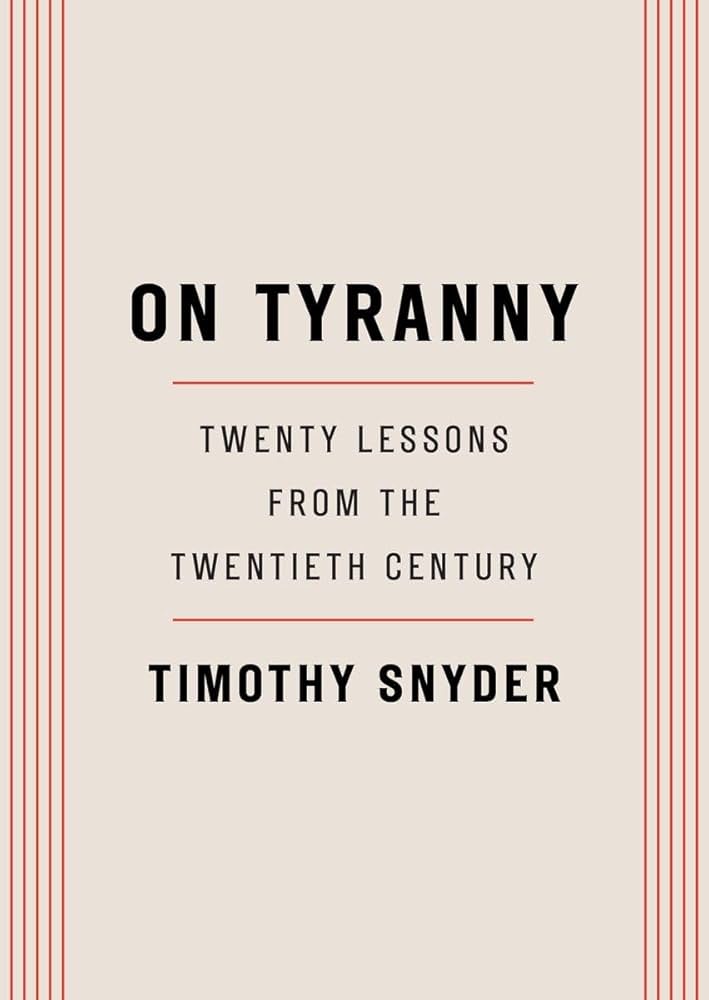
Following this, Timothy Snyder referenced what he labeled as “practical wisdom” from his seminal work, “On Tyranny,” citing provisos such as, “Do not obey in advance”, and “Be calm when the unthinkable arrives.” Snyder also expressed a cautionary note regarding “organizing vs. online activism,” by emphasizing that social media is too often neglected as a tool for social change and a way to significantly effect change in the real world.
But he cautioned against depending solely on social media to address the common ICE practice of indiscriminately rounding up, incarcerating and deporting immigrant populations without due process. Effective activism, he said, also requires the use of legal advocates to go on the offensive by filing proactive lawsuits rather than solely relying on legal defenses for those rallying against questionable ICE activities. He reminded the audience that while, “The courts are working better than expected … the Supreme Court remains … vulnerable to larger currents in society.”
Both Snyder and Maddow addressed collaboration as a necessary tactic in defending local ICE targets. Enriquez pointed out that when local police provide aid to federal agents, the result sometimes degenerates into the police “beating on the people instead of protecting us.” While Pastor Contreras, speaking for some in the faith communities emphasized, “We have to be united as one in this time if we want to save our nation’s humanity.”
To which Snyder expressed his greatest concern. “I’m actually much more worried about the republic breaking up than I am about a coast-to-coast Trump authoritarianism.”
Both Maddow and Snyder reiterated the need for “continuous, mutual work” and that winning the struggle against repression depends on not giving up, “no matter how bad circumstances seem.”
Let me close with a sentiment I lifted from the Buddhist Peace Fellowship community, which states, “Community is our path to awakening, our power-building strategy, and our best protection.” And, yes, that means getting woke, and woke means employing diversity, equity and inclusion. And if that doesn’t sit with you, move over, because that’s what’s needed and always has been.






Be First to Comment