
Understanding Auto Surveillance Cameras
By Larry Barnett
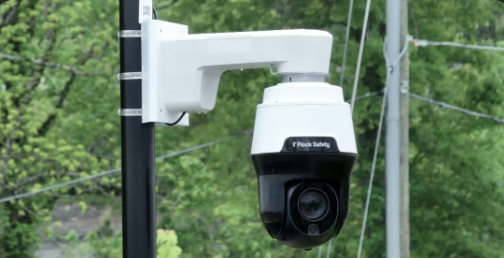
Sixteen automated license plate reader (ALPR) cameras surround the City of Sonoma, monitoring the vehicles that pass through the city. Installed in 2023, they now play a central role in solving serious crimes, many – if not most – of which are committed not by people who live here, but by people who travel to Sonoma for ill intentions like robbery, theft and worse.
Readers may remember the home invasion that took place on Wood Valley Road in September of 2025. Three residents, including two elderly home owners, were tied up by armed thieves. One resident was beaten, the house was robbed and their car was stolen. It was a frightening crime, but it was quickly solved. The perpetrators – one from Santa Rosa, the other from Lake County – were caught within hours because the stolen car’s license plates were recorded by ALPR cameras.
That crime underscores the 2023 decision made by Sonoma Police Chief Brandon Cutting, to recommend that the Sonoma City Council approve the cost and installation of the Flock ALPR camera system now in place. But the issue of improper access has recently been in the news. The City of Mountain View uses the Flock system, and access to some of the collected data was improperly granted to the federal government. That city’s system has been disabled until it can be determined exactly what happened, how, and what steps must be taken to prevent it happening again.
To explore the issue of security, public safety and the use and potential misuse of camera-collected data, the Sun recently sat down with Chief Cutting, who explained the safeguards in place that prevent the use of any license plate data by outside jurisdictions, including the federal government.
Cutting explained that Flock is one of several ALPR systems. He said the Vigilant brand was “the strongest back in 2010 or 2012. I was in Sonoma Sheriff’s Violent Crimes as a detective, and we had multiple homicides that were occurring around Sonoma County and we knew the suspects were coming from out of the area. It was then we started learning about ALPR systems in use around the country. None were in use by government in Northern California. They were used by commercial businesses in shopping center parking lots, like at REI or Toys“R”Us to curb retail theft.”
“As technology changed,” Cutting said, “the California Highway Patrol incorporated Vigilant cameras on its patrol cars. They would then get an alert on a stolen car. We started looking into that system in 2016. It was very expensive. Cameras for one car cost from ten-thousand to twenty-thousand dollars. From a violent crime perspective, I wanted the corners of the County to have license plate readers to know where we needed to look for violent offenders.”
Cutting explained that the LPRS system doesn’t provide access “to law enforcement’s stolen car data systems, but those systems generate a report every hour. We can reference that data by manually entering information on a stolen car. Vigilant incorporated the stolen car data into its system and reports if its camera has detected a stolen car. This was not really helpful to solving violent crimes, though.”
The picture changed, Cutting said, when technology allowed photographic images of license plates to be recorded and converted to digital information, instead of having to rely on Vigilant’s very expensive infrared-based system. For $50,000, the City purchased a 16-camera, image-based system from Flock, that was installed within city limits. The data compiled by the system belongs to, and access to it is controlled exclusively by, the City of Sonoma.
“Scams happen all the time,” Cutting explained. “Sometimes elder fraud includes telling victims that they must pay and the payment will be picked up at their homes. Unlike Vigilant, the Flock system is based on motion capture of the car, not just of the license plate, and if we have a description of the vehicle from a victim, we can match it to the data in the Flock system. We can search our data, and any other Flock data we have access to.”
He likened the Flock system to “having sixteen fixed-post deputies with perfect memory for roughly $50,000.” (That’s) much less than one deputy at $280,000. With multiple cameras, you can track suspects and see where they go. After analysis we determined that sixteen cameras gives us the coverage we need. Their specific locations are not revealed.”
As to concerns about data being used to track people exercising their constitutional rights, Cutting shares those concerns. “I’m not trying to intrude,” he said. “The system has been in place for roughly two years. It has been very helpful. We can use the database for anything criminal. Our rates on solving crimes have improved greatly. Homicde suspects, retail thefts, hit and runs; when cars are involved we can identify the vehicles and apprehend the criminals.”
And the use of the system? “We’ve been audited, we’re doing it well, and doing it within the law,” he noted, “and we’re using it the way we told the City Council we would use it. I don’t want to get into what’s happened in other cities that use Flock.”
Cutting said he is “one of three certified administrators of the system. We use a government secured server. The IT team in the County feels it is robust – ironclad they say – and at the highest security level you can find. Our database is ours. Flock can be granted access only by an administrator. The software and camera quality gets upgraded and improved with our permission.”
He explained that collected data is stored for only 30 days, and after that is deleted. Law enforcement agencies can request access to the Flock data to investigate a crime, and only an administrator can approve a request. The legitimacy of the request is confirmed.
“The law is very clear,” said Cutting. “No agencies outside of California have access to Flock data without a court-ordered search warrant. I’ve never been served with any such warrant. We don’t share our data with any federal agencies. We don’t cooperate with immigration related activities. Access to the system requires case numbers and is logged for audit purposes. Every city in Sonoma County has cameras now. It’s a game changer for law enforcement.”
The SUN also received the following commentary from the Inform and Educate team of Wake UP Sonoma about the surveillance cameras:
Watched on the Way Home
Automated License Plate Readers and the Future of Privacy in Sonoma
If you drive through Sonoma today, your license plate has likely been scanned, logged, and stored by an automated system you never explicitly agreed to. Automated License Plate Reader (ALPR) cameras are installed at multiple entry points and arterial roads in and around the city. These systems photograph passing vehicles, convert license plates into searchable data, and retain time-stamped records of where vehicles travel. They can also capture other visual details, such as vehicle color, bumper stickers, and parking passes.
ALPRs are usually sold to communities as a public safety tool. They can help recover stolen vehicles or identify suspects after serious crimes. But what is often downplayed is the tradeoff. At scale, ALPRs do not merely observe isolated moments in public. They create a persistent, searchable record of ordinary people’s movements – where they go, how often, and when.
That distinction matters. Courts have long recognized that while a single observation in public may be permissible, comprehensive tracking over time can cross a constitutional line. In Carpenter v. United States (2018), the Supreme Court rejected the idea that people surrender all privacy protections by venturing into public, warning against “near perfect surveillance” that reveals the “whole of a person’s movements.” That reasoning applies directly to citywide ALPR networks.
In Sonoma, the concern is not one camera on one corner. It is the accumulation of data from many cameras operating continuously, feeding into vendor-controlled platforms designed for easy sharing. Once installed, these systems quietly normalize mass surveillance.
ALPR systems are built to scale. As more cameras are added, the network becomes exponentially more revealing. Legal scholars describe this as a “mosaic,” countless small data points that together expose deeply personal patterns – commutes, medical visits, political meetings and protests, religious services, and social relationships.
Nationwide, law enforcement agencies scan billions of license plates each year, the vast majority belonging to people not suspected of any crime. This dragnet approach erodes traditional limits on police monitoring, such as cost, time, and human judgment.
ALPR vendors often claim that local agencies fully control their data. In practice, audits and investigative reporting show that data sharing is frequently broader than residents are told –sometimes enabled by default, sometimes misunderstood by local officials.
This is especially troubling in California, where state law restricts sharing ALPR data with out-of-state agencies. Yet multiple cities have discovered their data was accessed far beyond approved boundaries. Particularly alarming are reports of indirect access by federal immigration authorities through local law enforcement “partners,” undermining sanctuary policies and chilling entire communities
Three Northern California cities – Santa Cruz, Mountain View, and Los Altos Hills – have recently terminated or paused ALPR contracts after discovering unauthorized access, policy violations, or failures of vendor transparency.
ALPR systems rely on optical character recognition and database matching – both inherently error-prone. Plates are misread, databases are outdated. Similar characters such as O and 0, or 2 and 7, are easily confused. When errors occur, the consequences are not abstract.
Across the country, innocent drivers have been stopped at gunpoint, families forced onto hot pavement, and children handcuffed because an ALPR system falsely flagged a vehicle as stolen. In one widely-reported Colorado case, a family received a multi-million-dollar settlement after an armed stop triggered by an ALPR error involving their young child.
At scale, these errors are not anomalies—they are inevitable.
Sonoma is a small city where civic trust matters. When residents learn that their movements are being recorded and potentially shared, confidence in local governance erodes.
As Santa Cruz Mayor Fred Keeley said, when his city terminated its ALPR contract, “We trust our police. We don’t trust the company.” Public safety depends on legitimacy, and surveillance that operates quietly in the background without robust consent and oversight undermines that legitimacy.
ALPR programs are policy choices, not inevitabilities. Residents can insist the city publicly disclose camera locations; what data is collected and how long it is retained; which agencies have access, and under what conditions; how audits are conducted, and by whom.
Transparency should not require public records requests or investigative journalism.
Private meetings with Council Members are often more effective than public debate alone. A 15-minute conversation can humanize the issue and move it beyond abstractions. Bring a concise summary of concerns: constitutional risk, data sharing, false positives, and examples from nearby cities that have walked away from these contracts.
Public comment creates an official record and signals that constituents are paying attention. Emphasize that this is not an anti-police position – it is a pro-privacy, pro-accountability stance rooted in community trust.
Sonoma still has a choice. Other California cities have shown that when the risks of mass surveillance outweigh the benefits, communities can say, “No.”
Subsequent to the production of this opinion piece, Wake UP Sonoma shared a version of this article with Sonoma Chief of Police, Brandon Cutting. He made the following points, which we felt were important to bring forward as well for a balanced viewpoint of this issue:
- The Police Department highly values this ALPR data because it uses it frequently to solve crimes such as hit and runs, car thefts, or more recently, a home invasion. The data is only used for lawful criminal investigations.
- The ALPRs in Sonoma capture the following information: license plate data, color of vehicle, type of vehicle and if license plate is missing. The data is retained for only 30 days. During that time, only the City of Sonoma Police Department has access to this data. The vendor company that Sonoma contracts with to supply and maintain the cameras only gets controlled access to make repairs – and that access is monitored – and it never has access to the data. The Federal government does not, and cannot have access to that data, especially not to DHS for immigration purposes. State Law mandate SB 34 prohibits local and state law enforcement from engaging in immigration enforcement, and this kind of data-sharing with Feds. State and County agencies can request access to the data, but it has to be approved by Chief Cutting.
- Community members can ask for a Public Records Act request to see exactly who data was shared with.
- In terms of data-sharing, Sonoma Police can grant access, when requested, to State and County agencies. Police Chief Cummings must personally approve that. No Federal agencies have access to this data.
- Mistakes in license plate readings are common, but the ALPR data is not used as a stand-alone source of data. The officer has to confirm correctness by looking at the image and confirm it’s correct, and they run it through the law enforcement data base and in the case of stolen cars, the DOJ data base.






Be First to Comment