
Honoring the old, respecting the present, and planting for the future
By Hannah Aclufi, Sedra Nathan, and Vincent Distrola
If you are born in August, your Western traditional birth month flowers are:
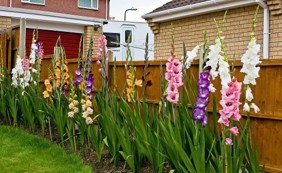
Gladiolus- Associated in ancient Rome with gladiators because of their sword-like leaves and flower spikes, they symbolize honor, strength, and moral integrity. Native to sub-Saharan Africa, one species is used to treat epilepsy. In some cultures gladiolus flowers are used to commemorate the dead. The wide variety of colors available represent archetypal characteristics: white gladiolus represents purity and innocence; red, passion and love; purple, mystery, grace, and charm; pink, compassion; yellow, happiness and cheer.
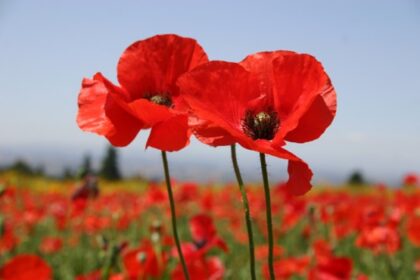
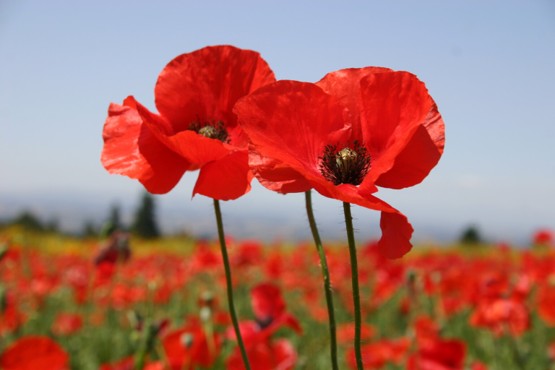
Poppy- In the ancient world, the transient beauty of poppies and their powerful medical properties connected them with dreams and the transition between life and death. (This meaning is at play in the Wizard of Oz, when Dorothy and the Lion fall sleep in a field of poppies conjured by the Wicked Witch.) In World War 1, the wide occurrence of red poppies on the open fields of Western Europe led them to be associated with the sacrifice and remembrance of soldiers who died in battle. Today poppies are used to foster awareness of issues affecting veterans.
Poppies’ ability to thrive in harsh conditions reminds us of resilience and rebirth.
To continue our promotion of California native plant alternatives, we present the following local plants which are either blooming or beginning to produce fruit in August:
Sambucus mexicana blue elderberry
Heteromeles arbutifolia toyon
Solidago velutina ssp. californica California goldenrod
Like gladiolus, blue elderberry has wide variety of medicinal uses. California goldenrod is a strong, sturdy plant that evokes the upright habit of gladiolus.Toyon’s bright red berries and ability to survive in harsh ecotones suggest resilience in the face of hardship like poppies.
Sambucus mexicana blue elderberry
This attractive large shrub/ small tree demonstrates variety throughout the seasons; sprays of small white flowers bloom in the late spring, followed by pretty blue berries in summer into fall. In the heat of summer, it loses its leaves, revealing its elegant fountain-like limb structure. And in winter it leafs out again, growing larger compound leaves.
Symbolism healing and nurturing; growth and change
Ecological benefits Spring flowers attract bees and other insects, which in turn attract birds , while the berries feed a wide variety of birds and mammals
Habitat role . Often grows in or near moist areas such as stream banks, canyons, and slope bottoms. Its adaptability to varied light conditions means that it can be found as an understory shrub, or in sunnier areas in cooler parks of California.
Garden notes Blue elderberry is a very flexible plant that can tolerate a range of conditions in regard to light, moisture, and temperature, however, it does prefer some drainage. Though it can grow up to 30 feet tall in the wild, it responds well to pruning. It grows quickly, and because it’s deciduous, can let in warm light in the late fall into winter.
Heteromeles arbutifolia toyon
Toyon is the quintessential coastal California native shrub. Handsome and evergreen, it is a moderate size (6-10 feet, sometimes more), and has many benefits for native animals and for the home gardener.
Symbolism resilience, interdependence
Ecological benefits The very small, fragrant cream colored flowers might not be noticed to humans, but they are popular with a wide variety of pollinators. The beautiful red-orange berries are an important food source for mammals of all sizes including coyotes and bears. What doesn’t toyon do? It’s a food source, a shelter, a nitrogen fixer, it stabilizes soil, and its thick waxy leaves and extensive root system are resistant to fire.
Habitat role Toyon is so omnipresent in our area, you might not know that its natural range is rather limited:




Be First to Comment