
By Jerry Bernhaut
The recent presentation in Sonoma, by professor of civil and environmental engineering Mark Jacobson, provided an analysis claiming to show the potential for completely replacing fossil fuels in the global energy system with renewable energy sources from wind, water and solar (WWS). According to professor Jacobson, the transition to renewable energy sources is technically and economically feasible within the timeframe required to avert irreversible global warming.
On page 329 of his latest book, “Still No Miracles Needed,” he writes, “Because technologies are advancing and WWS costs are dropping more quickly than previously thought, newer studies propose an 80 percent transition by 2030 and 100 percent, ideally by 2035-2040, but certainly no later than 2050.”
While I have great respect for Jacobson’s technical expertise, after reviewing his work and some of the most current climate data, I believe serious questions arise when we consider the complexity of creating a vast new infrastructure to electrify all energy sectors and then provide the electricity with WWS, in the timeframe required to avert irreversible global warming.
Providing energy from electricity is more energy efficient than providing energy from the combustion of fossil fuels, because electrification eliminates the waste heat from combustion. If the electricity is generated via solar, wind, or hydro, it bypasses the combustion cycle entirely, which eliminates traditional combustion waste heat from start to finish. This is the program Jacobson is advocating, which according to his calculations, can reduce greenhouse gas (GHG) emissions to the required level within the required time to avoid irreversible global warming, while maintaining continued moderate economic growth.
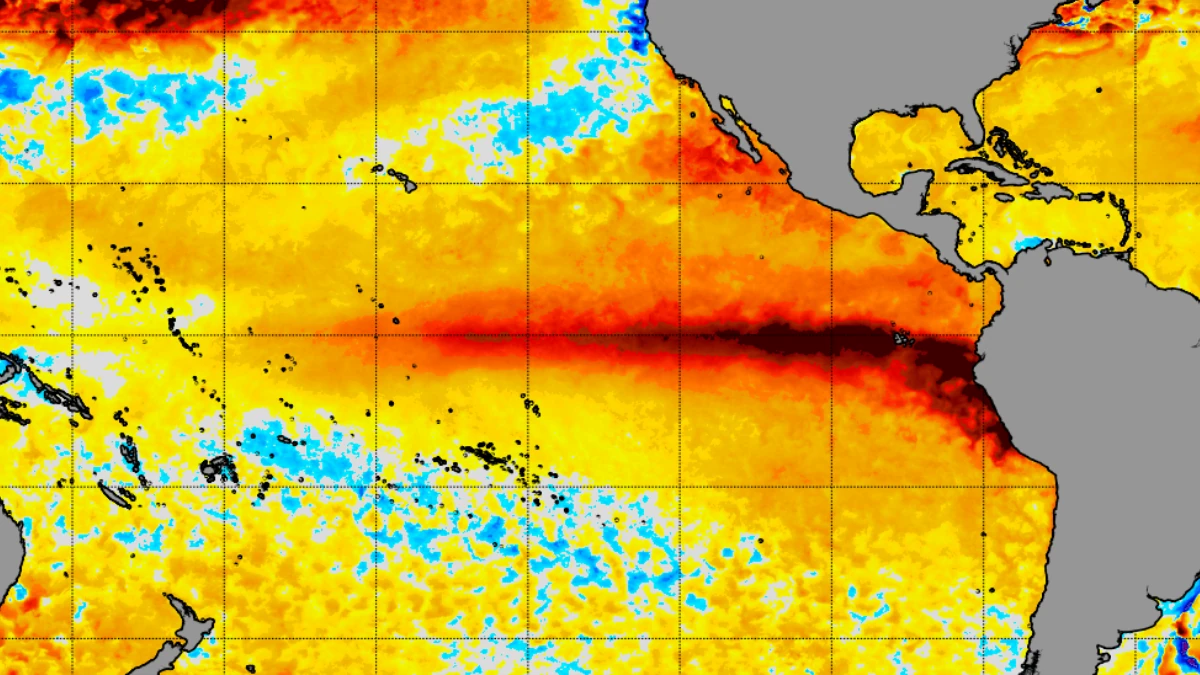
The key question is whether, assuming moderate economic growth, the transition to renewables can happen in time to avoid reaching tipping points, critical thresholds where increases in global warming trigger self-sustaining, major, and often irreversible shifts in Earth’s systems. An example of an irreversible trigger point is the thaw of the arctic permafrost. Arctic permafrost acts as a massive global freezer, trapping roughly 1,400 billion tons of ancient organic carbon. When temperatures cross the threshold of 1.5 degrees Celsius above preindustrial times, large-scale abrupt thawing begins. This becomes irreversible because microbes decompose the organic matter, releasing vast amounts of methane and carbon dioxide. These gases trap more atmospheric heat, causing further permafrost thaw in a powerful carbon permafrost feedback loop that bypasses human control.
According to a recent UN Report, the world has failed in its goal of limiting global warming to the 1.5°C threshold. This is likely to activate irreversible trigger points unless we can, as Jacobson claims, reduce GHG emissions in the very near term by an 80 percent transition of global energy to WWS by 2030, which is within the required timeframe to avoid activating irreversible trigger points. For the projection of an 80 percent transition of global energy to WWS by 2030 to materialize, the rate of electrification must be high enough that the more energy efficient use of electricity from WWS reduces energy demand sufficiently to offset the increase in overall energy demand, including the enormous increase in energy required by AI data centers.
Jacobson acknowledges this challenge on page 339 of “Still No Miracles Needed,” under the heading of Slow Progress. “One more obstacle,” he writes, “is the fact that, despite substantial effort to date, progress towards 100 percent WWS has been slow, on average, worldwide. Whereas several countries have reached 100 percent WWS in their electricity sector, the energy produced in these countries represents a small portion of world energy. In addition, electricity is only 20 percent of end-use energy. Part of the issue is that, although WWS and electrification is growing, it is barely exceeding increases in demand as the world population increases and less developed countries become more developed and energy-thirsty.”
This revised edition of “No Miracles Needed” was published in 2026. Thus, currently actual progress in transitioning to WWS is proceeding more slowly than his theoretical projections, because electrification, as a percent of overall energy use, is not increasing at a sufficiently greater rate than the increase in overall energy demand. Given the increasing energy demand for AI data centers, this relationship is not likely to change without a significant change in policy.
If we cannot meet Jacobson’s near-term projection of an 80 percent transition of global energy to WWS by 2030, Jacobson’s longer-term projections become highly unlikely because of the activation of irreversible trigger points by the rise in global temperature. The solution is to reduce overall energy demand by reducing our consumption of non-essential goods and travel, as well as transitioning to WWS.
Additional challenges to making the transition to WWS in time to avoid irreversible warming include the under-reporting of GHG emissions from military activity. And under the rules of the United Nations Framework Convention on Climate Change (UNFCCC), international aviation and shipping emissions are generally excluded from national totals and country-specific targets, so that reports of progress of individual countries in transitioning to WWS are likely to be based on understated attribution of emissions, especially in countries with highly developed export and tourist economies.
Also challenging is the harm to wildlife habitat from large, utility scale wind and solar installations, and the resistance to abandoning stranded assets in fossil fuel infrastructure. I don’t see Jacobson giving adequate consideration to these factors in his projections.
Jacobson has made great contributions to the development of non-fossil fuel renewable energy technologies, which he describes in detail in “Still No Miracles Needed.” But his attachment to economic growth in his roadmaps for transitioning to a WWS energy system is, to the best of my understanding, a fatal flaw in his analysis. The Earth is already being ravaged by extreme, unprecedented weather events as we move past 1.5 degrees Celsius above preindustrial levels in global temperature. The earth’s temperature is continuing to rise.One would expect an advocate for stabilizing the earth’s climate to feel a sufficient sense of urgency to be open to the fundamental systemic change required for humanity to live within planetary boundaries by transitioning to an economic system more focused on basic human needs than increasing gross domestic product. This is not a new concept, as Naomi Klein told us in her seminal 2014 work, “This Changes Everything, Capitalism vs. The Climate.”
The Solutions Project is the 501(c)(3) nonprofit organization that sponsors Jacobson’s work. According to Google and AI, The Bezos Earth Fund awarded a massive $43 million grant to help scale the Solutions Project climate justice initiatives. Perhaps this connection to Jeff Bezos, one of the Earth’s richest men, helps to explain Jacobson’s position on economic growth.
Based on my above analysis, it is highly unlikely that we humans will avoid irreversible global warming if the industrially developed countries persist in an economic system committed to increasing production and consumption, even while making our best efforts to transition to a WWS energy system.
Jerry Bernhaut is a resident of Sonoma and an environmental attorney for River Watch. In 2017 he won a lawsuit challenging the adequacy of Sonoma County’s Climate Action 2020 Plan. The ruling said of the Plan’s Environmental Impact Report (PEIR) that: “…the inventory of greenhouse gas emissions is based on insufficient information; the PEIR fails to include effectively enforceable, clearly defined performance standards for the mitigation measures regarding Green House Gas (“GHG”) emissions, identified as “GHG Reduction Measures;” and fails to develop and fully analyze a reasonable range of alternatives.”
Little has changed since then.



Be First to Comment