
By Jonah Raskin
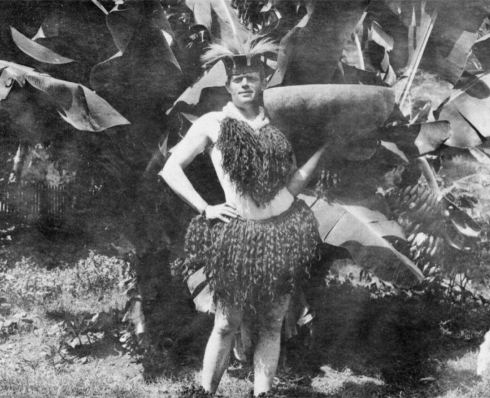
“I would rather burn than rot,” he wrote. And burn he did for most of his life, which began in San Francisco in 1876 and ended in Glen Ellen in 1916 when he was 40-years-old and the author of more than 50 books.
This year, Jack London fans in Sonoma, in The City and around the globe will celebrate the 150th anniversary of his birth. To write 50 books at the same time that he was traveling widely in Asia, Europe and South America, plus running Beauty Ranch and raising pigs and horses he had to burn the candle at both ends. Of course, he had help from Charmian Kittredge, his “mate,” as he called her, who was his second wife and an author in her own right who was never far from his side. A power couple, they were written up in the newspapers.
Born out-of-wedlock and named John Griffith Chaney, he became Jack London when his mother married a Civil War veteran named John London who treated him unkindly. Jack hunted for his real father and located him in Chicago, but he refused to acknowledge his son. In despair, London went prospecting for gold and came home with ore for dozens of stories.
A socialist, a patriot, and a chauvinist of sorts, Jack was a man of contradictions that fueled his creativity. “I have six or seven different selves,” he told his friend Cloudesley Johns who wrote but never published his memoir, titled “Who the Hell is Cloudesley Johns.”
Given his obscure origins, and with little formal education, London was an unlikely candidate to become a best-selling novelist, but he wrote books that were read around the world in dozens of languages, including French, Russian, Spanish and Chinese. “The Call of the Wild” made him famous before he was 30, along with Buck, his canine protagonist, who de-volves from lap dog to feral wolf.
Other dog stories followed, such as “White Fang”; there were also tales of adventure in the South Seas, ghost stories and a dystopian novel, “The Iron Heel,” that predicted the coming of an oligarchy to the US. London made lots of money and spent it as fast as he made it, buying land and machines, and living like the robber barons he disparaged. His dream house, which he named “Wolf House,” burned a week before he and Charmian took possession.
He drank to excess, chain-smoked cigarettes and lived like a party animal, entertaining guests from around the world and close to home including the poet, George Sterling, his comrade-in-arms. “I’m afraid I always was an extremist,” he wrote in “John Barleycorn,” a memoir about his bouts with alcohol.
The father of two girls, he wasn’t much good at parenting and as a husband he had flaws which Charmian pointed out in her two volume biography of Jack. His late novel, “The Valley of the Moon,” wasn’t the first work of fiction set in the Golden State, but it helped to carve out the field of California literature which would be populated by books such as Nathaniel West’s “The Day of the Locust,” John Steinbeck’s “The Grapes of Wrath,” both published in 1939, and Joan Didion’s “The White Album.”
Hollywood filmed several of London’s novels before it was really Hollywood; for years, he battled producers for the rights to his own work.
My own favorite London books include “The People of the Abyss,” a first-person account of his undercover adventures in London’s East End slums, and “The Road,” a vivid narrative about his travels across the US that inspired Jack Kerouac to write “On the Road.”
“To Build a Fire” is probably his best-known short story, but “South of the Slot,” which is set in San Francisco, deserves to be read and savored today, along with his masterpiece, “Martin Eden,” an autobiographical novel set in The City, the East Bay and on the Bay itself, whose waters he knew from years of sailing, and as an oyster pirate.
Were he alive today he’d be writing about AI, Donald Trump, tariffs and the Giants. He was a great sports reporter and loved boxing. There wasn’t a subject he didn’t tackle, including surfing which he did in Hawaii.
Too bad he died at 40. But he lived more life times in his four decades than many other writers who lived into their 80s. A plaque on the Wells Fargo building at Third and Brannon marks the place of his birthplace on January 12, 1876, and to commemorate San Francisco’s most famous writer. Jack London State Historic Park in Glen Ellen is a marvelous place to commune with his spirit.
Jonah Raskin is the editor of “The Radical Jack London: Writings on War and Revolution,” among many other books. He is the former chair of the Communications Study Department at Sonoma State University.




Be First to Comment