
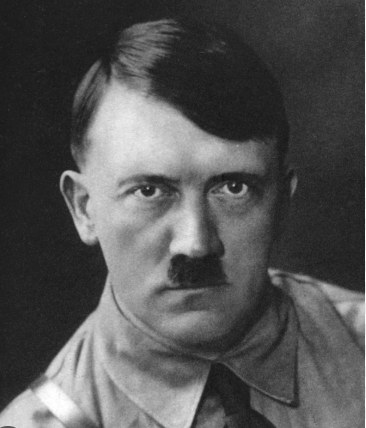
Researchers have discovered in Hitler’s DNA evidence of Kallmann syndrome, a genetic disorder characterized by, among other things, a small you-know-what. It might be easy to draw a conclusion from this, since compensating for feelings of inadequacy can lead to the strong man syndrome.
I’m not putting men down here. All of us have learned, or collectively internalized, the idea that power means domination, looming over others, being loud – in other words, aggression.
I got to thinking about power and how humanity hasn’t questioned its definition enough. Even women in the feminist movement emboldened themselves, followed the male example in some ways, rather than establishing our ground, insisting on empathy and authenticity, along with personal wholeness. So, what is power – really?
As I ponder the predominance of power struggles on our Earth, I wonder what it would be like for beings from another planet to view us on Earth, fighting all the time. I imagined some Spock-like people watching us down here on the globe. Humans everywhere with pointed guns roaring over each other’s territories in tanker trucks, shooting each other, mothers crying as their kids die in wars, homes full of yelling and divorces. I pictured the Spock beings puzzled, with necks cocked in confusion, watching us from up above. I could see them scratching their heads, wondering, why do people on that planet do such things?
Then I woke up.
Imbedded in us all are urges to fight, rebel, react, shut down, stonewall, destroy or just be passive-aggressive. We, the people, have not evolved far enough as a species. We keep hurting each other.
Why don’t we change, re-direct or rearrange this ingrained habit to do harm? We don’t do it, first of all, because its alternative is not valued enough. We honor anger, bow to it, embody it, act it out. The warrior is still king; the fight is courageous, contempt for the weak and hero worship rule. Being right, bullying and armor equal power. Even if we’re unconscious of it, it’s a deep-seated narrative. Unlike the poster I liked so much at a recent protest, “There is only one King, Elvis” – instilled in our psyches is still the big shot, the big you-know-what.
Researcher, author and podcaster Brene Brown writes about power in her new book, “Strong Ground.” One of her examples of how it can work well is that moment in football when a team wants to support a player in moving forward toward a first down or a touch down, the utter velocity of its collective momentum has been recently named (thanks to the Philadelphia Eagles) the “tush push.” As Brown describes it, “Everyone pushes together, with the players in back literally pushing the quarterback from behind to help him move forward through the opposing team. It’s not about leg force as much as teamwork and intention …”
To further illustrate the point, Brown quotes Abby Wambach, six-time winner of U.S. Soccer’s Athlete of the Year award. “If you watch footage of any of those goals,” says Wambach, “you’ll see that the moment after I score, I begin to point, I point to the teammates who assisted, I point to the defender who protected us, I point to the midfielder who ran tirelessly, I point to the coach who dreamed up this play. I point to the bench player who watched, willing this moment into existence. I’ve never scored a goal in my life without getting a pass from someone else. Every goal I’ve ever scored belonged to my entire team. When you score, you better start pointing.” She sums it up, “Maintaining the illusion of scarcity is how power keeps women competing for the singular seat at the old table, instead of uniting and building a new, bigger table.”
What is power? Communication, collaboration, cooperation, unity, valuing different skills. It’s the tush push.








Be First to Comment