
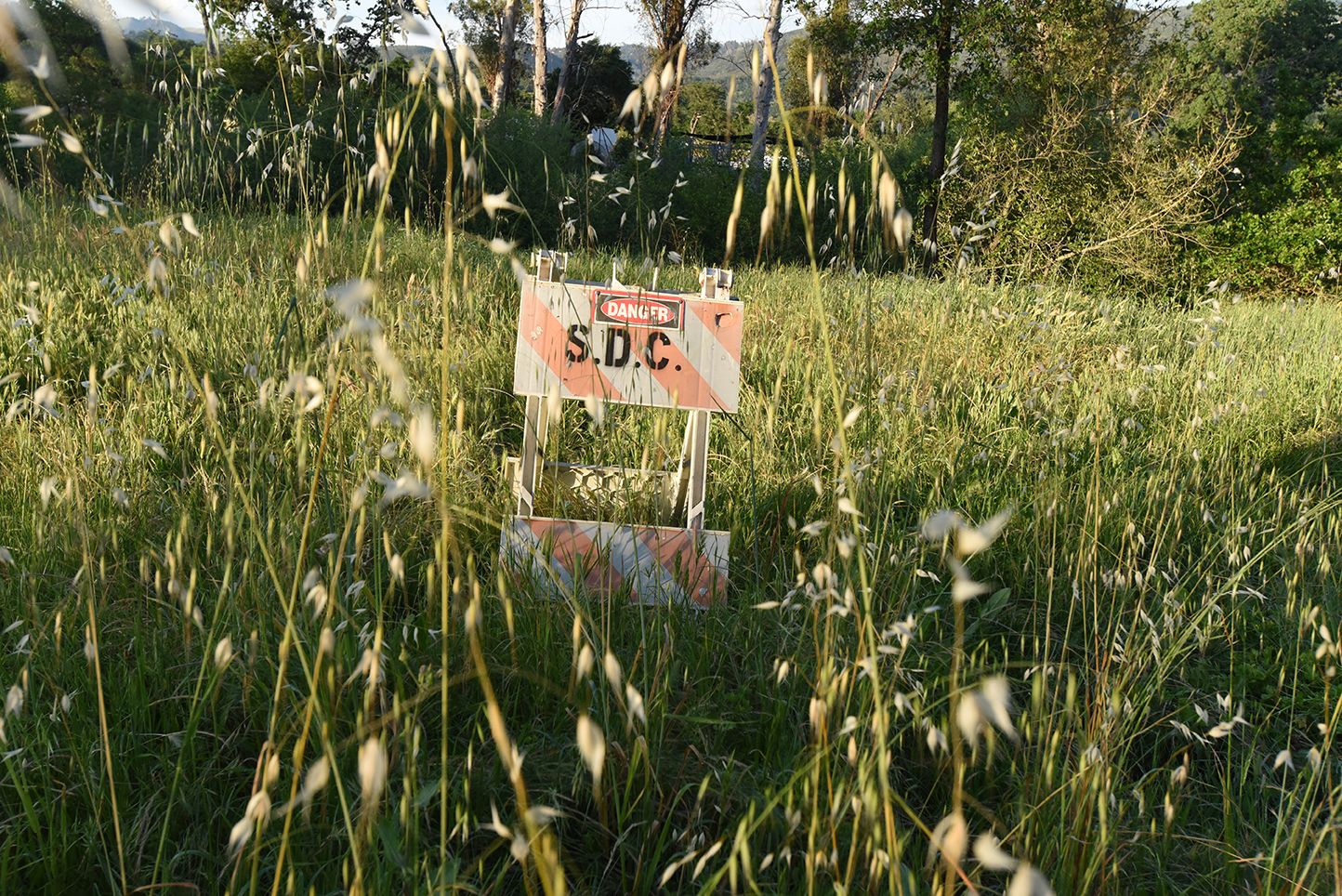
The cover on this issue of the Sun caused some discomfort, among our own staff. Too sensational, too scary, too much out of context. All of that is to some extent true. But in my view necessary.
In October, 2017, the Nuns fire burst out of Nuns Canyon, roared across Highway 12 and consumed a northwestern swath of Glen Ellen and random parts of Kenwood. It came perilously close to my house. Photographing the flames in the pre-dawn hours that Saturday morning, staring at a 180-degree wall of fire, I literally couldn’t process what I saw. That fire destroyed 407 homes, some of them belonging to people reading these words right now.
That was almost nine years ago, and we tend to forget. Up in Butte County, eleven months later almost to the day, the Camp Fire destroyed the entire town of Paradise, killing 85 people, destroying 18,804 structures and ringing an alarm bell about the dangers of the rapidly-expanding Wildland Urban Interface (or WUI), and the general lack of appropriate concern and urban planning paying attention to the challenges that acronym represents.
Two years ago an academic paper reported the conclusion that, after meticulous mapping, the global WUI footprint appears to represent 6.3 million square kilometers, which is 4.6 percent of total global land area, more land than twice the size of India.
Before the Camp fire struck Paradise, some planners tried to impose a temporary moratorium on future development while attention was paid to the risks of wildfire and the absence of enough needed escape routes. That effort was overruled and ignored with tragic consequences. It could be (and has been) argued that new development in WUI landscapes should be required to demonstrate and account for sufficient evacuation channels and manageable traffic loads on escape routes for residents to outrun wildfires.
One analysis of the wind-driven Paradise fire concluded that the flames consumed areas the size of a football field every few seconds. Which brought to mind the experience of October 8, 2017, when I stood on my roof as 40-mile-per-hour gusts roared through my Glen Ellen backyard, turbocharging the fire.
The Sonoma Valley WUI is plain as day – Sonoma Mountain on one side, the Mayacamas Range on the other and just two, roughly parallel north-south, populated escape routes down the middle.
One half of that chute, the east-facing, and thus moister slope of Sonoma Mountain, has not burned in recorded history. But that recorded history bears witness to the harsh reality of Climate Change. Which means less moisture on Sonoma Mountain and more danger from centuries of accumulated dead and drying fuel.
Common sense would suggest that careful and comprehensive analysis should precede any plan to place 1,000 homes – and 2,500 more people – hard up against that never-yet-burned wildland interface. Any prudent developer should make carrying capacity and evacuation times in a WUI a core part of project planning. And pouring 2,500 more people into such a vulnerable, forested space inherently increases the risk of wildland ignition. The National Park Service says about 85 percent of all wildland fires are caused by people – not Mother Nature or Acts of God.
There are numerous reasons to question the wisdom of any continuing planning target of 1,000 homes at SDC. But Wildfire risk is a compelling one, and has apparently not, so far, received anything approaching the necessary WUI risk analysis.
Instead, the target number of housing units seems to be driven almost exclusively by the dangerous desire to maximize a developer’s profits. The enabling legislation authorizing a local use for the SDC property is emphatically clear that surplus state property should first be offered to “nonprofit affordable housing sponsors, prior to being offered for sale to private entities or individuals.” So far, that has not happened.
Meanwhile, unless the State takes rapid action to clean up the accumulation of dead trees, tree branches, and the ballooning volume of five-foot-tall wild grasses and weeds littering the SDC campus, we may be in store for another raging wildfire. There is time, while the grasses are still green, to reduce the risk. But if the Department of General Services – which owns the land and the responsibility to protect it – doesn’t act before long, the results could be truly tragic.







Be First to Comment