
Honoring the Old, Respecting the Present, & Planting for the Future
By Sedra Nathan, Hannah Aclufi, and Vincent Distrola
Symbology of Plants
The tradition of associating flowers with birth months dates back centuries and spans continents. In May, that tradition names designates symbolic birth flowers as
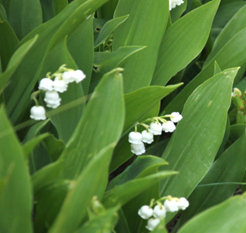
• Lily of the Valley, which symbolizes humility, sweetness, and a return to happiness.
• Hawthorn, which symbolizes hope, protection, and love.
These European species, while meaningful, are not well-suited to California’s dry summers and Mediterranean climate. As gardeners in the Valley of the Moon, we honor their spirit by spotlighting our native plants that echo those similar symbolic qualities, while thriving in our local area being water-wise and providing habitat for wildlife.
Here are four standout California natives—each blooming in May
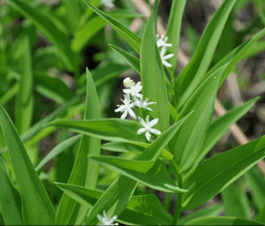
- Star-flowered False Solomon’s Seal (Maianthemum stellatum)
Often mistaken for Lily of the Valley, this woodland native has arching stems and star-shaped white blooms that offer subtle beauty and habitat value in shaded areas. It has been recorded in Jack London State Park so keep your eyes out for this dainty perennial. Naturally found in shady woodlands and moist meadows it can be grown in gardens
- Symbolism: Sweetness, humility, quiet resilience
- Ecological benefits: Attracts birds and pollinators
- Habitat role: Ideal for oak understories and forest margins
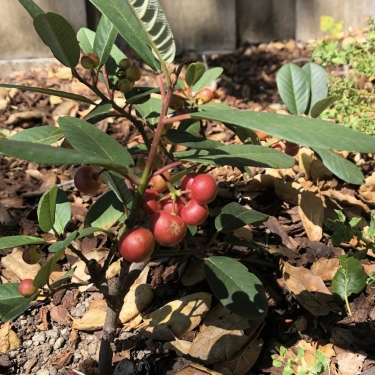
Coffeeberry – ‘Eve Case’ (Frangula californica, formerly Rhamnus)
If hawthorn represents protection, our native coffeeberry embodies it with quiet strength. ‘Eve Case’ is a compact nativar—perfect for residential gardens—offering dense structure, pollinator-friendly blooms in May, and bird-attracting berries by fall. . Its spring blooms may be subtle—tiny yellow-green clusters in May—but their ecological value is immense. While often overlooked by gardeners, these flowers are highly favored by native pollinators, and more than 80 species of butterflies and moths use coffeeberry as a host plant.
- Symbolism: purposeful, grounding presence, unassuming force
- Ecological benefits: Supports 80+ butterfly/moth species, pollinators, and birds
- Habitat role: Works well in wildlife gardens or low-water borders
- Garden notes: Adaptable, evergreen, and sculptural
Note on Nativars:
‘Eve Case’ is a cultivated form of coffeeberry, bred for manageable size and ornamental appeal. It retains many of the wild species’ ecological benefits while fitting comfortably into home landscapes.
- Western Columbine (Aquilegia formosa)
With its distinctive red-and-yellow nodding flowers, Western Columbine (also known as Red or Crimson Columbine) is a spring-to-summer standout. Its blooms attract hummingbirds and native bees, while mature seedheads provide food for song sparrows, juncos, finches, and other small birds. Delicate in appearance but resilient in nature, it’s also deer resistant—a true show-stopper in the garden.
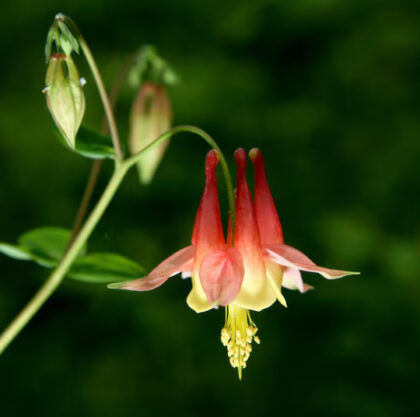
- Symbolism: Grace under pressure, joyful authenticity
- Ecological benefits: Nectar for hummingbirds, bees; seed for finches and sparrows
- Habitat role: Streambanks, woodland edges, and shady beds
- Garden notes: Deer resistant; pairs well with ferns and native grasses
Native California Plants for May
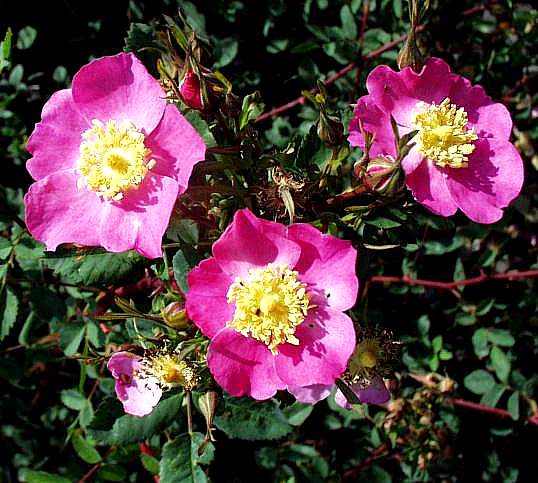
- California Wild Rose (Rosa californica)
A quiet powerhouse, this native wild rose delivers beauty, resilience, and ecological value. An attractive and important resource offering food, shelter, and safe nesting sites in a secure thorny bramble it has soft pink flowers that become red hips in fall.
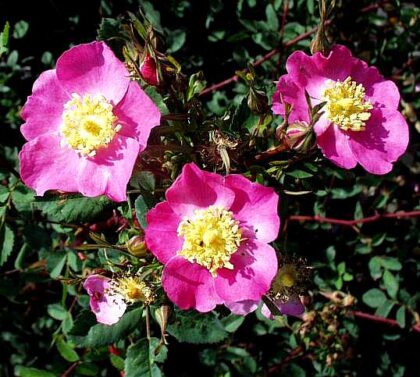
- Symbolism: The rose of course already has symbolic meaning that is deeply rooted in history and varies by culture and color. Pink is connected with grace, joy
- Ecological benefits: Supports native bees, beneficial insects, and birds throughout the year
- Habitat role: Ideal for riparian areas, hedgerows, or habitat gardens
- Garden notes: Water-wise, informal, and tough—thrives in clay and sun
- Blooms: May–July
The symbolic meanings for our modern interpretation of California natives are drawn from a combination of traditional floral symbolism, ecological characteristics, and their cultural or environmental roles in California. We hope you enjoy!


Be First to Comment