
Honoring the Old, Respecting the Present, & Planting for the Future
By Vincent Distrola, Hannah Aclufi, and Sedra Nathan
Birth month flowers for December: Paperwhites and Holly
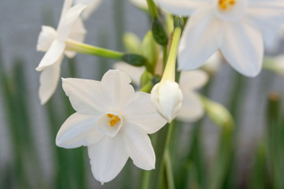
When we think of December, flowers may not be the first thing to come to mind. Instead we might think more in terms of smell; the spruce and junipers we wrap into wreaths, the cinnamon and allspice baking in our favorite warm dessert. Paperwhites (also known as Narcissus) are an easy to grow Amaryllis known for their extremely fragrant blooms and delicate flowers. Easy to grow and some of the first blooming plants of spring, they represent innocence and rebirth.
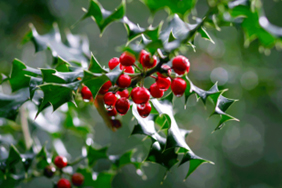
We also might be thinking of colors, and red holly berries are synonymous with December because this is the time where they are going to seed. Holly was originally used to ward off evil spirits, and represents protection.
Cosmos are very showy flowers with fine, lacy leaves that come in a variety of colors. Its symmetrical shape is said to symbolize beauty, harmony, and unity.
A Modern California Perspective
Our native plant alternatives for December are Toyon (Heteromeles arbutifolia), Manzanita (Arctostaphylos sp.), and Milkmaids (Cardamine californica).
Toyon (Heteromeles arbutifolia)
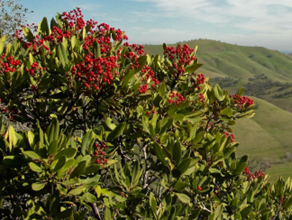
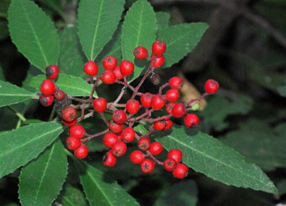
Toyon is also known as California Holly, and the beautiful red berries should give you a clue as to why. True holly (Ilex aquifolium) is often considered invasive in Sonoma County and is considered an escaped ornamental plant. Toyon, however, is a beautiful native shrub that can survive in hot, dry, rocky spots; perfect for that neglected corner spot in the garden where most things seem to perish. The red berries are an extremely important food source for migrating songbirds.
Symbolism: Family, Provision, Safety
Ecological benefits: Late blooming flowers for insects; late berries are good forage for songbirds.
Habitat role/ garden application: Quick growing; can tolerate both extremely rocky (preferred) and clay soils. Attractive shrub and can be pruned heavily to shape. It is in the rose family; and does not tolerate overhead watering.
Manzanita “Howard McMinn” (Arctostaphylos species)
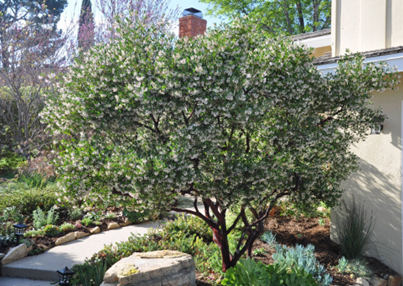
Fragrant, delicate white flowers bloom prolifically on established manzanitas starting in December. Manzanitas are used as centerpieces in the garden for good reason.
Symbolism: Generosity, Abundance, Vitality
Ecological benefits: Manzanitas are an extremely early blooming plant in the blueberry family. A mature manzanita starts to feed bees early on in the year when other things have not yet started to bloom (or even produce foliage for some of our native plants). Manzanita “apples” provide food for wildlife.
Habitat role/garden application: There are many manzanitas; “Howard McMinn” is the most common garden cultivar. It is tolerant of many soil types; but cannot be waterlogged. In Sonoma County it can handle full sun but prefers a slightly-shady spot if possible. Often used as a center piece due to attractive red branches and showy display of flowers once established.
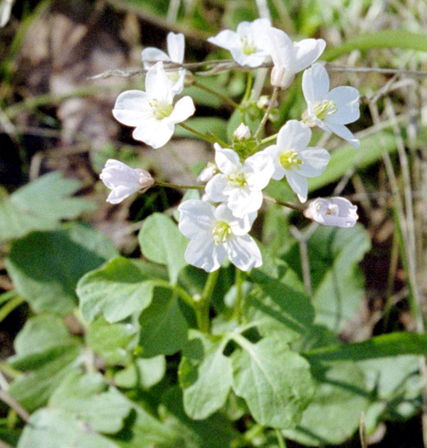
Milkmaids (Cardamine californica)
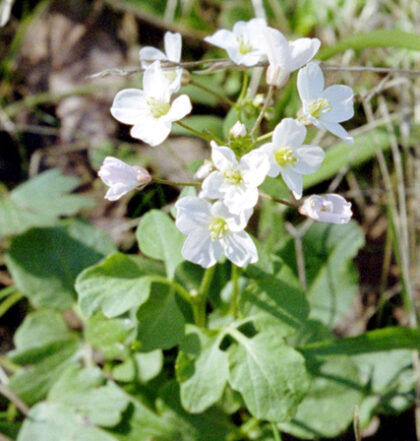
Milkmaids are a delicate flower in the mustard (Brassicaceae) family. They are typically the first blooming wildflower of Spring here in Sonoma County
Symbolism: Rebirth, Renewal, Peace
Ecological benefits: Early blooming wildflower for pollinators.
Habitat role/garden application: Milkmaids are occasionally sold in native plant nurseries, although it is fairly rare. The best way to enjoy this plant is visiting a local park or nature preserve, taking a slow stroll, sipping a tea, and connecting to the place we live in. Slowing down to appreciate the delicate white flowers of milkmaids reminds us that our garden is not limited to our fenced yards. The wild spaces around us that make up the Sonoma Valley are a garden in and of themselves; a place where we are all welcome.
Berries, Flowers, and Appreciations
In Sonoma, many of our native plants are either deciduous or just starting to “wake up” for the year. However, Toyon berries provide interesting color and will bring many birds to the yard. Manzanita “Howard McMinn” will add sculptural interest and produce a fabulous display of white flowers. Milkmaids are best viewed on the trail, and remind us to slow down and appreciate all that is around us.
Thank you for joining us across this year of flowers and native inspiration.
May the seasons ahead bring you joy in your garden, strength in community, and plenty of reasons to keep planting forward.
Articles written by:
Vincent Distrola (Point Blue Conservation Science),
Hannah Aclufi (Sonoma Ecology Center),
and Sedra Nathan (VOMGC Co-President and conservation ecologist).




Be First to Comment