
Gratitude is a multi-faceted feeling. It can be intensely personal. It can be on behalf of others. It can be about things, and it can be about people. And it can even be about the state of a nation.
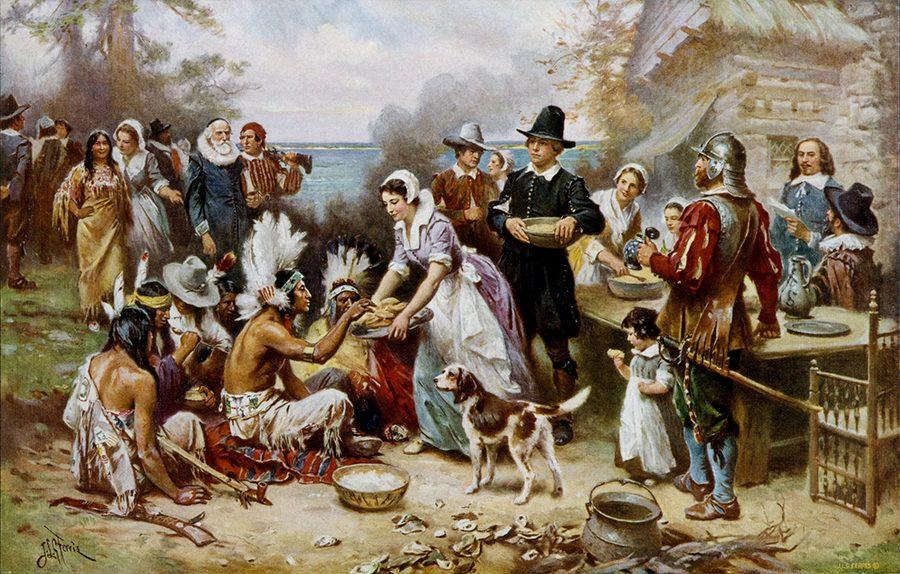
Historically, America’s Thanksgiving Day has been associated with the “Pilgrim” story, a sentimental tale of the coming together of English immigrants and North America’s indigenous people. Maybe it happened; none of us were there to verify it, but it’s part of our national narrative nonetheless.
From the perspective of the indigenous people, things certainly went downhill from there. Over time, European immigrants gobbled up ever greater parcels of land, drove the native people from their homes, brought new diseases to these shores that decimated native populations, and eventually declared war against them in acts of genocide. This is not fable, but fact. And it is not as prominent in the national narrative as it ought to be.
There are other facts, however, that are not well-known, and rarely or never taught in school, namely the essential role that this continent’s native people played in creating a democratic form of government. If we are going to give thanks this holiday, that truth needs to be acknowledged too.
In his book “The Dawn of Everything,” anthropologist David Graeber documents the ways in which the social organization of America’s indigenous people provided an example of freedom to European immigrants who were under the hard-fisted control of dynastic authoritarian monarchies. Sophisticated native elders, such as a man named Kondiaronk, member of the Huron (Wendat) People of Canada, learned to speak French and traveled to Europe. His thoughts and impressions of European society as compared with his own were captured in a book that became extremely popular, and influenced the development of what we now call Enlightenment thinkers. The influence of those thinkers underlies the documents which define the United States government: the Declaration of Independence and the Constitution.
In his observations of French society, Kondiaronk is quoted as saying, “I find it hard to see how you could be much more miserable than you are. What kind of human, what species of creature, must Europeans be, that they have to be forced to do good, and only refrain from evil because of fear of punishment.” He goes on, “I have set forth the qualities that we Wendat believe ought to define humanity – wisdom, reason, equity, etc… .A man motivated by (financial) interest cannot be a man of reason.” Graeber notes, “For Europeans of 1703, this was heady stuff.”
So the ideals of freedom and democracy did not emerge from under the heel of monarchy, but from exposure to the social organization of America’s original inhabitants. Here is something substantial to be grateful for.
Writer Wendell Berry explores the same topic in his book “The Unsettling of America,” when he observes, “If there is any law that has been consistently operative in American history, it is that the member of any established people or group or community sooner or later become “redskins” – that is, they become the designated victims of an utterly ruthless, officially sanctioned and subsidized exploitation.”
So, by all means enjoy your roast turkey with stuffing and your family gathering, but offer a moment of gratitude and recognition for the price paid by others for your security and comfort. Food is now being deployed as a weapon by unelected spiritual and political apostates in Washington D.C., and by the politicians who enable them. Berry notes this “strikes directly at the life of all…a gluttonous enterprise of ugliness, waste and fraud.”







Be First to Comment