
The Sonoma Coast may be an hour or so away from Sonoma Valley, but it is close to home in many ways. Sonoma Creek connects us directly as it flows into San Pablo Bay and then out the Golden Gate into the Pacific Ocean. Many of us enjoy eating fish and fresh crab this time of year that is sourced off our 55-mile long county coast and beyond. And who doesn’t enjoy a drive out to Bodega to walk and run the dog at Doran Beach?
Sonoma Valley is also connected to the sea by an international marine conservation organization based in Glen Ellen – the Marine Conservation Institute – that is led by longtime residents Lance and Angela Morgan. A crowd of us recently met and mingled with the Morgans and a panel of marine experts at the Sebastiani Theatre for a free, exclusive showing of the new documentary film, “Ocean,” narrated by world -renowned conservationist Sir David Attenborough.
“If we save the sea, we save our world,” Attenborough says in this inspiring, yet at times heartbreaking, voyage through the oceans.
The stunning underwater images in the film showed us coral reefs in full color as well as bleached by ocean warming. We see big bluefin tunas, white sharks and tiny krill, thriving in cold deep waters. The sea floor destruction by bottom trawling and monstrous industrial fishing factories shows how much harm is still underway below the depths. In the end, the promise of marine protected areas that are free from heavy fishing and industrial exploitation offer hope for the future, through such conservation measures as the marine protected areas off the Sonoma and other reaches of the California coast. The film is available to watch on several streaming services.
We learn that only about three percent of our oceans are protected, compared to about 18 percent of our lands. Lance, Angela and their team of marine science and conservation experts at the Institute play a key role in advocating for the international goal of protecting 30 percent of our oceans by 2030.
Before the main feature, we saw a short film about how the Institute is designating Blue Parks in places around the world where communities are protecting marine reserves from overfishing, pollution and other threats with the strongest possible standards. The concept is similar to a national park where conservation comes first. They developed the Blue Park standards as a science-based benchmark for marine protected area quality. Read more about Blue Parks at https://marine-conservation.org/on-the-tide/enduring-refuges-for-ocean-wildlife-blue-parks-five-year-review/
Lance joined thousands of conservation leaders in Abu Dhabi for the IUCN World Conservation Congress in October. He helped lead two major policy victories for ocean protection that will advance high seas protections and the Blue Park Standard. Read more about the Institute’s leadership at the Congress at: https://www.linkedin.com/pulse/advancing-ocean-protection-iucn-world-conservation-he4fc/
My personal experience with protecting our oceans was extensive during my years working for Turtle Island Restoration Network, based in West Marin, where I now serve on the board. We focused on policies to mandate that fishing gear and fishing practices prevent endangered sea turtles from getting trapped and drowning. Entanglement in shrimp trawl nets that drag the sea floor, and on longlines on the high seas, remain the biggest cause of death to rare sea turtles. The warming of our oceans and the beaches where sea turtles nest is also a major problem. The sex of the hatchlings that make a run for the sea is determined by sand temperatures. If too hot, they will all be females, upsetting the balance for future reproduction.
Once when I was volunteering to monitor and tag sea turtles on a nesting beach in The Kimberley region of Australia, I had a close encounter with a big, strong female at high tide. There wasn’t much sand between us and the water. After she laid her eggs and turned back to the sea, two of us put hands on either side of her head pushing against her shell to slow her to a stop. But when the biologist clamped the tags into her flipper, she was not pleased and started hissing and snapping—like a cross between a cat and a dragon! Off she went.
Now our oceans and coastline are under renewed threats from oil spills due to plans to vastly expand offshore oil and gas drilling by the federal administration along our coasts and beyond the continental shelf. We must not allow it.
For those interested in knowing more about Lance and Angela Morgan: Lance serves as president of the Marine Conservation Institute MCI), with a PhD in ecology from the University of California, Davis. He has long been involved in efforts to safeguard deep sea species with his efforts to protect deep sea corals on seamounts off the California coast. Lance currently serves on the Board of the Deep Sea Conservation Coalition and is a member of the High Seas Alliance steering committee. He oversees the major initiatives of Marine Conservation Institute: Blue Parks, Marine Protection Atlas and High Seas Conservation.
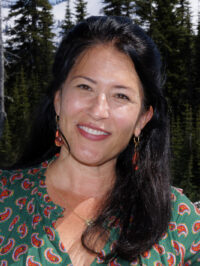
Angela serves as Director of Development for MCI. She studied at San Francisco State University, Sonoma State University, and U.C. Berkeley and has a graduate degree in Restoration and Historical Ecology. Angela was a faculty member in the Environmental Studies Department at Sonoma State University and College of Marin. She is the first woman in Sonoma county to receive the Switzer Environmental Fellowship and went on to become the recipient of a Switzer leadership grant to establish the first watershed station in the Sonoma Valley protecting and restoring local streams and watersheds. For more information go to https://marine-conservation.org/




Be First to Comment