
Sonoma Next 100 Suit Can Proceed to Trial
By David Bolling
A Sonoma County Superior Court judge handed down a crucial decision on March 11 which protects a lawsuit that could dramatically affect the future of the Sonoma Developmental Center (SDC) in Glen Ellen.
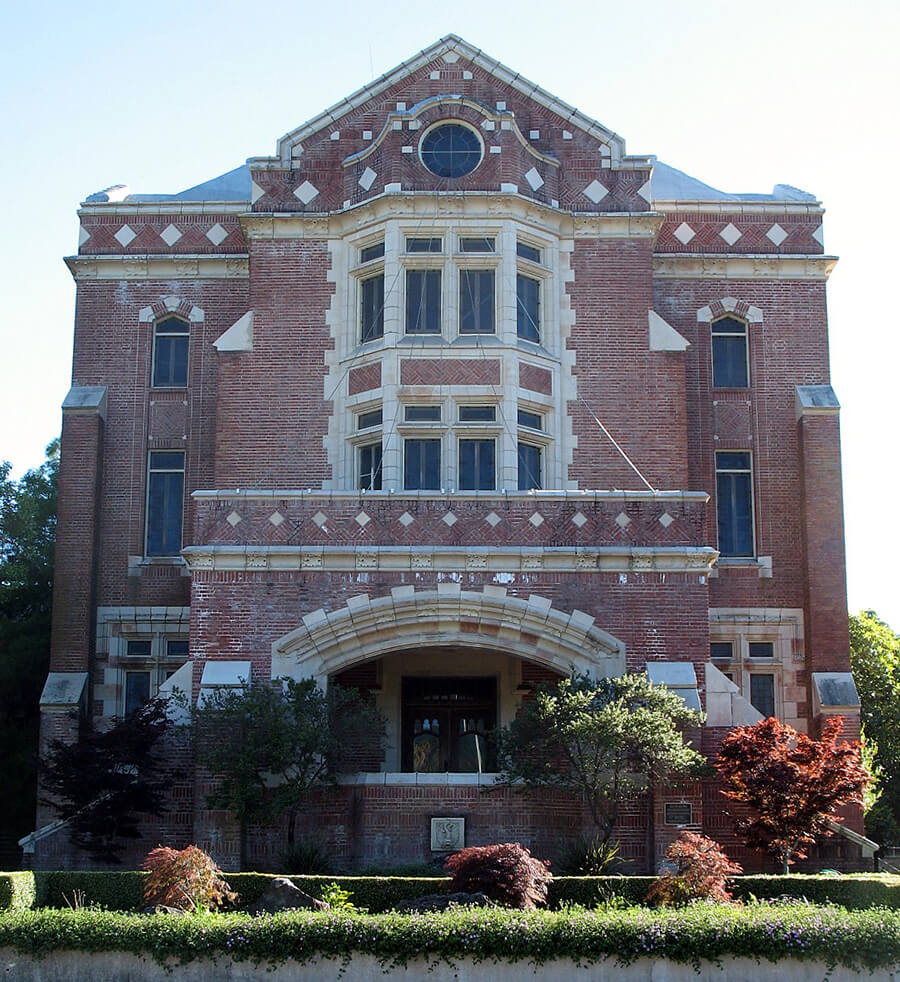
The ruling, by Sonoma County Superior Court Judge Pat Broderick, over a suit filed in September of 2025 by Sonoma Next 100, was the latest in a series of legal actions and countersuits over what kind of development should be allowed to take place on the remaining 184 (or so) acres of a bucolic, environmentally-sensitive, historically-significant and wildfire-at-risk rural property beloved by locals and visitors from around the world.
An application to develop the property by commercial developer Keith Rogal from Napa, in partnership with the Grupe Company from Stockton, was chosen by the California Department of General Services (DGS), the State agency with legal ownership of the SDC property. It was one of three applications submitted, including the Sonoma Next 100 proposal, a nonprofit entity representing the priorities and community input from a coalition of local organizations.
The SDC property was the final aggregate housing facility for developmentally disabled people in California, and was officially closed in 2018 when the remaining residents were transferred to community-based housing. In 2019, the California State Assembly adopted legislation to guide a specific planning process to govern disposition of the roughly 900-acre property, with some 750 acres to be designated as open space, and affordable housing being a priority for the developed core-campus.
In late 2022, Permit Sonoma – Sonoma County’s planning agency – approved a specific plan and an environmental impact report (EIR) for 750 homes and 400,000 square feet of commercial space, including a luxury hotel with more than 100 rooms. The EIR for the plan concluded there would be no significant environmental impacts requiring mitigation or alternative planning. And through a last-minute legal loophole, the Rogal-led development team – now referred to as Eldridge Renewal LLC – submitted a project application for at least 990 housing units, allowed under the terms of emergency state legislation referred to as a “Builder’s Remedy.”
One important aspect of the subsequent Rogal development plan was the fact that approximately 90 percent of the SDC campus buildings would be demolished, thus erasing most of SDC’s historic footprint.
In response to this Specific Plan, a coalition of local organizations, using the acronym SCALE, filed suit against the County, alleging that the EIR was inadequate and did not accurately define the negative impacts of the Specific Plan, and the almost-1,000 housing units proposed for the property, which is recognized as a critically important wildlife corridor.
In October of 2024, Superior Court Judge Bradford DeMeo ruled emphatically that the EIR was woefully inadequate and rejected the Plan in its entirety. The Sonoma County Board of Supervisors then decertified the Plan, with its EIR, but decided to repeat the planning process, employing the same consulting firm that had prepared the first Plan. And in 2025, the state ceased most of its maintenance activities on the property, leading to the incremental degradation of building infrastructure, and the flooding of basements containing significant amounts of asbestos insulation.
Meanwhile, DGS transferred some 750 acres of the property’s open space to California State Parks, with a portion going to Sonoma County Regional Parks, and 50 acres designated as space to significantly expand an existing CALFire facility into a regional training complex.
Sonoma Next 100 then filed its suit against DGS, alleging five causes of action:
- That selection of the Rogal-Grupe application without a Specific Plan in place violated the intent of the State’s enabling legislation, and that DGS violated a key condition of the legislation that declares surplus state property should first be offered to “nonprofit affordable housing sponsors, prior to being offered for sale to private entities or individuals.” As a nonprofit advocating for affordable housing, Sonoma Next 100, they argued, should therefore have been offered the first opportunity to propose a specific development plan.
- That DGS should not have signed the developer’s Builder’s Remedy application prior to an adopted Specific Plan, EIR and General Plan Amendment being in place.
- That DGS failed to follow state law by not consulting with the California Office of Historic Preservation about its demolition plans for the historic SDC property.
- That DGS violated the terms of the enabling legislation to maintain the property until it is transferred to a developer.
- And that DGS should not have approved the transfer of 50 acres to CalFire because that use was not approved in the enabling legislation.
DGS responded to the Sonoma Next 100 suit by filing both a motion to demurrer and a motion to strike the lawsuit, asserting that the claims by Sonoma Next 100 were legally insufficient. Judge Broderick, a veteran of 15 years on the bench, was not persuaded and dismissed the DGS motions to strike the Sonoma Next 100 suit, which will now proceed to trial. The next phase will be discovery and pre-trial motions about the disposition of the former Sonoma Developmental Center.
Norman Gilroy, a Sonoma architect and project planner who helps guide Sonoma Next 100, observed of Broderick’s ruling, “We believe this is the first time a party has successfully moved to trial against DGS.”
The Sonoma Next 100 proposal, still being adapted to the evolving decision-making process, envisions roughly 450 housing units on the site, some converted from existing structures through adaptive reuse, with the vast majority designated as affordable or workplace “missing middle” homes. Other developed uses on the site, proposed by the nonprofit group, address a variety of community resources including performing arts, recreation, agriculture, environmental protection and green resource management.






The lawsuit by Sonoma Next 100 is another example of a small but well-organized group trying to stall the future of Sonoma Valley.
Most ordinary residents — especially young families — want the Sonoma Developmental Center site to finally move forward. For decades the property has sat largely unused while our community struggles with housing shortages and a lack of good local jobs.
The people who show up to every meeting to block development are often retirees who already own homes and have the time and resources to engage in endless litigation. Meanwhile younger generations who need housing, jobs, and opportunity are largely absent from these debates because they are busy working and raising families.
This isn’t about fire safety or historic preservation — those issues can be addressed through planning and regulation. What we are seeing instead is a pattern that has become common across California: a small group using process and lawsuits to delay projects indefinitely.
Sonoma Valley deserves thoughtful development at the SDC site that creates housing, jobs, and economic opportunity while protecting the environment. Continuing to leave this property frozen in time helps no one.
~ The Rogel proposal is such that few if any ‘young families’ could afford any of the gaggle of homes Rogel would like to build.
~ The Rogel proposal would, if completed, effectively create a small city in a precious rural area of the Valley, complete with a high-end tourist hotel and small commercial center, with all of the environmental impacts inherent in such a project, effectively destroying the character of the community of Glen Ellen.
~ A completed project as advanced by Rogel would — should the need arise to evacuate the site because of a wildfire or earthquake — trap thousands of its
residents and residents elsewhere in the Valley in a massive traffic jam as they try to flee on two narrow rural roads that could easily result in countless deaths and block fire and emergency vehicles. There is no way to “carefully plan” to avoid the hazards posed by a narrow valley between two mountains without massive alterations of geography that are never going to happen. Indeed, even without an emergence evacuation, the increased population in this sector of the Valley resulting from the project as proposed would clog daily traffic far in excess of any now experienced, and have negative impacts on the character & quality of life of the entire Valley.
~ Finally, the opposition to the project as proposed is far greater than that of a “small well-organized group.” That group is but the tip of the spear of virtually an entire Valley of 42,000+ residents who have no intention of letting their quality of life (or property values) be decimated by commercial greed that would greatly erode the reasons they enjoy living her in the first place.
I think some of these concerns are reasonable to discuss, but they’re also the kinds of issues that the planning and environmental review process is specifically designed to address.
First, on affordability: no single project is going to solve Sonoma Valley’s housing affordability crisis, but adding housing supply — especially workforce and mixed-income housing — is still part of the solution. If we reject every project because it doesn’t solve the entire problem perfectly, then the result is simply that nothing gets built at all.
Second, the site we’re talking about is not untouched rural land. It has been a developed institutional campus for more than a century, with roads, utilities, buildings, and infrastructure already in place. Thoughtful redevelopment of an existing site is very different from opening new greenfield land for development.
Third, wildfire evacuation and traffic are important concerns, but they are exactly the kinds of issues that get studied through environmental review, traffic analysis, and emergency planning. If improvements are required, those can be incorporated into the project. Leaving the property unused does not actually improve evacuation planning for the valley.
Finally, I respectfully disagree that opposition represents “virtually the entire valley.” Public meetings tend to attract the most engaged voices, but many working families and younger residents are under-represented simply because they don’t have the time to attend every meeting or participate in litigation.
My point in the original comment was simply that Sonoma Valley needs to balance preservation with opportunity. The Developmental Center site is one of the few places where housing, jobs, public space, and historical recognition could all be thoughtfully integrated.
Doing nothing indefinitely is not a plan either.
Mr. Loe seems to argue against legally rightful social process. Sure its distressing SDC appears frozen by his language while a complex social process is working itself out. Fortunately , in my view, the judge chose to hear and positively respond to the reasonable and formal requirements of State property disposal and taking this matter to trial is one plausible way toward that. Standard commercial development is the hammer seeking and demanding the ordinary nail. This property deserves better than that..much better. Fortunately there are those among us who are willing to invest themselves in the efforts needed to provide citizen direction and input seeking the highest and best use for this remarkable property. Thank you Sonoma 100 for helping our community and region grow in ways that will show larger ecological and social development benefit and purpose in addition to providing jobs and housing,
I agree that legal process and community input are important. No one is suggesting that development should bypass environmental review, statutory requirements, or public participation.
My concern is about the difference between process and paralysis.
Large public projects in California often spend many years — sometimes decades — moving through planning, review, litigation, and redesign. While that process unfolds, the site remains unused and the community’s housing and economic challenges remain unresolved.
The Sonoma Developmental Center property has already been the subject of years of planning and public engagement. Continuing to refine the plan is reasonable. But if every proposal ultimately becomes tied up in litigation and delay, the practical result is that nothing moves forward.
I also believe the site’s difficult history deserves recognition and thoughtful interpretation. But leaving the campus deteriorating behind locked gates does not meaningfully address that history either.
My hope is that the process ultimately produces a plan that provides housing, jobs, public access, environmental protection, and historical acknowledgement — and that it does so within a timeframe that actually allows the community to benefit.
The valley deserves both careful planning and forward progress.
Let’s get on with it! Forget an expensive hotel that most valley residents couldn’t afford to put up visiting friends and family. Maybe 450 homes is the right number. Bring in experts to assess what existing buildings can be reused. If Rogal can’t give us what we want get a different builder. Rogal has already gone against what the people want by exercising the Builders Remedy.