
Many hereabouts are looking forward to the “No Kings” demonstrations scheduled nationwide for March 28. Billed as a protest against our President, his policies, behaviors, attitude, appearance and/or very existence, the day is eagerly anticipated by millions of Americans outraged at our nation’s current state of affairs.
Scrubbed of obscenities, the popular sentiment can be summed up thusly: “How the (obscenity) dare he! Who the (obscentity) does that (obscenity) think he is – a (obscenity) KING??!”
Possibly. But not without good reason.
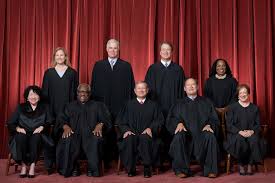
Readers may recall that in 2024 the U.S. Supreme Court decided that the President has absolute immunity for actions he takes within his core constitutional powers, and ‘presumptive immunity’ for all official acts. Yes, not unlike the Kings of Old, back in the day.
In Trump vs. the United States 144 S. Ct. 2312 (2024) a majority on the Court explained that:
In his Farewell Address, George Washington reminded the Nation that “a Government of as much vigor as is consistent with the perfect security of Liberty is indispensable.” 35 Writings of George Washington 226 (J. Fitzpatrick ed. 1940). A government “too feeble to withstand the enterprises of faction,” he warned, could lead to the “frightful despotism” of “alternate domination of one faction over another, sharpened by the spirit of revenge.” Id., at 226–227. And the way to avoid that cycle, he explained, was to ensure that government powers remained “properly distributed and adjusted.” Id., at 226.
It is these enduring principles that guide our decision in this case. The President enjoys no immunity for his unofficial acts, and not everything the President does is official.
The President is not above the law. But Congress may not criminalize the President’s conduct in carrying out the responsibilities of the Executive Branch under the Constitution. And the system of separated powers designed by the Framers has always demanded an energetic, independent Executive. The President therefore may not be prosecuted for exercising his core constitutional powers, and he is entitled, at a minimum, to a presumptive immunity from prosecution for all his official acts. That immunity applies equally to all occupants of the Oval Office, regardless of politics, policy, or party.
In a law school long ago and far away, your correspondent recalls a professor saying it was a crime to intentionally shoot people dead for no lawful reason, like self-defense for example. And also that it is a ‘core constitutional power’ – a duty – of the President to ensure that laws passed by Congress (e.g., immigration laws) are faithfully executed.
So . . . Let’s say our President (“Sir,” if you prefer) is out for a stroll and overhears an animated passer-by speaking loudly in Spanish, and our President promptly shoots him dead. Shocked bystanders immediately summon the police to arrest the President.
An officer arrives, gun drawn. Says Sir to the cop, “Wait. Wait! I was energetically and vigorously exercising my official duty to enforce immigration laws passed by our Congress. That guy sounded like an illegal alien who’s pedaling drugs and eating our dogs and our cats!”
“Oh,” says the officer, holstering his firearm, “In that case, no worry, Sir. The Supremes said you’re immune from prosecution.”
Overhearing, a shocked bystander shouts, “Hey! Wait a minute, officer! In America, No One Is Above The law!!”
“Pipe down, pal!” shouts the cop, “the Supremes made a new law. This is America now, and don’t you forget it!”
March 28 – Be there or be square.






Be First to Comment