
Celebrating 250 Years of Victories
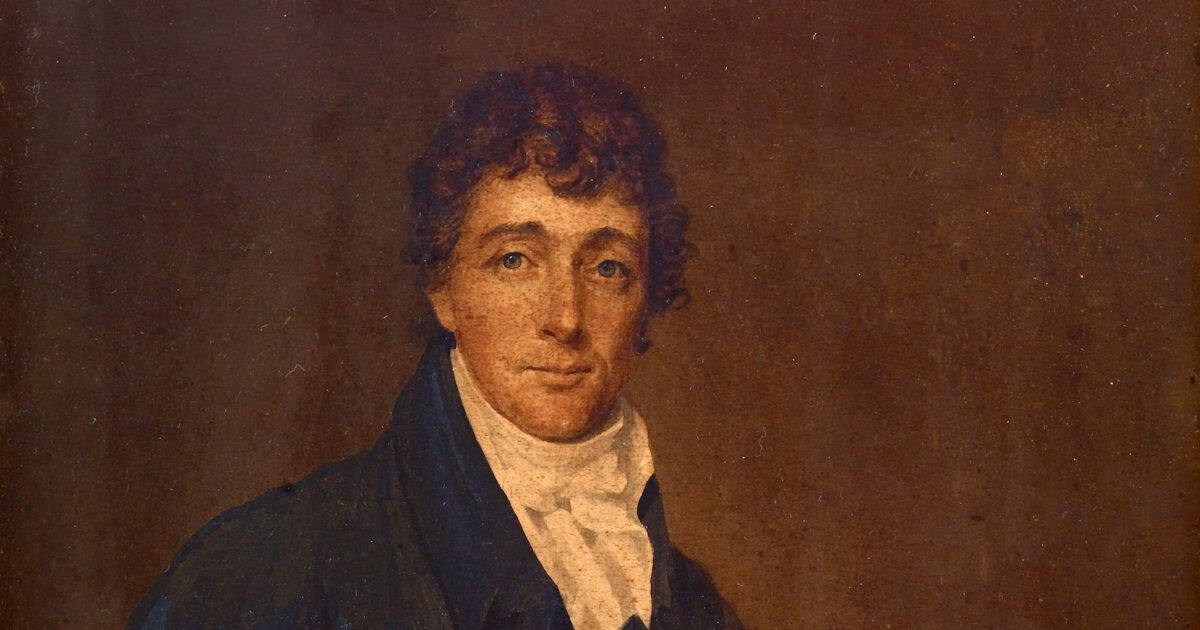
In 1814, Francis Scott Key (‘Scotty’ to his friends) penned a poem entitled, “The Defence of Fort McHenry.” In 1931, its first verse became our National Anthem.
As the country’s 250th birthday approaches, it’s a tune we’re hearing more than usual, not just at the beginning of every high-school/college/professional football, baseball and canasta game. The 250th is evenly divisible by 50, and there are 50 states, which makes this 4th of July a special semiquincentennial (look it up).
Whenever it is played and/or sung this year, “The Star Spangled Banner” will be infused with extra enthusiasm and perhaps tears, but with straight backs and proud chests puffed by 250 years of Victories. Yes, Victories! Over enemies foreign and domestic, real and imagined – over Indigenous People, the French and British, Tripoli pirates, Cubans, Germans, Colombians, Mexicans, Japanese, etc., etc. Plus a dozen or so billion-dollar ‘tie-games’ against North Koreans, Vietnamese and miscellaneous North Africa-Middle-Easty-quasi-Asian peoples over the last 80 years and counting. But this is America! When it comes to wars, who’s counting??
Keys’ poem has three more verses, each ending with “O’er the LaaAnd of the Freeeee, and the Hoooomme . . . of the . . . Braaaaaaaave.” His full poem can be found at: https://amhistory.si.edu/starspangledbanner/pdf/ssb_lyrics.pdf. Of course, all those verses [Scotty’s day-job was lawyer] would be far too many words to add to our anthem, delaying kick-offs far too long.
But Keys wrote his poem in 1814, so what did we use as a National Anthem until 1931? Did we even have one?
Your correspondent texted his friend, Eih Aye, and her reply – cleansed of mistakes, repetitions, techno-sentence structure and bad grammar – was as follows:
“Before ‘The Star-Spangled Banner’ became the official national anthem in 1931, the United States had no officially recognized anthem, but several songs served as de facto anthems. ‘Hail, Columbia’ (1798) was the most prominent, used at official functions for most of the 19th century. It was also the song used at George Washington’s inauguration and became the de facto anthem for over a century. Today, it is still used as the ‘entrance song’ for the country’s Vice-President.
“Also widely used was ‘My Country, ‘Tis of Thee’ (1831) – also known as ‘America’ – and often used alongside ‘Yankee Doodle,’ for the better part of a century.
“The Star-Spangled Banner” gained popularity throughout the 19th century, particularly during the Civil War, and was used by the military prior to 1931. It was finally adopted as the Official National Anthem by Congress and signed into law by President Herbert Hoover on March 3, 1931.”
But sadly, as July 4th approaches this year, our United States are becoming increasingly dis-united – ‘Untied.’ If Unity lasts a little longer and we perhaps become a less violent culture, Scotty’s last verse might be worth a look, anthem-wise:
O thus be it ever when free men shall stand
Between their lov’d home and the war’s desolation!
Blest with vict’ry and peace may the heav’n rescued land
Praise the power that hath made and preserv’d us a nation!
Then conquer we must, when our cause it is just,
And this be our motto, “In God is our trust,”
And the star-spangled banner in triumph shall wave
O’er the land of the free and the home of the brave.
If no one demands to know His/Her/Their/Its gender, race, religion, color, nationality, immigration status, political party, accent, sexual preference and/or pronouns, “God” shouldn’t be a problem.






Be First to Comment