
During the Indiana chapter of my boyhood there was a deep gorge that channeled the East Fork of the Whitewater River through the middle of town. And in that gorge, on the banks of that river, there was an enormous, abandoned, multi-storied brick warehouse where, completely unknown to me, American musical history had been made. It had been home to the Starr Piano and Gennett Records company, and it once housed a primitive recording studio that produced the first recordings, and subsequent records, of musical icons that included Louis Armstrong, Jelly Roll Morton, Blind Lemon Jefferson, Bix Beiderbecke, Guy Lombardo and cowboy troubadour Gene Autry, to name a few.
The new technology for recording sound on wax platters, and transferring the impressions to grooved discs made from shellac, ignited the recording industry and turned the Richmond, Indiana recording studio and production factory into an engine of modern American musical history, until the Great Depression brought it all crashing to a stop. Gennett Records did not survive the economic crash and the wreckage of its collapse was littered all over that factory into my 1950s boyhood.
My older brother and I, along with other anonymous partners in juvenile delinquency, inherited access to that abandoned factory and its 78-rpm shellac-bodied contents, through the simple fact that there was no one on site to protect it, to preserve its historic contents, to chase us away.
And so it became a popular pastime to hike down to the record factory where an inexhaustible supply of shiny, flat, black finely-grooved discs were stacked in boxes, strewn in loose piles, littered randomly everywhere, begging to be flung, flipped, sailed through the air before shattering against the brick walls or flying out the windows to wherever gravity took them. I have no idea how many records, of which artist, I wantonly destroyed. Something there is, in the spirit of young boys, that craves access to forbidden spaces and the opportunity to break things, smash things to pieces.
It never occurred to any of us that we might be destroying a slice of musical history with each flipped disc. Frisbees had not yet been invented, so it was rare, if not impossible, to find any round object that could be made to fly as easily and as far as those 12-inch records, that had the added benefit of shattering into showers of shards on impact.
Which brings me to a recent walk I took through SDC – the Sonoma Developmental Center campus – or to be more precise, into and through a variety of the buildings at SDC that have been breached by anonymous members of the public. Who did the breaching, I have no idea. There was, to my surprise, limited evidence of graffiti or structural damage to windows, walls and doors. But several windows have been broken, several locked gates have been pried apart or simply flattened, several doors are now standing open, almost inviting curious passersby to enter. So I accepted the invitation and, along with my dog, I entered.
We all carry our own inner filters when exploring the unknown, and what I experienced was a feeling reminiscent of my countless childhood hours at the Gennett record factory. I was not tempted to smash anything – I’m far too old and there were no vinyl records lying around to tempt me. But I felt the pull, nevertheless, to explore a vast, unlocked and mysterious space. And the very fact that the buildings were breached reveals that others have had the same impulse.
I was surprised to find no evidence of overnight encampment. There wasn’t a lot of trash, almost no tagging, no evidence of fire – a risk in any unlocked, abandoned space.
The Sonoma Developmental Center is virtually abandoned. Two or three security vehicles circulate through the 180-acre campus, a vestigial presence incapable of making the place secure. At some point, without better oversight, it would border on miraculous if more intrusion doesn’t take place, and with more intrusion comes the inevitable risk of fire.
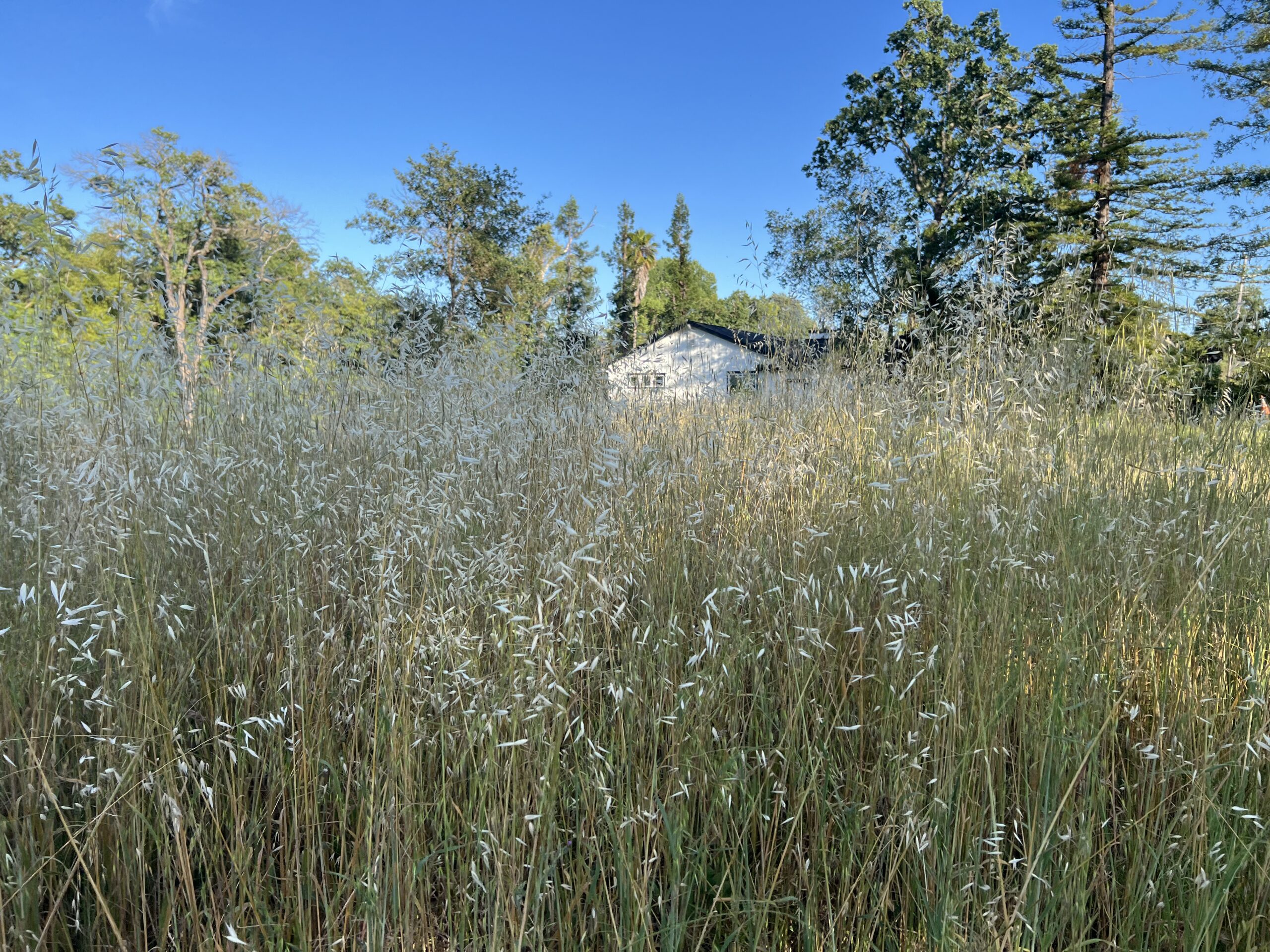
And while the State Department of General Services (DSG) has made one so-far cosmetic effort at cutting a small swath of the head high grasses and weeds embroidering the campus, the fire danger from that rapidly drying fuel grows exponentially. As I write this, from my home office literally 20 feet away from a stand of that elegantly unkempt grass, a North wind is gusting past 20 miles per hour, whipping the grass and showering my yard with bits of tree debris.
It feels, at this moment, very much like the night of October 8, 2017 when the village of Glen Ellen was wrapped with flame, and the firestorm raced down the canyon of Sonoma Creek to within yards of this home. The main difference is that, at this moment, there appears to be more available fuel.
DGS not only still has ownership of the property across my fence, it has the legal responsibility to protect it. I have hundreds of neighbors who, like me, wish the state would start taking that responsibility seriously.







The State of California is negligent in letting SDC grasses become a fire hazard. Some places it’s 6 feet high. They have done some cutting along Arnold, but if you venture to the side roads, it’s out of control. They should know better because we all remember Paradise and Altadena fires where people burned alive in their cars. How many more people have to die before they make real changes. Adding more homes to the area only complicates the evacuations. During the Tubbs fire, it took 3-6 hours to get out of Sonoma Valley.