
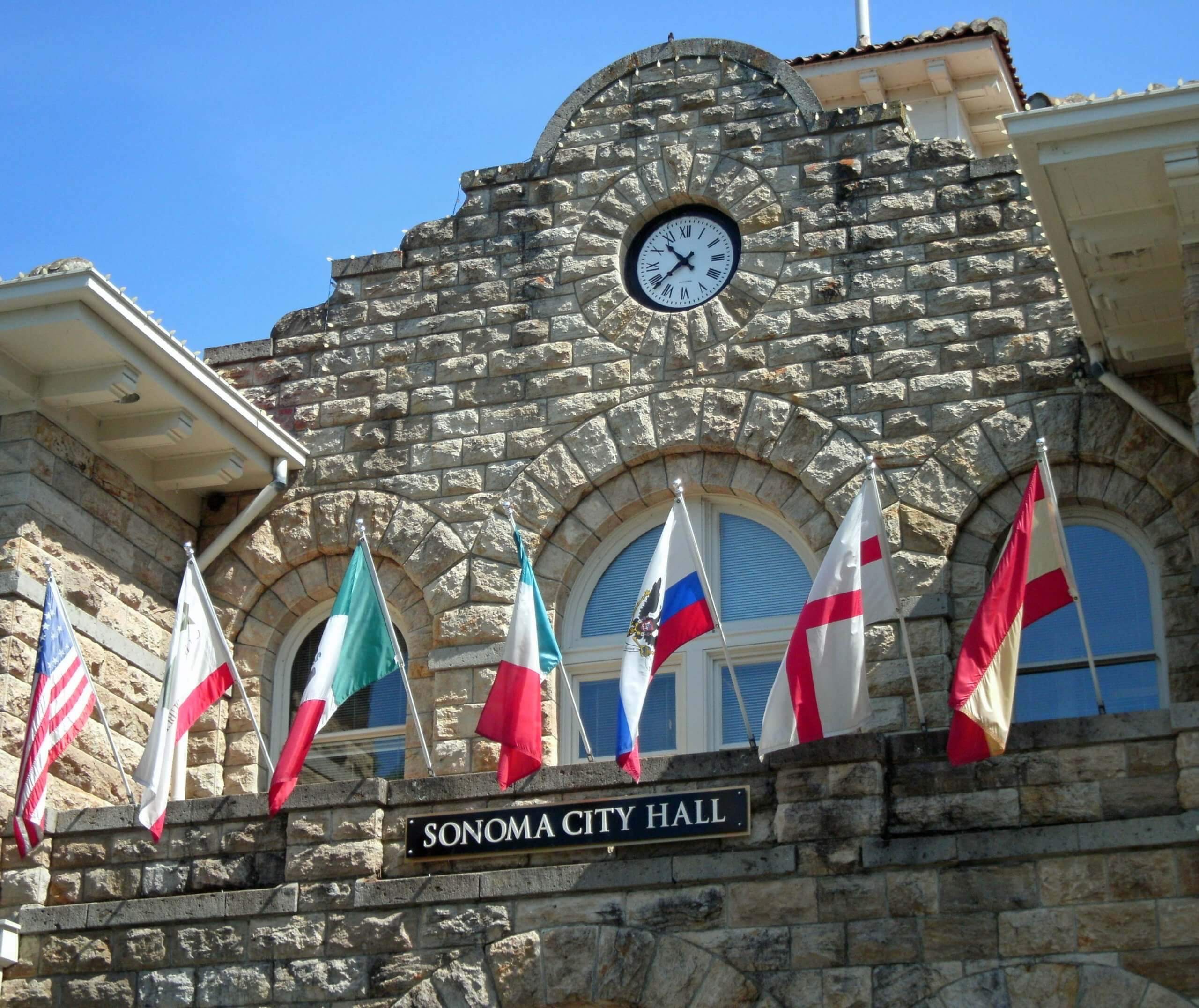
Facing a projected $1 million deficit for the proposed 2026-27 budget, the City of Sonoma recently undertook a fee study to determine ways to increase revenues.
Using a “cost recovery” methodology which analyses the actual costs incurred by the city in conducting its affairs such as development plan reviews, cemetery operations, conducting appeal hearings, replacing trees, and most other public-serving services, Matrix Consulting began its analysis in 2024. The result is a set of recommendations for the city to update its Master Fee Schedule which, if adopted, will significantly increase costs for the public.
The City of Sonoma relies in large part of fees to offset the cost of its operations. Payroll and its accompanying benefits and obligations like pensions, comprise the vast majority of costs for the city, and increase yearly. All but management personnel are represented by SEIU, a union, which negotiates rates and benefits for the city’s employees. In addition, the ordinary annual increase in costs for goods and services adds to the city’s expenses.
As noted in the staff report, “according to the results of the Fee Study, the City is under-recovering its costs by approximately $1.1 million or recovering 40 percent of its costs; the largest deficit is in relation to Building services which recovers just 25 percent of its cost.”
Examples of proposed fee increases include:
- General Plan Maintenance Fee: This would mean for every $100 of a major building permit, a $23 surcharge will be applied ($10,000 = $2,300).
- Technology Fee: for every $100 of any permit issued, an $8 surcharge will be applied Administrative Fees: City staff proposes to add fees for new services including use of the City Council Chamber, Notary, and wedding license fee.
- Police Fees: Police has an annual cost recovery of roughly 50% due to the dog licensing The City has the option to increase these fees.
- Building Fees: Staff proposes altering its building permit fees to be based on the occupancy and square footage of the project rather than based on project valuation. This allows the City to more accurately account for the level of effort associated with reviewing and inspecting these projects, further described below. The building plan check is proposed to be 75 percent of the building permit fee and planning plan check is proposed to be 10 percent.
- Planning Fees: Staff worked with the project team to right-size these fees, ensuring the time to administer these services reflected the current process needed to conduct these reviews.
- Public Works and Utilities Fees: The fees charged by the Public Works Division under-recover the associated costs. Public Works has an annual cost recovery of about 56%. The largest under-recovery is in relation to the ‘Encroachment Permit Fee’, especially the ‘Major’ Fee, which makes up $53,000 of the deficit.
- Special Event Fees: Additional fee categories have been introduced for items such as amplified sound, banners and equipment storage, and amenity rental. One of the most significant changes is to the rental fees for Plaza and park use.
- Cemetery Fees: Under the proposed fee schedule, most standard burial and cremation services would experience moderate increases generally ranging from approximately 5% to 8%.
- Annual Fee Escalator: Staff recommends an annual CPI increase. This factor is calculated by the Bureau of Labor Statistics and is specific to states and regions.
- Impact Fees and In-Lieu Fees on Trees, Public Art and Parking
If the Master Fee Schedule is approved, the fees would become effective in 60 days, on August 2, 2026. The City Council will conduct a public hearing to review the recommendations on June 3, 2026.
The full report and proposed fee schedule can be viewed HERE.






Be First to Comment