
By Larry Barnett
Worldwide, there are 1,700 documented species of bamboo that grow in regions as diverse as tropical to temperate. Over 100 species are used for food, and nearly that many for construction. They range from tiny to timber-sized and have been in cultivation for 10,000 years.
Here in Northern California, where the climate ranges from hot and cold to temperate, and even subtropical, bamboo can be found having naturalized and formed large groves. Its use in landscaping and gardens can also be found but, unfortunately, it’s gained a bad reputation, largely undeserved. It’s not bamboo that’s to blame, but its improper use.
A member of the grass family, bamboo is divided roughly into two growing types, running and clumping. Both types grow from rhizomes, underground root structures from which new growth emerges. It is the running type of bamboo that has fed its maligned reputation due to its rapid spread and tough rhizomes. And yet even running types of bamboo can be successfully grown in gardens and landscapes with the proper planning and maintenance.
I’ve grown nearly a dozen different types of bamboo in my home gardens over the years, ranging from giant “timber” bamboo that reached 45 feet tall to low-growing ground-cover. I’ve raised both clumping and running types, and while bamboo needs careful observation, its rewards are many. It provides beauty and, placed strategically, shade and privacy. The sound of its leaves rustling in the breeze is calming, and it is largely pest-free.
The key to growing bamboo is proper planning. Unless space is no concern, running bamboo needs to be contained either through the use of buried bamboo barrier or grown in pots or planter boxes. Uncontained running bamboo can spread as much as ten feet or more in a year. Bamboo barrier is sold in rolls; it’s a heavy-weight plastic product about three-feet in width that provides a way to surround a patch of running bamboo and contain its rhizomes from spreading. Installation requires digging a deep trench, but because bamboo rhizomes are contained within the first few feet of soil, the barrier is highly effective. This is true of both small and large species. The barrier needs to extend at least four inches above the soil line so that rhizomes attempting to spread over the barrier can be observed and removed. Accumulated leaves can obscure rhizomes attempting to escape the barrier, so diligent observation is essential.
Clumping bamboo spreads very slowly, in inches not feet. Both large and small varieties are clumping, and a bamboo barrier is not generally necessary. On the other hand, clumping bamboo creates tight knots of rhizomes over time, and if a large variety, is extremely dense and hard. It is the density of bamboo that gives it extraordinary strength, but also means its management includes having the right kind of tools, like sharp pruning saws.
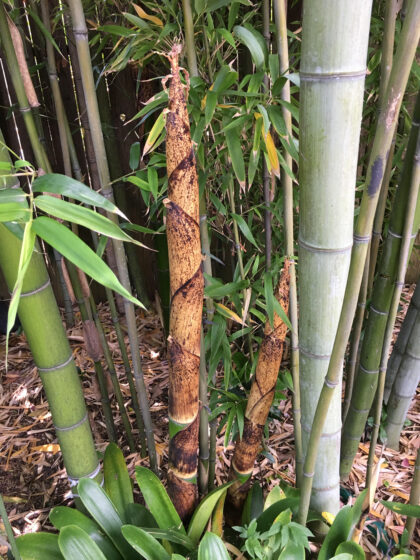
The new growth of bamboo is called “culms” and they can grow very quickly. I observed my timber bamboo culms growing up to nine-inches in one day. Culms emerge from the ground at their full circumferential width, so what you’ll see is what you’ll get. Culms are temporarily covered by “shield” leaves that protect them until they harden; they then dry out and fall off. Once the culm reaches its maximum height, side branches begin to grow from the nodes between bamboo segments. All bamboo are heavy feeders, and benefit from regular application of fertilizer. Most varieties also like regular water, although they can withstand prolonged periods of drought when well established.
Both running and clumping types can be container grown, but because roots can emerge from drain holes and make their way into the soil, pots or containers should be placed on an impermeable surface and not be placed directly on the ground. Over time, rhizomes will fill the container and the choice then is to either repot in a larger container, or to remove the root ball, reduce its size by cutting and trimming, place it back in the pot and add new soil. Regular feeding is essential.
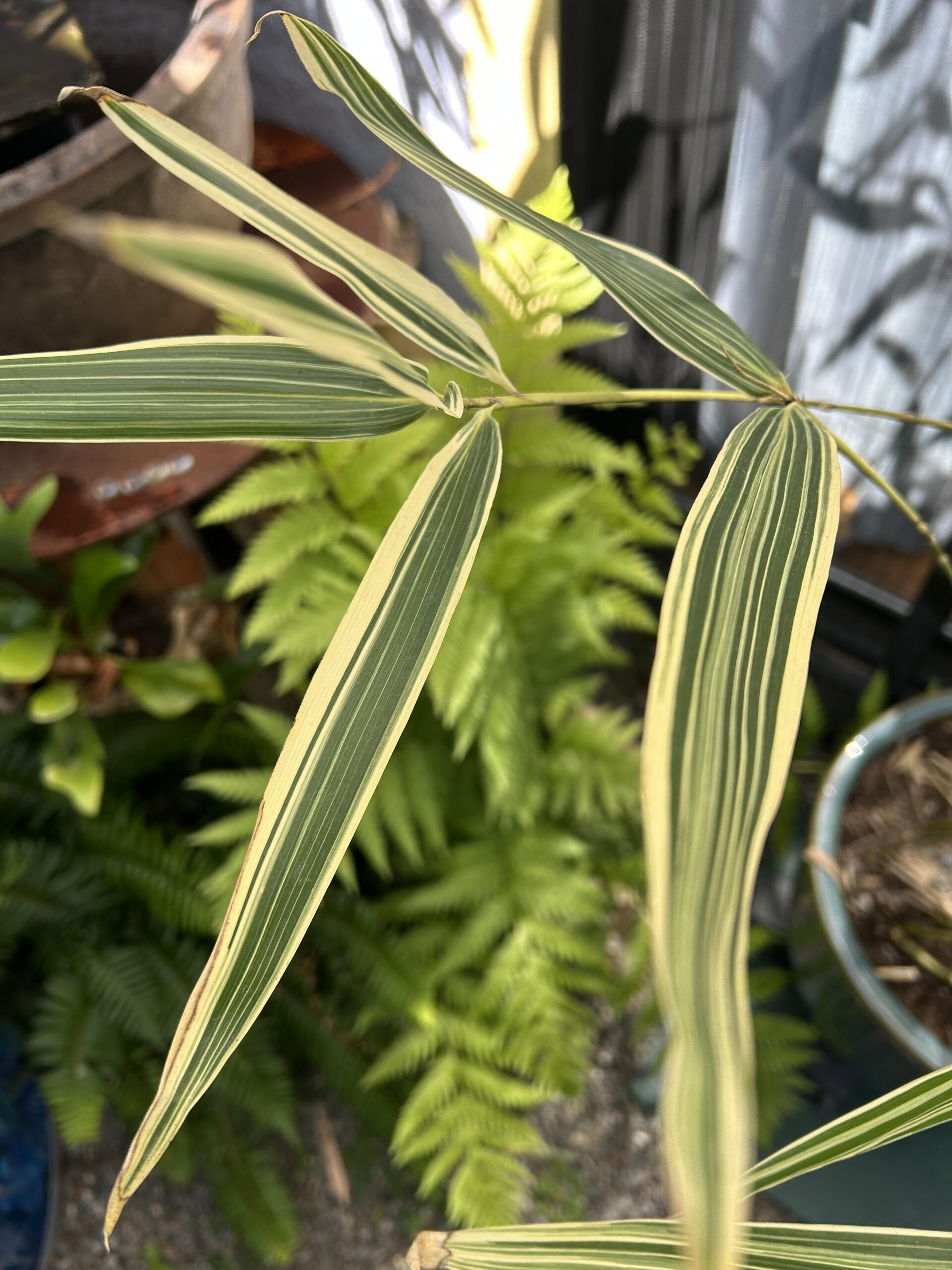
Some species of bamboo like shade and an understory habitat, while others thrive in sunlight. Choosing the right type for the right conditions is essential for success. Some species have deep green culms and leaves and other species have yellow or even black culms. Variegated yellow and green striped varieties exist as well. There are many species that will thrive here if chosen and planted properly.
There are few garden experiences more dramatic than watching new culms emerge, but bamboo does not live forever. Remarkably, the life cycle varies from as little as 10 to 60 years. When it reaches the end of its life cycle, bamboo forms grass-like seeds and the plants die. With some species, this happens as a global event, all plants of that species going to seed at the same time. It’s a reminder of the relentless cycle of life and death, and itself a solemn event about time and mortality.




Larry,
I’d love to speak with you and pick your brain in regards to using Bamboo in landscaping in Sonoma.
Email me at [email protected] and we can chat.