
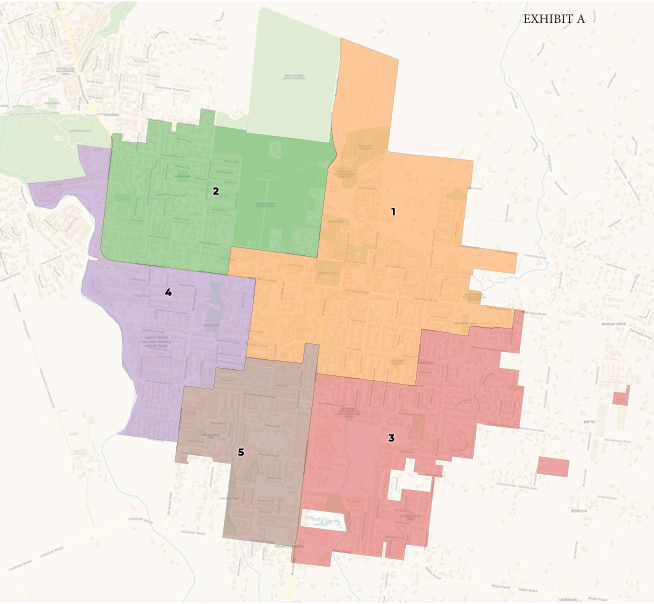
When the City of Sonoma succumbed to the perceived threat of litigation due to non-district-based elections for City Council, it was hoped district-based elections would help residents feel, and actually be, better represented. Ironically, for mobile home residents, it’s not the case. The convergence of state conflict-of-interest law and how the districts were drawn within the City, means the council member who lives in the district where all the mobile home parks are located must recuse herself from council deliberations and votes on policies covering mobile home parks.
State conflict-of-interest laws require that any elected council member must recuse when their primary residence is located within 1,000 feet of a project or parcel under council consideration. The basis of the law is that proximity closer than 1,000 feet creates potential financial impacts such as raising or lowering property value that might sway the vote of a council member in one direction or another.
In principle, such laws make sense, but in a city only two-and-a-half miles in size, conflicts of interest happen far too often. Now the residents of District 4 must look to council members residing outside their district for advocacy and support. Hopefully, the City Council majority will continue to support the needs of mobile home park residents, regardless of the district in which they live.
State laws governing mobile home parks have changed since the City of Sonoma enacted its own set of regulations in the 1990s. An effort is currently underway to align the city’s mobile home park regulations to conform to state requirements, and the park residents are concerned that their interests continue to be well protected. We hope they are; mobile homes provide affordable housing to a vulnerable population of mostly elderly residents who would be hard pressed to find alternative housing in our community they could afford.
But this situation is a good example of the way the law of unintended consequences works. Measures adopted both locally and statewide intended to produce a positive effect on society sometimes do exactly the opposite, and nobody, it seems, sees it coming.
Laws are made of words, and words matter. The interpretation of the wording of laws and their effects by the courts is a major activity, and the entire activity of the Supreme Court. Laws are written by people, after all, and because people are imperfect, so are the laws we write. Even the best intentions can result in poor results. For example, the slew of housing laws passed in Sacramento over the past five years were intended to increase the supply of housing, but reportedly, housing starts remain flat. Our society is too complex for us to always get the results that we expect.
We trust that the people we elect to represent us are honest and take office with the interests of the community placed well above their own. By and large, that’s true, but there are and will always be exceptions, people in office who only care about themselves. Conflict of interest laws were adopted to eliminate temptation and take financial incentives off the decision-making table. We can call it the “rotten apple” rule, written to prevent dishonest people from enriching themselves.
The unintended consequence is that well-meaning, honest, elected decision-makers are prevented from doing the job they were chosen to do.







As always great editorial by David Bolling and interesting insights into this new district election. in Sonoma.
Hopefully those of us who live in mobile home parks will be represented by the City Council.
Thank you for being a real voice of Sonoma.