
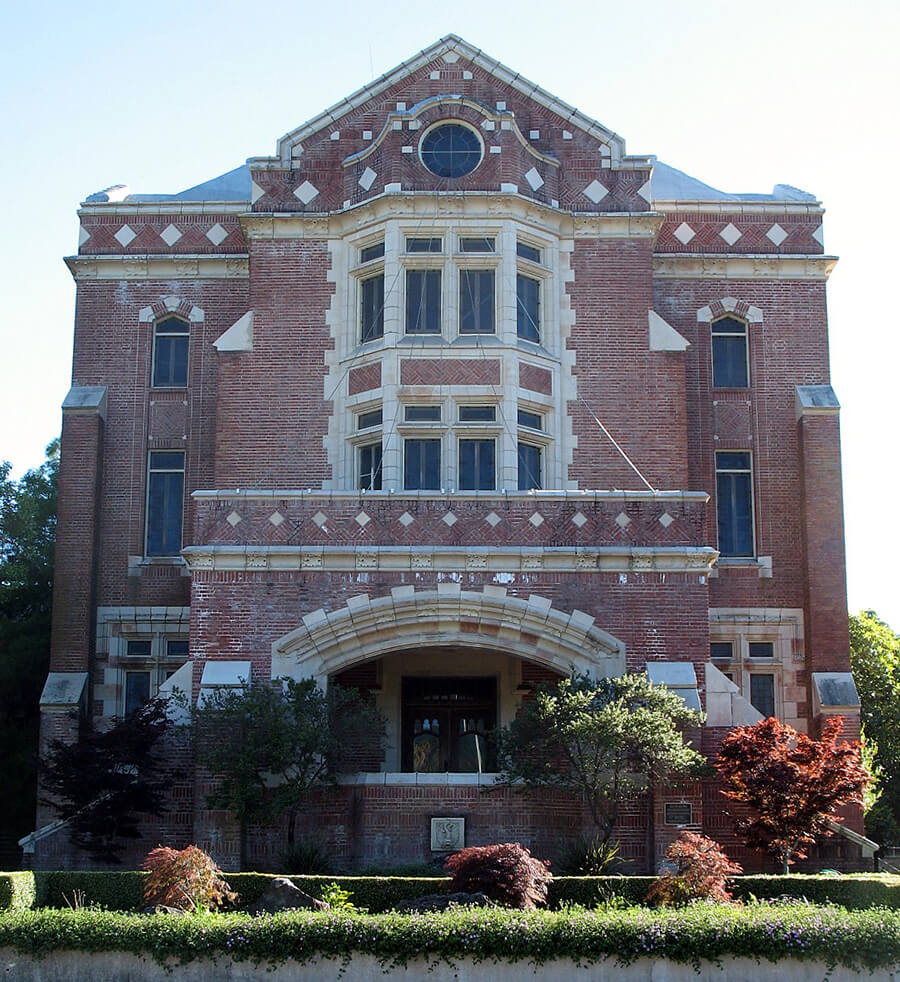
County Needs More Analysis
By David Bolling
In a surprise announcement released on a County website last weekend, the Sonoma County planning department – Permit Sonoma – announced that the expected release of a new draft Environmental Impact Report for the proposed development of the former Sonoma Developmental Center (SDC) in Glen Ellen, will be delayed into next year. Original expectations were that it could be released sometime between April and September of 2026.
That delay comes on top of a complete planning do-over by county staff, after a former Superior Court Judge, Brad DeMeo, summarily rejected the County’s original development plan, and its accompanying Environmental Impact Report (EIR), as being wholly inadequate. Judge DeMeo’s scathing, 2024 rejection of the first “Specific Plan” and its accompanying EIR, forced the county to decertify the whole package, which called for approximately 1,000 housing units, encompassing some 2,400 people, with as many as 3,000 vehicles, to be placed on the 184-acre central campus, along with a 150-room resort hotel, bordering two-lane Arnold Drive. The population of the immediately adjacent village of Glen Ellen is approximately 900, spread over a few square miles.
The so-called “Specific Plan” for the property had been spearheaded by a development consortium composed of Keith Rogal (a Napa County developer) and the Gruppe company, a statewide development powerhouse based in Stockton. The developers (who name their SDC project “Eldridge Renewal”) had taken advantage of a loophole in housing law, called the Builders Remedy, which allows developers in jurisdictions where a county or city housing element has not been adopted by a date certain, to ignore zoning regulations governing density, and to build with densities otherwise prohibited.
The EIR rejected by the Superior Court essentially concluded that the cumulative impact of that many people and vehicles on a semi-rural-wildland environment, would have no negative environmental impacts that could not be mitigated. This despite the presence of a critically-important North Bay wildlife corridor running directly through the SDC landscape, and the proven threat of wildland firestorms that could challenge the capacity of the two, two-lane evacuation routes for the property. Those critical routes were alternately gridlocked and/or blocked in the 2017 and 2020 firestorms that ravaged Sonoma Valley.
The lawsuit, challenging the original plan and EIR, was brought by a consortium of Sonoma Valley citizens groups acting under the umbrella acronym of SCALE (Sonoma County Advocates for A Livable Environment). But a second lawsuit, brought by a companion organization – Sonoma Valley Next 100 – added a different legal strategy by targeting several alleged violations of state law by the California Department of General Services (DGS), which has jurisdiction over the disposition of surplus state properties. That lawsuit alleges that the legislation enabling the State to dispose of SDC has been violated in five ways:
First, that selection of the Rogal-Grupe application without a Specific Plan in place violated the intent of the State’s enabling legislation, and that declares surplus state property should first be offered to “nonprofit affordable housing sponsors, prior to being offered for sale to private entities or individuals.”
Second, that DGS should not have signed the developer’s Builder’s Remedy application prior to an adopted Specific Plan, EIR and General Plan Amendment being in place.
Third, that DGS failed to follow state law by not consulting with the California Office of Historic Preservation about its demolition plans for the historic SDC property.
Fourth, that DGS violated the terms of the enabling legislation to maintain the property until it is transferred to a developer. Since June 30 of 2025 there have been no state-budgeted funds for preservation and maintenance of the property, which has led to incremental deterioration of the onsite infrastructure and an increase in wildfire risk.
And fifth, that DGS should not have approved the transfer of 50 acres, at the southeast corner of the property along Highway 12, to expand a major CalFire facility, because that use was not approved in the enabling legislation.
Why Permit Sonoma announced the months-long delay in completing the SDC plan and its EIR wasn’t made entirely clear. The online announcement stated, “Permit Sonoma is currently conducting environmental review for both the Sonoma Developmental Center (SDC) Specific Plan and the Eldridge Renewal development proposal. In response to comments received during the Environmental Impact Report (EIR) Scoping Period, the County is conducting additional environmental analysis and technical studies. This additional analysis has extended the environmental review timeline beyond what was previously anticipated, and the Draft EIR will not be ready for release in 2026. “
There was no clarification regarding the “comments” that triggered the need for additional analysis, although county sources indicated earlier that Permit Sonoma would be seeking expert analysis on wildfire evacuation issues.
An authoritative study released in 2025, paid for by the Valley of the Moon Alliance, and performed by KLD Associates – a San Antonio, Texas company renowned worldwide as experts in evacuation and emergency planning – claimed that wildfire evacuation data incorporated in the EIR for SDC are wildly unrealistic and dramatically understate the impact of 1,000 new homes in the event of a wildfire. The so-called Sonoma Area Fire Evacuation study (captioned the “SAFE Report”) concluded that Valley residents fleeing a wildfire with even an hour’s notice could expect to spend between four and eight hours – or even more – on traffic-clogged roads, traveling at walking speeds.
The announced delay contradicted comments made by Permit Sonoma Director Scott Orr at an August 3 public meeting in Glen Ellen, when he projected that a draft EIR should be ready by September. Orr’s most recent estimate is now the spring of 2027.
That timing could collide with the Sonoma Next 100 lawsuit, which passed a legal challenge in March when Superior Court judge Pat Broderick rejected legal motions by DGS to strike the suit. Norman Gilroy, a Sonoma architect and project planner who helps guide Sonoma Next 100, observed of Broderick’s ruling, “We believe this is the first time a party has successfully moved to trial against DGS.”
Sonoma Next 100 has meanwhile filed a Writ of Mandamus, seeking to force DGS to perform the legal duties the suit accuses the agency of ignoring, without further court action. A successful writ of mandamus is considered a rarely successful legal strategy, but Gilroy insists the failure of DGS to follow the dictates of the State’s enabling legislation makes for a good case. And, he points out, the writ is scheduled for a court hearing in November.
Gilroy refused to speculate whether the pending writ might have influenced the County’s decision to delay the EIR, but he agreed that, were the writ to be successful, it would effectively halt the County’s planning process.






Love your editorials and your intense local reporting. We are blessed to have the Sonoma Sun active and progressive. Thank you David and staff.