
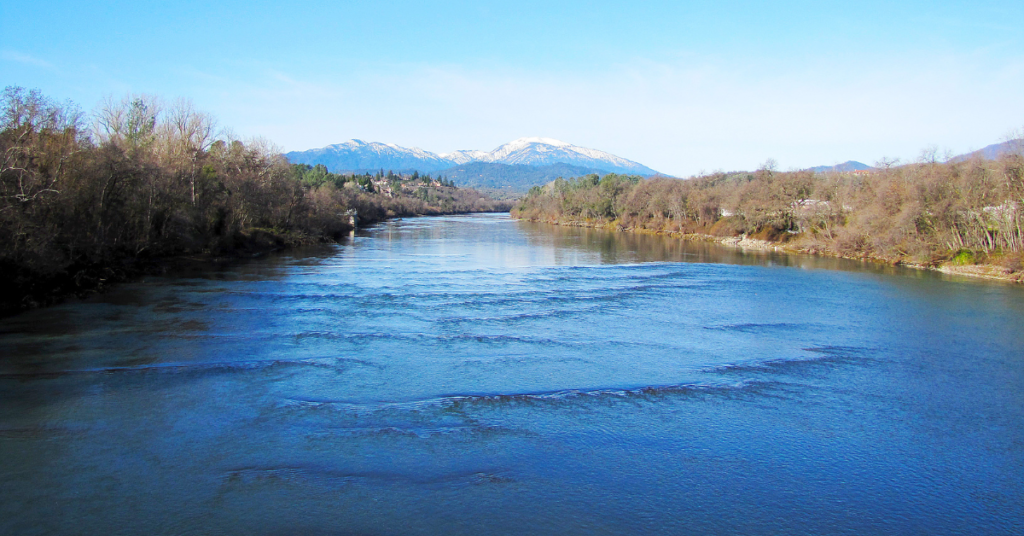
Chinook salmon have been burying their eggs in the gravel of the Sacramento River since long before anyone dammed it. This fall, many of those eggs are not going to hatch, because California’s largest river is running too warm to keep them alive.
State biologists monitoring nests below Shasta Dam estimated in early September that roughly one in five eggs might not survive, and the river has only warmed since. Chinook eggs begin dying once water passes 53.5 degrees, and the Sacramento has crossed that line.
Environmental groups are pointing the finger at the federal government. San Francisco Baykeeper says the Bureau of Reclamation released too much Shasta Lake water this spring and summer for Central Valley farms, draining the cold pool at the bottom of the reservoir that keeps the river chilled through spawning season. Reclamation counters that it is following a temperature plan built with state and federal fishery agencies and complying with the Endangered Species Act.
This is the scenario conservationists warned about in May, when the Trump administration’s push to send more Shasta water south. The worry was that summer releases would leave the river too warm by fall. That is now happening.
The timing could hardly be worse, since California just reopened salmon fishing after three straight years of closures and CDFW projected a strong return to the Sacramento this year. Warm water on the spawning beds threatens the next generation before it ever reaches the ocean.
Shasta Dam has stood 602 feet tall since 1945, walling salmon off from the cold spring-fed streams near Mt. Shasta where they once spawned. Downstream is all they have.
This article and photograph were originally published by ActiveNorCal




It’s about time they did something like this!