
As the 2026 Midterm Election draws near, as America’s proto-despotic president caroms through his second term, laying waste to democratic norms, rules, constitutional rights and moral imperatives; as ICE agents without body cameras continue to kill defenseless people on public streets; as the press is rebuked and refused access to the White House; as incompetent and cowardly cabinet members passively embrace lie after Trumpian lie; after an illegal war drives diesel fuel toward $7 a gallon; and while the incrementally less coherent and ever more irrational president boasts about a new helipad, plans an obscenely monumental archway as his lasting legacy, uses his privileged, inside position to rake in more than a billion dollars of corporate and personal profit, while millions of Americans can no longer afford health care, hamburger or heating oil; and as your eyes glaze over reading the endless and tiresome litany of this president’s political, personal, and legal compromises, you must be looking for relief somewhere, anywhere.
So let me introduce you to Jamie Sonavie, an independent writer and blogger who publishes articles on platforms like Medium, which is where I found him. Sonavie, in turn, introduces us to Ron Garan, a former Air Force fighter pilot and NASA astronaut who has spent 178 days in space, during which he acquired a perspective most of us can only imagine, and which our president appears to be incapable of understanding. Sonavie takes over this page from here:
After spending 178 days aboard the International Space Station, astronaut Ron Garan returned to Earth with something far heavier than space equipment. He returned with a completely different understanding of humanity itself.
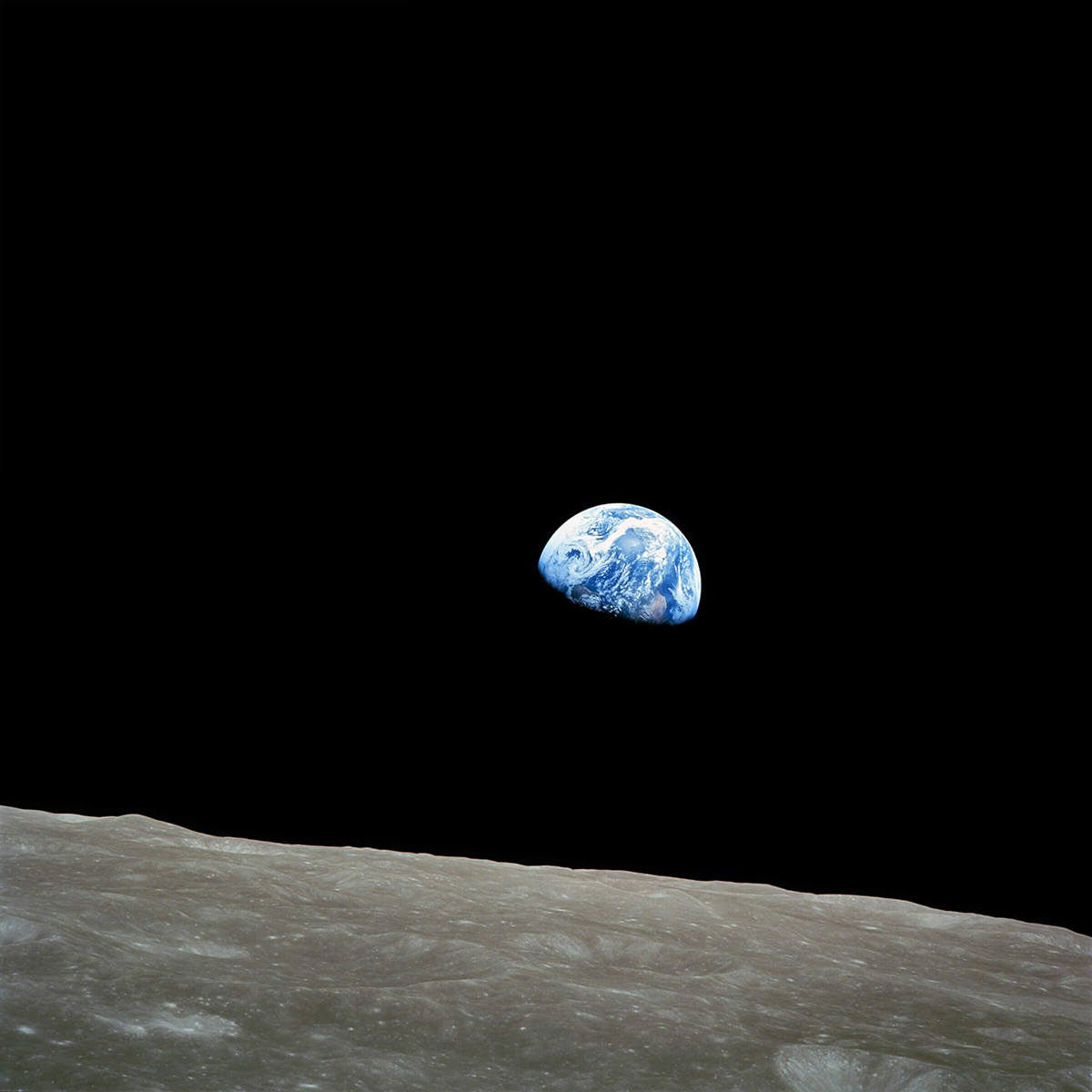
From orbit, we don’t see Earth’s countries, borders, or any of people’s debated interests. From orbit, Earth is a single, radiant blue sphere suspended in darkness.
There are no lines dividing continents. We don’t see flags that mark territories. From 250 miles above the surface, every human conflict suddenly looks small.
Garan described watching lightning storms flash across entire continents. The Aurora Borealis ripples like living curtains over the poles, and city lights glow against the planet’s dark side.
He stated that what struck him most wasn’t Earth’s power – it was its fragility. The atmosphere protecting all life appeared as a paper-thin blue halo, barely visible, yet responsible for everything that breathes, grows, and survives.
It reminded me of Carl Sagan’s Pale Blue Dot, which had the same attitude toward this one world floating in the universe.
That view triggered what astronauts call the “overview effect” — a profound cognitive shift reported by many who see Earth from space. It’s the sudden realization that humanity shares a single, closed system. No backups. No escape route. No second home.
Garan began questioning humanity’s priorities. On Earth, people often treat economic growth as the ultimate goal. From space, that hierarchy collapses.
He argues the correct order should be planet first, society second, economy last—because without a healthy planet, neither society nor economy can exist.
He often compares Earth to a spacecraft. A ship carrying billions of crew members, all dependent on the same life-support systems. And yet, many behave as passengers rather than caretakers, assuming someone else is responsible for keeping things running.
From orbit, pollution has no nationality. Climate systems ignore borders. Environmental damage in one region ripples across the entire globe. The divisions we defend so fiercely on the ground simply don’t exist from above.
In my view, Garan’s message isn’t abstract or idealistic. It’s practical. If humanity continues to treat Earth as an unlimited resource rather than a shared system, the consequences will be universal.
Seeing Earth from space didn’t make him feel small. It made him feel accountable.
Because when you truly understand that we’re all riding the same fragile spacecraft through the universe, the idea of “us versus them” quietly disappears — replaced by a single, unavoidable truth: There is only us.







I’d vote for sending the whole group of them in DC into space so they can acquire the overview. It would be expensive but worth it. Oh, did I mention there is no “Return to Earth” button…?
👍