
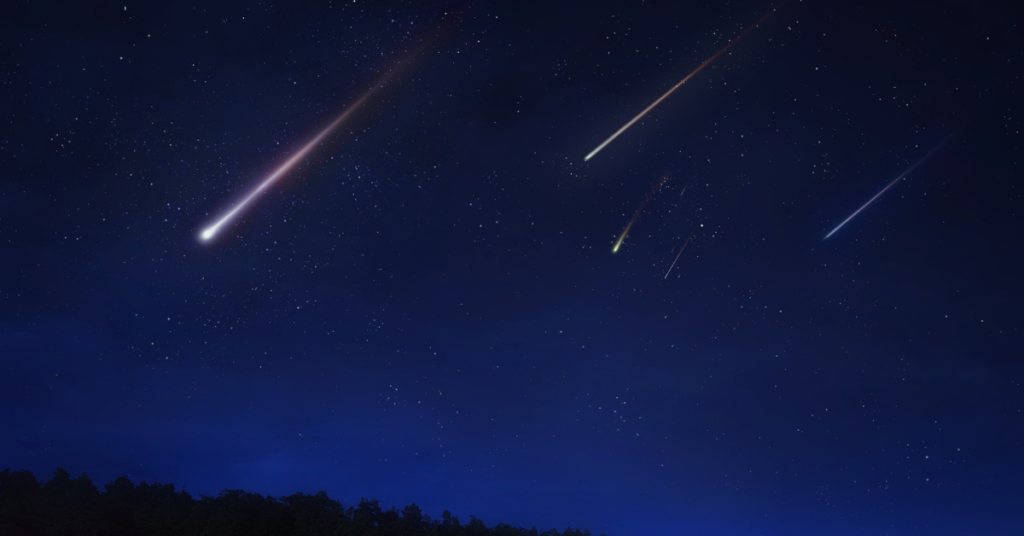
Pieces of Halley’s Comet are hitting the atmosphere over California at about 41 miles per second this month, and the best night to watch them burn up is about two weeks away.
EarthSky lists the Orionid meteor shower as active from September 26 through November 22, with the peak predicted for October 21. Under dark skies the shower typically produces 10 to 20 meteors an hour, and in exceptional years, including 2006 through 2009, rates climbed to 50 to 75. Orionids are fast, about half leave glowing trails that linger for a few seconds, and a few arrive as bright fireballs.
A waxing gibbous moon, roughly 80% lit ahead of the full Hunter’s Moon on October 25, will wash out fainter meteors in the evening, but it sets several hours before dawn on the peak mornings. That makes the window between moonset and first light on October 21 and 22 the time to be outside. The shower’s radiant, near the bright star Betelgeuse in Orion, climbs highest around 2 a.m.
Eyes need 20 to 30 minutes to adjust to the dark, and a red flashlight protects night vision. A smaller shower, the Draconids, peaks October 8 and 9 in the early evening under a nearly moonless sky, though it usually delivers only a handful of meteors an hour.
Halley’s Comet itself will not be back until 2061, so its dust will have to do.
This article and photo were originally published by ActiveNorCal




Be First to Comment