
SDC Demolition
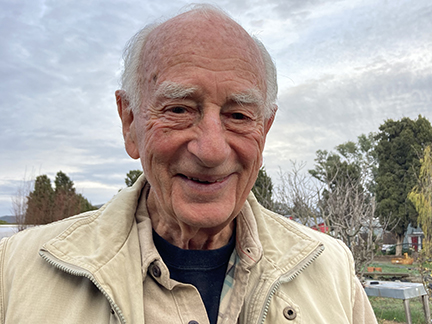
By Norman Gilroy
Sonoman Norman Gilroy is an architect and urban planner who has worked locally and around the world. One of many projects he designed is Larkspur Landing. An activist, he spearheaded the “Cows Not Casinos” campaign, and organized the successful opposition to the Amazon warehouse in Schellville.
On September 25, I went to the County’s public briefing meeting on the Sonoma Developmental Center (SDC) at which the community was invited to provide input into the scope of the EIR for the new Specific Plan required by Sonoma Superior Court Judge Bradford DeMeo when he overturned the County’s first effort last October.
The meeting began with a representative from Dyett & Bhatia, consultants for the County, providing a “description of the project” that enumerated all of the things that would be built but, like the last time around, never once mentioned the demolition process that would precede any construction on the site. No mention of a process that would take many months, its effects on several thousand people in a variety of ways, and that it would result in the total demolition of the buildings and landscape that we now know as the SDC.
Even the documents the County posted along the walls around the spacious meeting room, that purported to show the “buildings to be retained,” did not reveal that all but four (one large, three very small) of the 64 historic buildings on the site, would be demolished. And all that so the developers would have enough room for 990 “living units,” the oversized and urbanized plan for profit they have in mind.
That was an important omission, especially for a meeting set up specifically to scope an EIR to focus on the environmental impacts of what is being proposed by the developers at SDC. But it was a repeat of that same omission that was made at every turn of the first review of the County’s Specific Plan – and we now know what the Judge thought of that when he overturned it and ordered it redone.
These kinds of omissions are dangerous in that they indicate blind spots that have not gone away – and that may actually be reinforced this time around by a need to prove that “we were right the first time” among some people still active on the consultant’s team.
Massive demolition twelve feet deep and over 132 acres, as proposed by the developers, is simply a bad idea – and a bad investment decision on their part. It involves throwing millions of dollars into a hole in the ground, a hole which then needs another few million to refill and reconsolidate to serve as a building site for the multistory buildings proposed. Those millions will then accumulate to increase the “land cost” for the future development, and that will make the challenge of building affordable housing in any quantity even more daunting in today’s rapidly inflating construction market.
But there is no need to make such a mistake. There is a plan out there, proposed by the community, that would be implemented without demolition, and that would avoid that massive expenditure and all of its allied environmental impacts. It would retain the “buildings in a park” character and the open landscape that now exists at SDC, blending them into a village, a cultural and arts center for the Sonoma Valley, and a gateway to Sonoma Mountain for the hikers and nature lovers among us.
And it would double the amount of affordable housing over what is now proposed by the developers, making it more affordable by avoiding throwing a few millions into that “hole in the ground” that is hidden in the present plan now being given so much attention.
“Scale it down, don’t knock it down!”, should be the new motto around SDC. Let’s get it done!







Certainly the real and established intentions of the development group must be obviously displayed in visual planning materials during important public forums. Omissions, as Norman Gilroy calls them, are very likely evidence of bad faith representation from the developer side. It seems obvious to many the opportunities that live within the community village model represent a humanly sane evolution for this public property. Many people can be housed reflecting Gov. Newson’s drive for significant increases in capacity without having to lay bare to overwhelming urbanization this rich and delightful property. It’s no surprise the private violent bright lights for profit want to own and manage this transition. These are publicaly owned acres. It doesn’t seem at all too much to ask that they should have the most authority for the direction of this potentially happy and necessary process. They then also are more likely to welcome the new neighbors and village making given the extraordinary opportunities available to wise use of this space. Versus of course a big plop down magazine worthy development of wealth-showing style.