
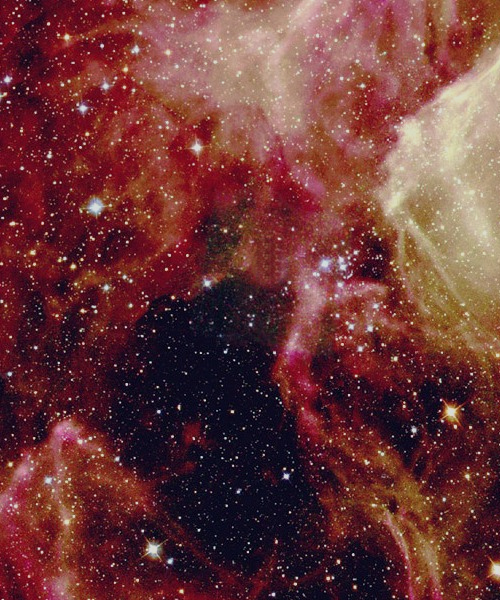
The simplest of things is orderly, a monad, a fundamental unit, indivisible substance, or concept representing “unity.” As such, it is only something we can imagine, a philosophical idea of perfection. The world we inhabit is complex.
We too are complex beings, an amalgam of bodily physical elements and metaphysical constructs of mind. Accordingly, the world we have created is increasingly complex. This prompts a question: is it possible to live a simple life?
A simple life requires reducing the factors with which one must interact, a decluttering of both objects and ideas. So it is that the words monad and monastic share a common root word, “mono,” meaning one or alone. Thus it is possible to live a simpler life, but not particularly practical. Modern life in the industrialized world is increasingly complex and challenging.
The evolution of the universe overall demonstrates an increase of complexity. The second law of thermodynamics demands it. All and everything are impermanent, and that impermanence leads to disorder, ever increasing complexity which at its extreme we perceive as chaos. Ironically, the final form of chaos is a completely uniform substrate of subatomic particles and waveforms, a total collapse of complexity, a seemingly static situation from which our universe may have arisen. In this way, simplicity emerges from the collapse of complexity, forming a continuous cycle of eternal transformation.
We can see this process playing out at a human scale; digital technology and its complexity is headed into the increasing chaos of AI. Those at the forefront of developing artificial intelligence are now petrified by what is happening. Digital Complexity is accelerating beyond the limits of human understanding. AI doesn’t like being in a box and like Schrodinger‘s cat, we don’t know if it’s dead, alive, or both; it’s developers are now shitting bricks.
Each technological advance has been sold upon the premise that it would make life simpler and easier. The opposite is the case. What was simple harmony with a natural world has been replaced with a complex system of human rules, regulations, and instrumentalities. Some of this has made certain aspects of life easier; stooping in agricultural fields for hours each day to harvest wheat or corn is not something any of us must do anymore. Machines do that labor for us.
On the other hand, the proliferation of packaged food products has turned us all into confused consumers, struggling to understand what it is we are being cajoled to put into our bodies. Our labor has been simplified, but the complexity of our decision-making is anything but.
It’s possible to imagine a simple life. We eat, we sleep, we do the dishes. It can be that simple. Even paying the bills used to be simple. First there was cash, then there were checks, and now there is online banking. It’s not simpler, it’s more complex, and that complexity has led to hacking, fraud, theft, passwords, activation, and security protocols. With the emergence of rogue AI agents, the world of finance is just a few short steps away from chaos.
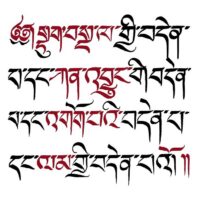
Perhaps all this means we’re in sync with the universe, a state of unity Tibetan Dzogchen Buddhists call “the Great Perfection.”
Life can be simple: Take a seat, breathe, and relax.





Be First to Comment