
By A Concerned Sonoma Valley Educator
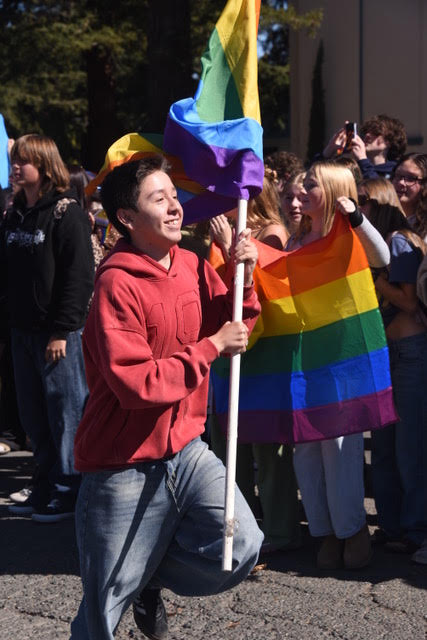
On a Monday morning when Sonoma Valley Unified School District staff were set to begin mandatory professional development around LGBTQ+ student support, the flag representing those very students was quietly removed from outside Sonoma Valley High School.
The irony would be laughable if the consequences weren’t so serious.
By choosing to take down the Pride flag at Sonoma Valley High on the exact day staff were tasked with learning how to better support LGBTQ+ youth, district leadership sent a clear and chilling message to the 3,425 students across our district and their families: visibility is conditionally permitted, but only when convenient.
More importantly, this action demonstrated a fundamental misunderstanding of what LGBTQ+ inclusion actually means – and why training like California’s PRISM program is urgently needed at every level of school leadership, starting with our School Board.
A Pattern of Unpreparedness
In a community like Sonoma Valley, discussions surrounding diversity, identity and inclusion often bring strong local opinions. School board members are charged with navigating these discussions with leadership, nuance and an unwavering commitment to the well-being of all 3,425 students in our care. Yet, removing a symbol of inclusion from Sonoma Valley High School under pressure – or out of discomfort – reflects the exact hesitation many classroom teachers face when discussing marginalized histories.
Education professionals spend hours learning how to create safe environments, handle sensitive topics with fidelity, and align classroom instruction with state standards such as the FAIR Education Act. When School District board members bypass these same learning opportunities, while taking actions that directly affect campus climate, it creates an unsettling disconnect between administrative governance and everyday classroom reality.
What PRISM Training Actually Teaches
PRISM isn’t an exercise in political posturing; it is a professional development curriculum designed to equip school leaders and educators with factual knowledge, cultural competency and legal awareness.
Had the board engaged with the course content prior to making decisions about school symbols at SVHS, they would have understood three key concepts:
Visibility Drives Safety: According to national climate surveys, over 80 percent of LGBTQ+ students report feeling unsafe at school due to their identity. Visible signs of support – whether a rainbow flag on campus, a Safe Space sticker, or inclusive history lessons – are directly linked to higher academic engagement and lower rates of mental health crises among youth.
History Is Academic, Not Ideological: Course materials highlight how LGBTQ+ history is deeply rooted in American civil rights history – from Bayard Rustin organizing the March on Washington to California’s own civil rights milestones. Treating inclusive symbols as controversial political statements ignores their historical and educational substance.
Leadership Requires Engagement: Cultural proficiency is an ongoing practice. Leaders cannot effectively advocate for a diverse student body of 3,425 children without actively learning about the historical barriers those students face.
The Path Forward: Our district’s job is not to avoid difficult conversations, but to guide our community through them with transparency, empathy and educational integrity.
If the School Board expects SVHS staff, students and families to engage thoughtfully in building a safe school climate, board members must lead by example. Taking down a flag at Sonoma Valley High School does not eliminate the needs of our LGBTQ+ students; it only underscores how much work remains to be done.
Editor’s Note: The author’s name is withheld by request but is known to this newspaper as an educator in a SVUSD school. PRISM (Providing Relevant, Inclusive Support that Matters) is a mandatory training program for teachers and certificated employees.



Be First to Comment