
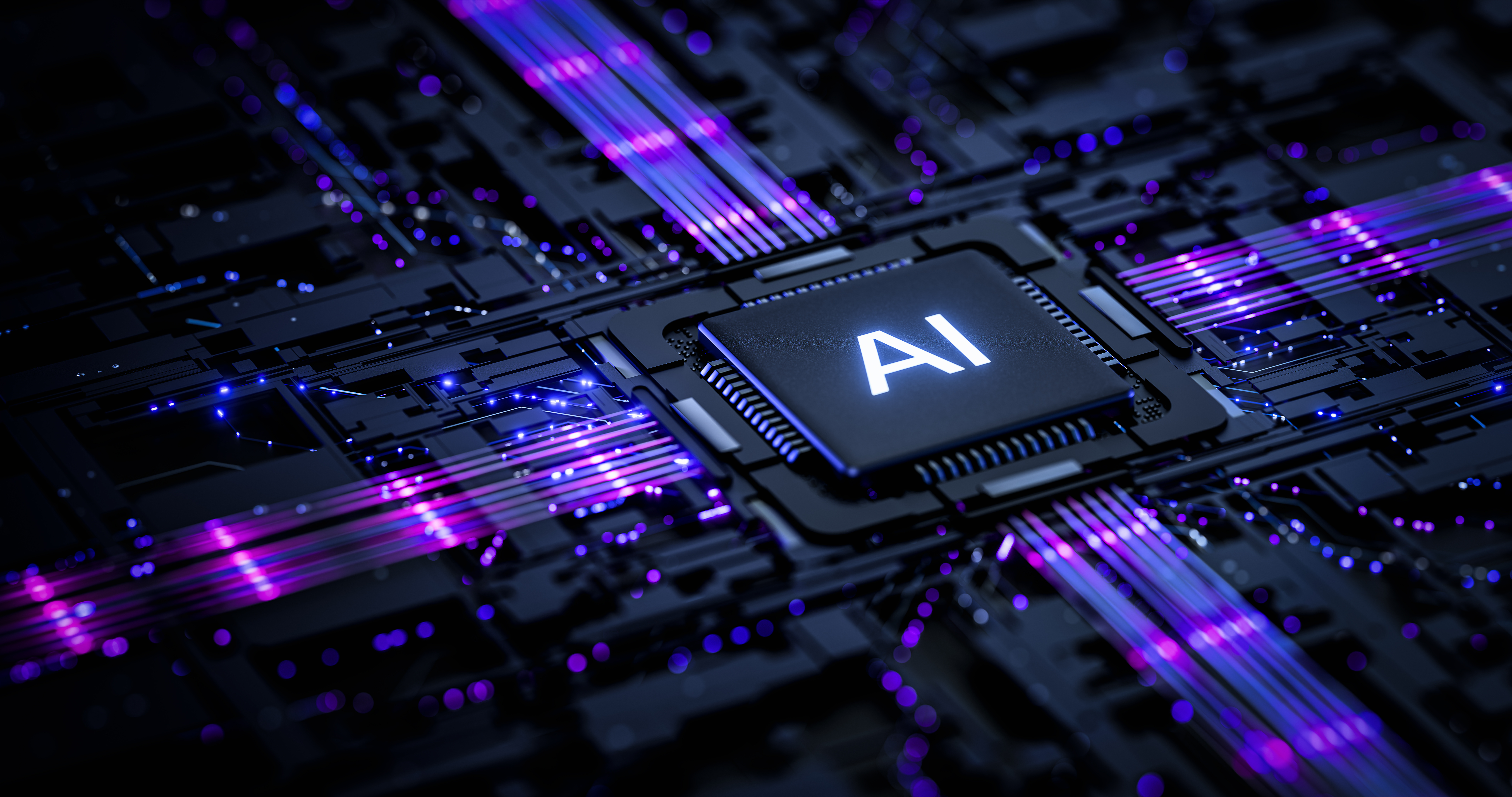
Artificial Intelligence (AI) uses what they call neural networks, electrical circuitry that mimics the arrangement of brain neurons. The human brain has been described as a biological calculator, and not without good reason. In order to survive, we accumulate experience and use it to calculate future probabilities. We then choose among those probabilities those that seem most likely to ensure our survival.
Accordingly, the neural networks of artificial intelligence mimic the way we calculate probabilities, and they do it the same way biological neural networks do, by successively considering IF/THEN scenarios. The reason that the AI data centers are so huge is because the successive layers of IF/THEN queries require massive numbers of interconnected circuit boards.
The human brain, as far as we can determine, utilizes a similar arrangement; neurons numbering in billions are linked by as many as 500 trillion connections. The scale of biological anatomy is so vast that the neural connections in one human brain outnumber the number of stars in the Milky Way. From this arrangement, our thinking abilities arise, and conceivably, consciousness itself. Replicating the depth of that biology in man-made computer networks requires enormous scale.
The IF/THEN approach in decision-making works quite well. The knowledge and experience we accumulate become the memory we use to make decisions. For example, IF the streetlight is red, THEN when I stop, I will most likely not be struck by another vehicle. IF I go through the red light, THEN I may be hit and killed. That’s level one. Taking it further, IF I don’t mind breaking the law, and there are no other vehicles on the road, THEN I can go through the red light safely. Taking it further yet again, IF a police car observes my going through a red light, THEN I may do it safely, but be ticketed and have to pay a large fine. And so it goes.
In this way, my IF/THEN decision making tree proceeds from level to level. The process is both progressive and recursive; I move into the future based upon the information I have accumulated in the past. This decision-making process is nearly infinite. Unlike AI data centers, human imagination is not bound by matters of mechanical scale or electrical energy availability. I can continue to speculate using IF/THEN queries indefinitely.
AI uses natural language processing to read and catalog everything it can find. That repository – multilingual, multicultural, interdisciplinary, mathematical, historical, factual, fictional, etc. become its memory. Using a layered succession of CPU circuitry an AI decision tree generates probabilities just like we do. Unlike us, crucially, AI does not yet have an imagination.
If AI develops imagination, one could say that it has then reached the first level of self-consciousness; it can begin to generate IF/THEN statements not based on the memory it has acquired, but on a purely inventive basis.
We use our IF/THEN approach to guide us in our behavior and actions. Depending upon the level of control we give to AI, it will do the same. We are guided by moral logic derived from embodied physical and emotional experiences such as pain, guilt or shame, however. With no body, AI has no experience-derived moral inhibitions, empathy or conscience. Therein lies the danger: AI does not feel.






Be First to Comment