
Can Art and Culture Grow the Valley Economy?
By Connie Schlelein
“Never doubt that a small group of thoughtful citizens can change the world. Indeed, it is the only thing that ever has.”
When anthropologist Margaret Mead wrote those words, she could have been imagining the transformation taking shape in Sonoma.
Our historic valley is at a crossroad. As the wine industry confronts economic headwinds and changing market demands, a question is gaining urgency: Can Sonoma build a stronger, more diversified economy by connecting its artistic, cultural and historical assets? The opportunity is within reach – if we build a strategic, long-term foundation, collectively.
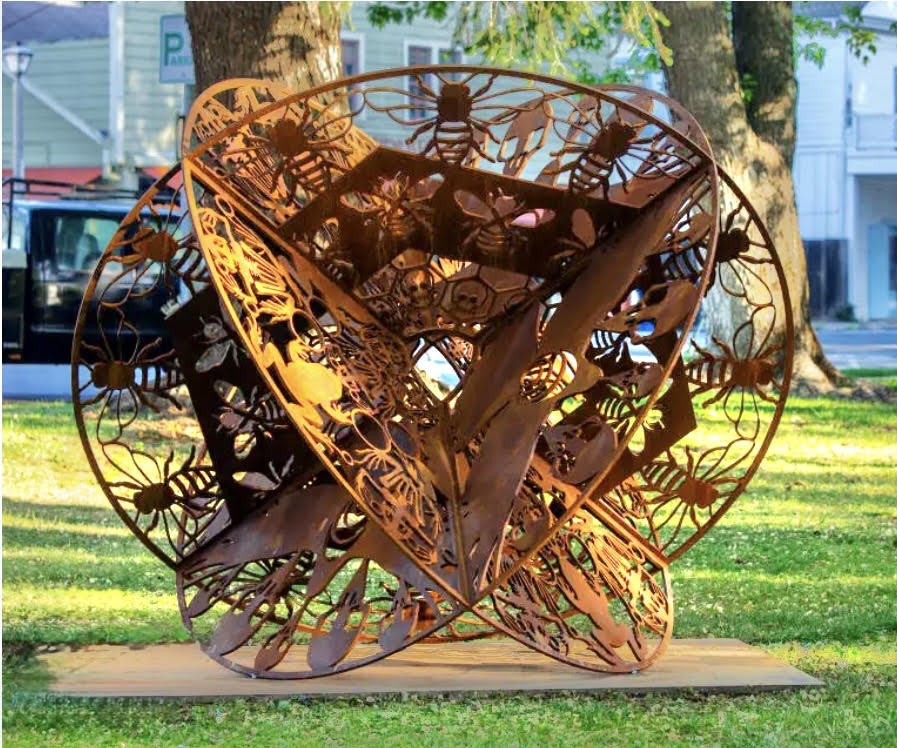
On October 4, over 200 people joyfully gathered in Sonoma Plaza to celebrate the unveiling of Cycles #3, a monumental sculpture donated to the City by local sculptor Peter Hassen. The occasion marked a milestone for Sonoma’s public art program and showed how one person’s generosity can help launch a community-wide vision.
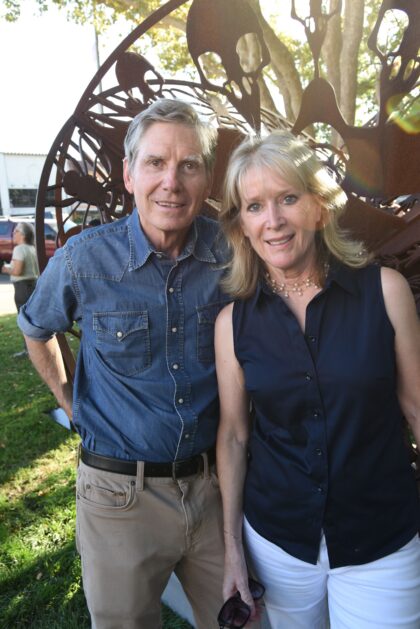
Hassen thanked the Culture and Fine Arts Commission for advancing public art, the City Council for its commitment, and city staff for bringing the installation to life. He singled out Parks and Recreation Director Dave Jahns and Public Works Director Mike Berger for their support.
The sculpture is crafted from corten steel, also known as “weathering steel,” because while it acquires an attractive weathered patina, it does not corrode. The commanding piece, titled “Cycles #3” explores nature, science and humanity’s place in the living world – a message at home in Sonoma Valley, where landscape, agriculture and environmental stewardship are central to our identity.
“I have always been inspired by the natural world,” Hassen said. He created the sculpture to connect with “the extraordinary web of life on this beautiful planet we all share.” Explaining the motives behind his gift, Hassen added, “Louise and I have called Sonoma home for the last 17 years. It means the world to me to have Cycles #3 in the Plaza, in a community that has given us so much.”
Peter and Louise moved permanently to Spain two days later, leaving a lasting legacy that fulfills one of his artistic dreams: to have his sculpture seen in a prominent Sonoma public place.
Hassen likes his art to contain “an element of surprise, like a message in a bottle.” Now, as people encounter Cycles #3 in the heart of Sonoma, they can discover that message for themselves.
Building on What Sonoma Already Has
Overlapping Hassen’s gift, the City’s Culture and Fine Arts Commission (CFAC) has been updating Sonoma’s decades-old public art policy and expanding community participation. The City Council has included arts and culture in its annual goals, and a modernized “one percent for the Arts” fee directs one-percent of qualifying new commercial and multifamily development costs toward public art.
Early projects under the new Public Art Master Plan demonstrate how art brings people together. Square Keys, a public-piano project developed by CFAC in partnership with the Sebastiani Theatre Foundation, invites people to play music on an actual donated piano in the Plaza. Next, at the end of October, seven contemporary local artist-designed electric utility boxes will be unveiled. In the pipeline is a Call For Art for proposals for a public art piece for the redevelopment of Olsen Park. There are many more, as the City’s new online portal is lighting up with residents suggesting projects, donations and ideas for everyday civic spaces.
Sonoma’s opportunity extends beyond individual projects. Our Valley already has an extraordinary artistic and cultural foundation: Indigenous, Californian and American history; an iconic Plaza; spectacular natural beauty and a Mediterranean climate; vineyards and farms producing world-class wine and food; accomplished artists and makers; and festivals, museums, galleries and performances that attract creative talent year after year.
Tourism is already established here. Expanding the experience through Cultural Tourism is a natural next step. Each project adds another brushstroke to a larger picture.
From Public Art to Economic Opportunity
At the end of October, a few business, philanthropic, cultural and city and regional government leaders will meet with a nationally recognized creative-economy expert. This small Think Tank will explore the valley’s potential for economic diversification through the arts, creative industries, makers and innovators.
Could underused buildings become live-work spaces or maker studios? Could partnerships help creative entrepreneurs grow businesses? Could cultural destinations bring more visitors to local shops, restaurants and hotels?
These are questions to explore, but the goal is to develop a practical roadmap for identifying gaps, connecting resources, and creating long-term economic opportunities.
The vision is not to replace wine or agriculture, but to broaden our economic foundation while celebrating what makes Sonoma distinctive.
Painting Sonoma’s Next Chapter
Public art opens the door to our imagination about this place. A sculpture can spark conversation; a piano can bring strangers together; a creative gathering can inspire collaboration. Over time, these connections can help build a more vibrant, innovative and welcoming community.
No single artist or organization can create this future alone. It will take residents, young and old alike, businesses, government, nonprofits, philanthropists and our creatives working across traditional boundaries.
Sonoma’s canvas is already rich with history, beauty and talent. Our opportunity is to connect those colors into something more powerful: one that enriches community life and helps sustain our economic future. The next chapter is ours to imagine – and build together.
Connie Schlelein is a community arts activist and artist. She is a retired visual arts and journalism educator/professor and public arts administrator. As Chair of the City of Sonoma’s Culture and Fine Arts Commission (CFAC), she has focused the commission on modernizing the City’s public art policy and developing ongoing public art projects. The opinions expressed here are her own, not the CFAC’s.


Be First to Comment